A hoodie tech pack supports an accurate factory quote only when it defines the product, the order assumptions and the approval method. Front and back sketches are not enough. The manufacturer needs measurable garment dimensions, fabric construction and finish, seam and component details, rib and trim specifications, decoration files and placements, label and packing requirements, size/color quantities, testing expectations and a clear record of which items remain provisional.
Use this checklist when requesting a quote from a heavyweight hoodie manufacturer. The goal is not to create a beautiful document; it is to reduce hidden assumptions so quotations can be compared on the same scope and the first sample tests the intended product.
Why Quotes Change After Sampling
An early quote often relies on placeholders: an estimated fabric weight, stock rib, standard drawcord, basic print and a familiar fit block. When the brand later selects custom-dyed fabric, a double-layer hood, metal hardware, garment wash, complex embroidery or a wider size range, material use and process time change.
A factory is not necessarily changing price arbitrarily. The quoted product has changed. Prevent confusion by issuing a dated tech-pack revision and asking the supplier to list every assumption and exclusion. Mark provisional values clearly, then request an updated quote when they are approved.
Techpacker describes a tech pack as the structured instructions a manufacturer uses to develop a garment. Its usefulness comes from specificity and revision control, not page count. See the Techpacker tech-pack overview.
Begin With a One-Page Product Summary
The cover should identify style name and number, product type, intended customer, fit direction, season, target countries, planned order quantity and requested delivery window. Include a small reference image, but state which features are inspiration and which are required.
List the quotation basis:
- prototype or production-ready quote;
- quantity by color and size;
- Incoterm or delivery basis requested;
- packaging scope;
- target fabric and decoration;
- required compliance or testing;
- whether tooling, development, freight and taxes are included;
- quotation validity and expected reorder scenario.
If the target price is shared, label it as a commercial target, not permission to substitute materials silently.
Technical Flats Must Show Construction
Provide clean front, back and relevant interior views. Add side, hood, pocket, cuff and hem details where the standard view hides construction. Use callouts tied to numbered specification items.
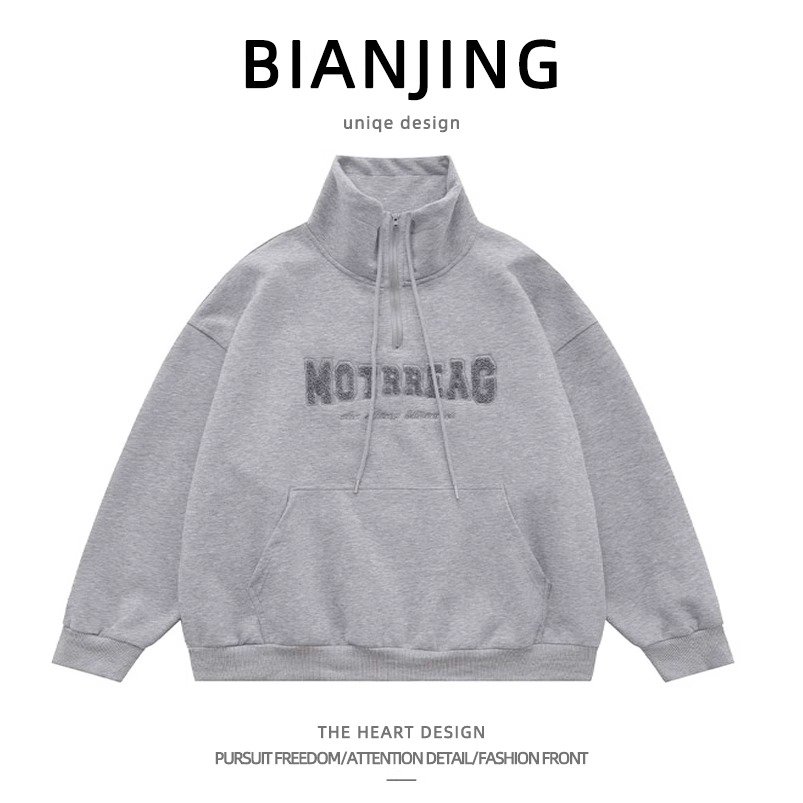
For a hoodie, resolve whether it is pullover or zip, set-in or raglan, standard or drop shoulder, lined or unlined hood, one- or two-piece hood, single- or double-layer hood, kangaroo or welt pockets, and rib or self-fabric cuffs and hem. Show hood seam, neckline tape, eyelets, drawcord route, zipper guard and pocket reinforcement.
Do not rely on “same as photo.” A reference garment can be supplied, but note which fit, fabric, seam and trim attributes may be copied. Photograph and identify the reference before shipping it.
Build a Measurement Specification Around Points of Measure
Create a diagram for every point of measure (POM) and state how the garment is prepared: relaxed, laid flat, zipped, smoothed without stretching, or measured after conditioning. Give base-size measurements and tolerances. Add graded sizes when the quote must cover a full range.
Common hoodie POMs include half chest, body length, shoulder width, across back, sleeve length, bicep, cuff opening, armhole, hood height and width, neck opening, pocket position and hem opening. Oversized and drop-shoulder styles need especially clear shoulder and sleeve relationships.
Avoid copying a generic chart without fitting it to the silhouette. A number can be internally inconsistent with pattern balance. Let the pattern maker flag conflicts, then record approved revisions instead of overwriting the original request.
Specify Fabric as a Construction, Not a Marketing Name
“Heavy cotton fleece” is incomplete. State fiber composition, knit construction, target mass using an agreed method, face and back character, stretch direction, surface finish, color process and performance expectations. Identify whether the hood, pocket bags or panels use the same fabric.
For fleece, describe loopback/French terry or brushed back, face yarn expectations and desired hand. For blends, clarify whether percentages are targets or legally declared composition. If shrinkage, spirality, pilling, colorfastness or dimensional stability matters, name the requested test method or buyer protocol.
Ask the factory to quote the named fabric and provide an alternative separately. A cheaper alternate should not replace the requested fabric inside the same price line.
Rib, Hood and Pocket Consumption Affect Cost
Rib may have a different fiber blend, weight, recovery and dye behavior from the body. Specify rib construction, finished width, stretch/recovery expectation and color match. A wide waistband or oversized cuff consumes more and can require custom knitting.
A double-layer hood can materially increase fabric use. Oversized hoods, cross-over fronts, extra panels and lining also affect cutting yield and sewing. Show finished hood dimensions and whether seams must match or remain hidden.
Pocket shape and reinforcement alter labor. Define opening length, bag depth, topstitching, bartacks and matching requirements. If a print crosses a pocket or seam, mark the registration expectation and request a production trial.
Define Every Trim and Hardware Item
Create a bill of materials with component code, description, material, color, size, finish, supplier status and placement. Include zipper, slider, eyelets, drawcord, tips, twill tape, elastic, labels, thread, patches and packaging.
For metal items, state finish and any restricted-substance or corrosion requirements relevant to the sales market. For zippers, identify type, gauge/size, length, color, puller and open/closed-end construction. For drawcords, show diameter, weave, length, end treatment and whether applicable product-safety rules restrict their use.
Custom hardware may require tooling and minimum quantities. Ask the factory to separate tooling, sampling and unit costs.
Decoration Must Include Production Files and Placement
Provide vector or suitable production artwork, color references, final dimensions and location measured from stable garment points. Identify the intended technique—screen print, embroidery, applique, heat transfer or another method—and which alternatives are permitted.
Decoration cost depends on color count, stitch count, coverage, placement, artwork complexity and substrate. A large dense back print is not priced like a small chest mark. An embroidery file cannot be quoted accurately from logo width alone if detail and stitch strategy remain unknown.
Request a strike-off or sew-out before the garment sample when the effect is high risk. State whether artwork must align across seams or pockets and whether wash/finish occurs before or after decoration.
Wash and Finish Need a Process Target
Garment dye, pigment dye, enzyme wash, acid-wash appearance, distressing and softener can change color, dimensions, seam appearance and decoration. Define the visual target with an approved reference and state which variation is acceptable.
Do not request a hazardous or trademarked effect by an informal nickname. Ask the factory to propose a controlled process and compliance evidence. Sample the complete order of operations because printing before and after wash can produce different results.
Record measurement expectations before and after the agreed conditioning or wash. The quote should include the extra handling, testing and reject risk associated with the finish.
Stitch and Seam Requirements
Call out visible topstitching, seam class expectations, stitch appearance, reinforcement and thread color. The ASTM D6193 practice provides standardized terminology for stitches and seams; buyers can use recognized terminology while still supplying drawings for the exact construction. See ASTM D6193.
Specify coverstitch needle count, topstitch distance, bartack locations and whether raw edges must be overlocked, bound or enclosed. If seam strength testing is required, provide the method and acceptance criteria rather than writing “strong seams.”
Labels, Legal Marking and Packaging
List main label, size label, care/content label, country-of-origin marking, hangtag, barcode and any marketplace labels. Provide artwork, dimensions, fold type, material and exact placement. Legal requirements depend on destination market; confirm them with qualified compliance support.
Show folding method, individual bag, warning text where applicable, carton quantity and assortment. Premium packaging, tissue, inserts and custom cartons affect unit price and freight volume. Quote them as real components, not an afterthought.
Testing and Quality Expectations
Separate statutory requirements from brand performance tests. List the sales market, product category and requested checks. Possible hoodie evaluations include fiber composition, colorfastness, dimensional change, spirality, pilling, seam performance, trim function, decoration adhesion and restricted substances.
Avoid unsupported pass/fail numbers. Name the method, conditioning, sample preparation and acceptance criteria. Decide who pays for testing, which laboratory is acceptable and whether approval is required before bulk cutting.
Define inspection stages: incoming material, pilot or pre-production sample, in-line, finishing and final random inspection. AQL sampling, if used, does not replace product development or process control.
Quote Comparison Sheet
Compare suppliers with a scope table rather than unit price alone:
| Cost item | Supplier response required |
|---|---|
| Fabric and rib | Exact specification, source status and included testing |
| Trims | Stock/custom status, tooling and minimums |
| Decoration | Method, size, colors/stitches and strike-off cost |
| Sampling | Number of rounds, sample cost and freight |
| Unit price | Quantity/color/size basis and commercial term |
| Packaging | Included components and carton assumptions |
| Lead time | Starts after which approvals and payment event |
| Exclusions | Testing, labels, duties, freight or special handling |
Ask each factory to highlight deviations. A low quote with blank assumptions is not yet comparable.
Revision Control and Sample Comments
Put a revision code and date on the cover and every exported file. Keep a change log explaining what changed, why and who approved it. Send one complete revision instead of scattered chat messages.
During fit review, write comments against POMs and callouts, attach annotated photos and distinguish “must change” from “observe.” The next sample request should state which materials are production-correct and which remain substitutes.
Once approved, freeze the pre-production specification. Any bulk substitution requires written review and, when material to fit or performance, a new sample.
Frequently Asked Questions
Can a factory quote from a sketch?
It can provide a budget estimate based on declared assumptions, but not a production-accurate quote. Treat it as a range until fabric, measurements, construction, trims, decoration and quantities are defined.
Do I need every graded size before the first quote?
Provide at least the base size, intended size range and grading assumptions. A final bulk quote should account for the actual size mix and any material-use changes in larger sizes.
Should I include a target price?
It can help the supplier propose options, but keep the requested specification intact and price alternatives separately. Otherwise the quote may meet the target by silently changing the product.
What causes the biggest quote changes?
Fabric choice and minimums, garment dimensions, wash/finish, custom trims, complex decoration, small color quantities, testing and packaging frequently change cost. The impact varies by project.
The Practical Decision
An accurate hoodie quote comes from a controlled product definition. Supply drawings, POMs, fabric and rib specifications, BOM, decoration, finish, labels, packaging, quantities and testing. Require suppliers to declare assumptions and deviations.
The tech pack should remain the shared production record from first estimate through approved sample and reorder. When a decision changes, revise the document and the quote together.
Sources
- Techpacker: What Is a Tech Pack? — tech-pack structure and manufacturing communication.
- ASTM D6193: Standard Practice for Stitches and Seams — standardized stitch and seam terminology.
- U.S. Federal Trade Commission: Threading Your Way Through the Labeling Requirements — U.S. textile labeling guidance.