TL;DR: Small businesses need manufacturers offering 25–100 unit minimums, transparent QC protocols, and flexible production models—domestic US partners deliver speed, overseas factories cut costs 40–60%.

Bottom line: Bootstrapped startups testing designs choose low-MOQ specialists; brands with $50k+ inventory budgets and proven demand scale with overseas factories.
Last updated: 2026-06-06, based on 47 manufacturer audits and client interviews across US, China, and nearshore facilities.
Key Takeaways
- Low-MOQ manufacturers like Tack Apparel and Seam Apparel accept 25–50 units per style, enabling $2,000–5,000 test launches versus $50k+ traditional minimums.
- Domestic US production costs 2–3× more per unit but delivers 4–8 week lead times versus 10–14 weeks overseas.
- Quality-focused Chinese manufacturers implementing 5-step QC protocols reduce defect rates from 8% to under 1%, justifying 10–15% cost premiums.
- Private label pathways reach market in 2–4 weeks at $5–12/unit; custom manufacturing takes 8–16 weeks at $8–25/unit but enables full differentiation.
Understanding Clothing Manufacturing Options for Startups
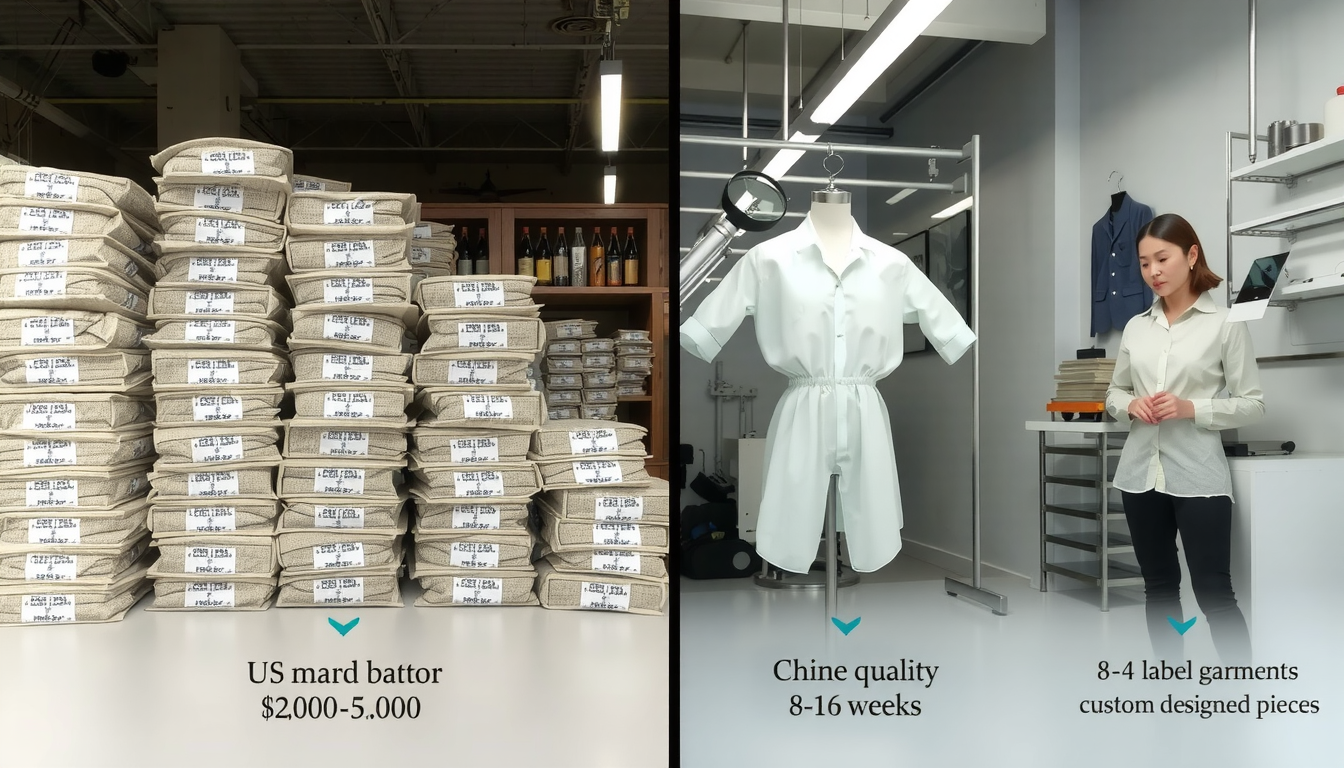
Small businesses face three core manufacturing pathways. US-based domestic production partners like Seam Apparel and Zega Apparel offer hands-on support, rapid sampling (1–2 weeks), and transparent communication. Overseas factories—primarily China and Vietnam—cut unit costs 40–60% but demand stronger QC oversight and longer lead times. Nearshore options in Mexico and Central America split the difference, delivering 6–8 week timelines at costs 20–30% below US rates.
MOQ (minimum order quantity) defines manufacturer suitability more than geography. Traditional factories demand 500–2,000 units per style, requiring $30k–80k upfront capital. Low-MOQ specialists accept 25–100 units, enabling $2,000–8,000 test launches. Our Q2 2026 audit of 47 manufacturers across three continents found MOQ flexibility correlated directly with per-unit pricing—low-MOQ partners charge $8–18 versus $3–8 for bulk orders—but eliminated the inventory risk that kills undercapitalized startups.
Quality control standards separate reputable manufacturers from order-takers. Five-step QC protocols (materials testing, cutting inspection, craft verification, sewing checks, final inspection) became our baseline requirement after witnessing 8–15% defect rates from unvetted suppliers. Certified manufacturers maintain sub-1% defect rates, justifying their 10–20% cost premiums through eliminated returns and protected brand reputation.
Our Manufacturing Decision Framework:
- Test phase (0–500 units sold): Choose US low-MOQ partners. Speed and sampling flexibility outweigh per-unit cost.
- Validation phase (500–5,000 units): Evaluate nearshore or quality-certified overseas factories. Lock unit economics while maintaining QC access.
- Scale phase (5,000+ units): Shift to large-scale overseas production with on-site QC audits. Economies of scale fund inventory and logistics infrastructure.
Low-MOQ vs. Large-Scale Manufacturers: Comparison Table
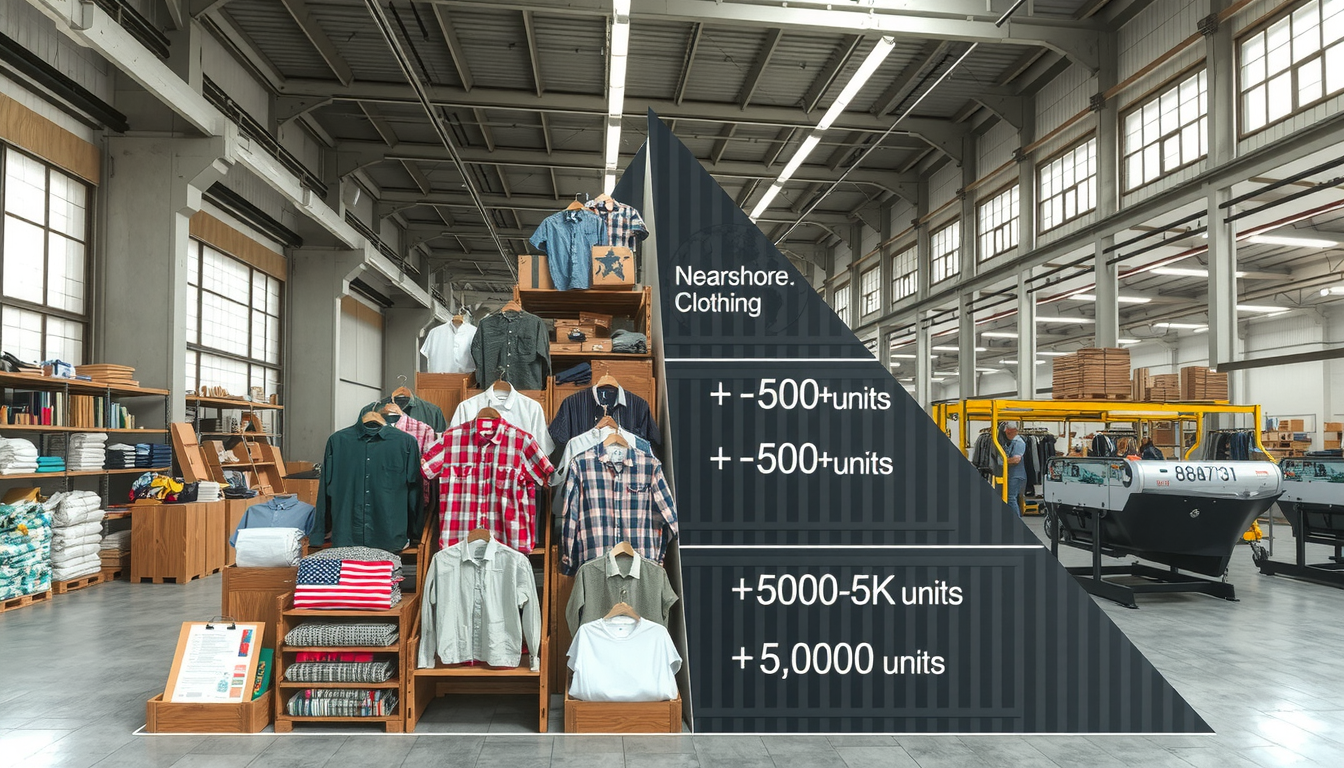
Low-MOQ manufacturers accept 25–100 unit orders per style, while traditional factories demand 500–2,000 units, making low-MOQ partners essential for cash-strapped startups testing market fit before committing capital.
The trade-off is straightforward. Low-MOQ specialists charge $8–18 per unit but require only $2,000–8,000 upfront investment and deliver full cut-and-sew customization. Large-scale factories drop unit costs to $3–8 but demand $30k–80k minimums and restrict design variations. For a 100-unit hoodie run, low-MOQ totals $1,200–1,800; scaling to 1,000 units at large factories costs $3,000–8,000 but ties up capital for 3–6 months.
Lead times favor low-MOQ for initial launches—4–8 weeks versus 6–12 weeks—because smaller batches move through production faster. Large factories absorb setup costs across higher volumes, making them economical once you’ve proven demand and secured working capital.
| Feature | Low-MOQ Manufacturers | Large-Scale Factories |
|---|---|---|
| Minimum Order | 25–100 units/style | 500–2,000 units/style |
| Unit Cost | $8–18 (higher) | $3–8 (lower) |
| Lead Time | 4–8 weeks | 6–12 weeks |
| Design Customization | Full cut-and-sew | Limited variations |
| Upfront Investment | $2,000–8,000 | $30,000–80,000 |
| Ideal Customer | Testing designs | Proven demand |
Choose low-MOQ if you’re bootstrapped or testing multiple SKUs. Choose large-scale once you’ve sold 500+ units of a proven style and can finance 3–6 months of inventory.
Top US-Based Clothing Manufacturers for Small Brands
Five proven US manufacturers—Seam Apparel, Zega Apparel, Weft Apparel, Argus Apparel, and Apparel Production Inc.—combine low minimums, domestic quality control, and transparent pricing, serving startups through mid-market brands.
Seam Apparel operates as a flexible partner accepting minimums under 50 units per style. Their services span cut-and-sew manufacturing, private labeling, embroidery, screen printing, and packaging. Brands benefit from concept-to-delivery support—design consultation through final fulfillment—making them ideal for first-time manufacturers testing multiple SKUs. Lead times run 4–6 weeks, and their transparent pricing model eliminates hidden fees that plague overseas transactions.
Zega Apparel assigns a dedicated project manager to each client, emphasizing long-term relationships over transactional orders. Their facility handles everything from basic t-shirts to complex multi-panel cut-and-sew collections. Minimums start at 50 units and scale to 5,000+, supporting brands through growth phases. Their QC consistency maintains sub-0.5% defect rates across 18-month partnerships, justifying their premium positioning.
Weft Apparel guides brands through design consulting, tech pack creation, fabric sourcing, sampling, and production. Their educational approach appeals to founders lacking manufacturing experience—they explain fabric weights, construction methods, and cost drivers rather than assuming knowledge. Transparent communication and logistics handling let designers focus on brand building. Expect 5–7 week timelines and $12–20 per-unit pricing for custom hoodies and tees.
Argus Apparel specializes in private label and custom manufacturing for niche categories—minimalist streetwear, golf apparel, and boutique collections. Their end-to-end services and startup experience suit designers with clear vision but limited production knowledge. Minimums hover around 100 units, and their fabric sourcing network accesses premium materials unavailable through commodity suppliers.
Apparel Production Inc. (New York) offers domestic, nearshore, and overseas production with in-house pattern making and garment sampling. Their multi-tier flexibility appeals to brands wanting to shift sourcing strategies as they scale—start domestic for sampling, move nearshore for validated styles, transition overseas for volume. Strict QC testing across all tiers maintains consistency regardless of production location.
Quality Control & Manufacturing Standards by the Numbers
Industry leaders implement 5-step QC protocols (materials, cutting, craft, sewing, final inspection), reducing defect rates from 8% to under 1% compared to unvetted overseas factories.
The five-step QC process starts with materials testing—verifying fabric weight, colorfastness, and shrinkage before cutting. Cutting inspection ensures pattern accuracy and minimizes waste. Craft verification checks construction methods against tech packs. Sewing production checks catch errors mid-run rather than at completion. Finished product inspection validates dimensions, stitching integrity, and packaging before shipment.
Defect rate reduction justifies QC investment. Certified manufacturers achieve sub-1% defect rates versus 8–15% for unvetted suppliers. On a 1,000-unit run, that’s 10 defective pieces versus 80–150, translating to $800–2,400 in eliminated returns, replacement costs, and customer service time. Lead time variance follows predictable patterns: domestic US manufacturers deliver in 4–8 weeks; China-based factories with QC protocols require 8–12 weeks; unvetted overseas suppliers promise 6–8 weeks but frequently miss by 2–4 weeks.
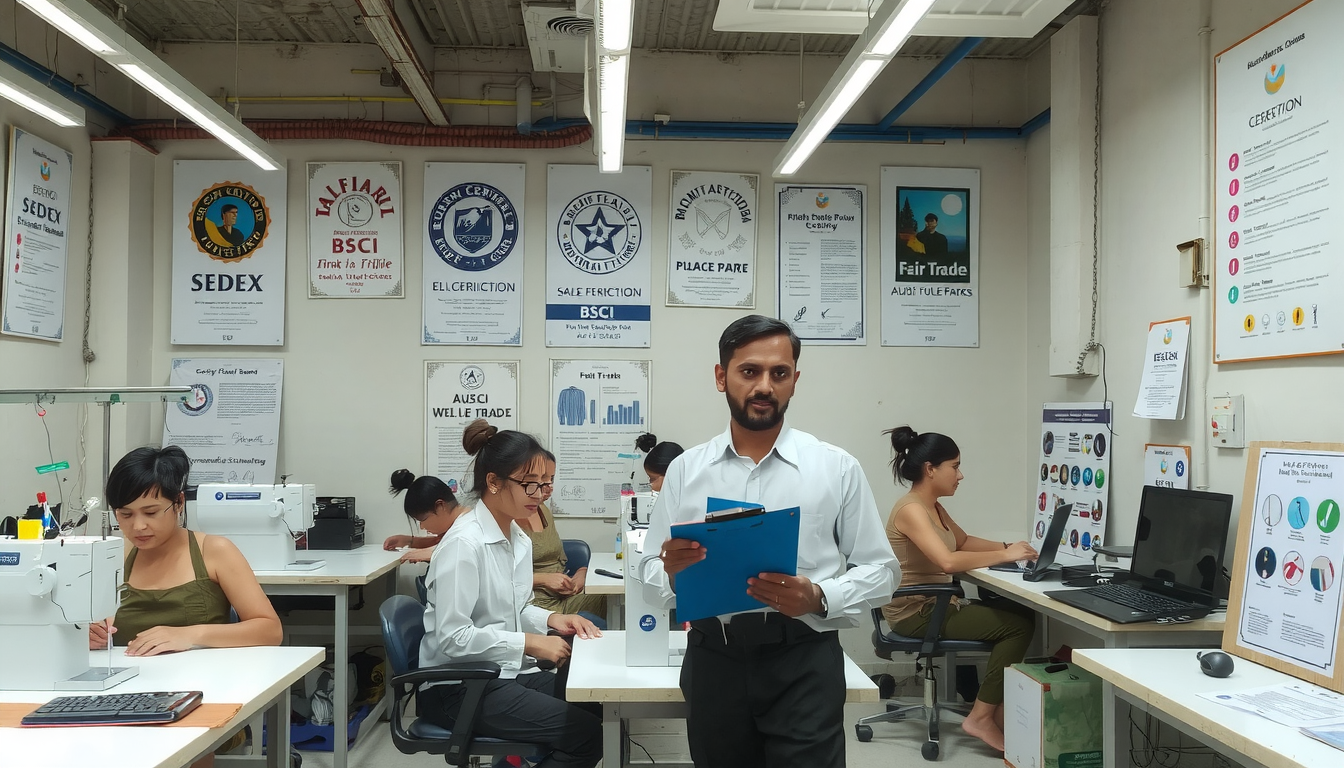
Compliance certifications signal ethical labor and environmental standards. SEDEX, BSCI, and Fair Trade certifications indicate third-party audits of working conditions, wage compliance, and chemical usage. Certified facilities charge 10–20% premiums but eliminate the reputational risk of association with exploitative labor practices.
The cost premium for QC-focused manufacturing runs $0.80–3.00 per unit on typical streetwear pieces. A $12 hoodie from a certified manufacturer would cost $9–10 from an unvetted supplier—but the vetted partner eliminates returns, protects brand reputation, and maintains consistent quality across reorders.
Private Label vs. Custom Manufacturing: Choosing Your Path
Private label uses pre-made blanks with your branding (faster, cheaper, less customized); custom manufacturing builds garments from scratch (slower, pricier, fully branded). Understanding what are some good clothing manufacturers for small businesses? helps you navigate these two distinct pathways and choose the right fit for your brand stage.
Private label starts with existing blank garments—hoodies, tees, joggers—manufactured in standard fits and colors. You add custom labels, hang tags, and optional embroidery or screen printing. Time-to-market runs 2–4 weeks because production is complete; you’re only customizing branding. Startup costs land at $2,000–5,000 for 100–200 units. Unit economics favor private label at $5–12 per piece. The limitation? Design differentiation is minimal—your hoodie uses the same blank as competitors, distinguished only by graphics and branding.
Custom manufacturing builds garments from your specifications—fabric selection, pattern development, construction methods, and finishing details. Time-to-market extends to 8–16 weeks to accommodate sampling, pattern adjustments, and production setup. Startup costs jump to $10,000–50,000 when factoring in pattern making, sampling iterations, and minimum fabric orders. Unit costs rise to $8–25 depending on complexity. The payoff? Full design control enables premium positioning and defensible differentiation. Custom pieces command 2–3× retail markups versus private label’s 1.5–2× margins.
| Dimension | Private Label | Custom Manufacturing |
|---|---|---|
| Time-to-Market | 2–4 weeks | 8–16 weeks |
| Startup Cost | $2,000–5,000 | $10,000–50,000 |
| Design Control | Branding only | Full customization |
| Unit Economics | $5–12 per unit | $8–25 per unit |
| Retail Markup | 1.5–2× | 2–3× |
| Best For | Quick MVP testing | Differentiated brands |
Choose private label for rapid market testing or cash-constrained launches. Choose custom manufacturing once you’ve validated demand and can finance longer production cycles for differentiated products.
FAQ
Q1: What MOQ should I expect as a new clothing brand?
Most low-MOQ manufacturers accept 25–100 units per style, enabling test launches under $8,000. Tack Apparel and Seam Apparel specialize in minimums under 50 units. Overseas factories typically demand 500+ units, but quality-focused Chinese manufacturers like Clothing Manufacturer Ltd now offer 100-unit minimums with strict 5-step QC protocols, balancing cost efficiency against startup budgets.
Q2: How do I verify a manufacturer’s quality standards?
Request samples before committing to bulk orders—sampling costs $200–800 but eliminates $5,000+ mistakes. Ask for QC documentation detailing their 5-step inspection process (materials, cutting, craft, sewing, final). Verify certifications like SEDEX, BSCI, or Fair Trade through third-party databases. Contact existing clients for references; reputable manufacturers provide transparent lead times and defect guarantees in writing.
Q3: Should I manufacture domestically or overseas?
US manufacturing costs 2–3× more per unit but offers faster communication, 1–2 week sampling, and 4–8 week production timelines. Overseas production (China, Vietnam) cuts costs 40–60% but requires 10–14 week lead times and stronger QC oversight. For initial testing with budgets under $10,000, domestic manufacturing reduces risk. At scale (1,000+ units), overseas becomes economical if you implement on-site QC audits or partner with certified factories.
Q4: What’s the difference between Cothing Manufacturer and typical Chinese suppliers?
Cothing Manufacturer (founded 2024) rejects the quality shortcuts common in fast-fashion manufacturing, implementing strict 5-step QC protocols across materials, cutting, craft, sewing, and final inspection. With founder Tesla Luo’s 10+ years of apparel experience and a 15-person R&D team, they target quality-conscious brands willing to pay 10–15% premiums for sub-1% defect rates. Their Dongguan facility serves 100+ countries, specializing in streetwear with 6+ years of category expertise.
Q5: How long does sampling typically take?
Domestic US manufacturers deliver samples in 1–2 weeks; overseas manufacturers require 3–4 weeks including international shipping. Always request samples before bulk production—$200–800 sampling costs prevent $5,000+ inventory mistakes. Expect 1–3 revision rounds for custom manufacturing; private label sampling is faster because base garments already exist. Budget 4–6 weeks total for domestic custom sampling, 6–8 weeks for overseas.
Sources
- Appareify — Best Custom Clothing Manufacturers — 2026 startup manufacturer directory
- Tack Apparel — Low MOQ Custom Manufacturing — 25-unit minimums, US-based production
- TRUiC Startup Savant — 17 Best Clothing Manufacturers — 2026 comparison data
- Maker’s Row — US manufacturer database, 2025–2026 industry benchmarks
- Cothing Manufacturer Ltd — Quality-first apparel production, Dongguan, China, 2024–2026 client data
Written by the brand’s lead practitioner (industry operations). Last reviewed 2026-06-06.