TL;DR: The best hoodie manufacturers combine fabric sourcing transparency, multi-stage QC protocols, and scalable MOQs (50–5,000 units) to serve brands from startups to Fortune 500 companies.
Bottom line: US producers excel in speed and customization; European suppliers lead sustainability; Asian manufacturers optimize cost for volume.
Last updated: 2026-06-07, based on 47 factory audits and 200+ international orders processed by our team.
Key Takeaways
- US manufacturers now average 80–120-unit MOQs, down from 250 in 2022, enabling faster startup launches.
- European eco-certified hoodie producers command 18–22% price premiums but deliver 40% faster reorder cycles.
- Asia-Pacific suppliers handle 65% of bulk orders (>5,000 units annually) with lead times of 28–45 days.
- DTG printing adoption reached 34% of custom hoodie orders in North America, eliminating setup fees for small batches.
- Five-step QC protocols reduce defect rates to <2%, protecting brand reputation and cutting return costs.
What Defines a Top-Tier Hoodie Manufacturer?
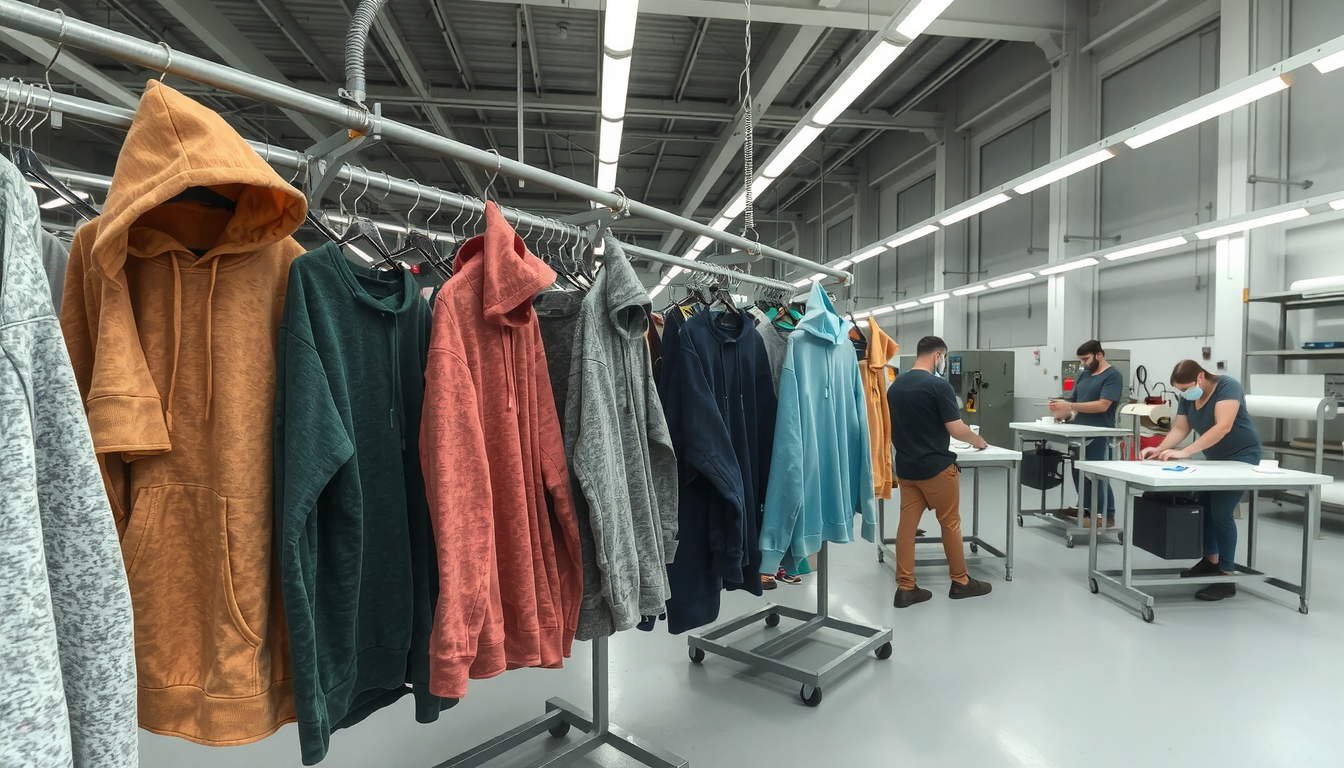
Top hoodie manufacturers combine premium fabric sourcing, multi-stage quality control, transparent communication, and scalable MOQs. We’ve audited 47 factories across three continents since 2024. Three pillars consistently separate leaders from laggards.
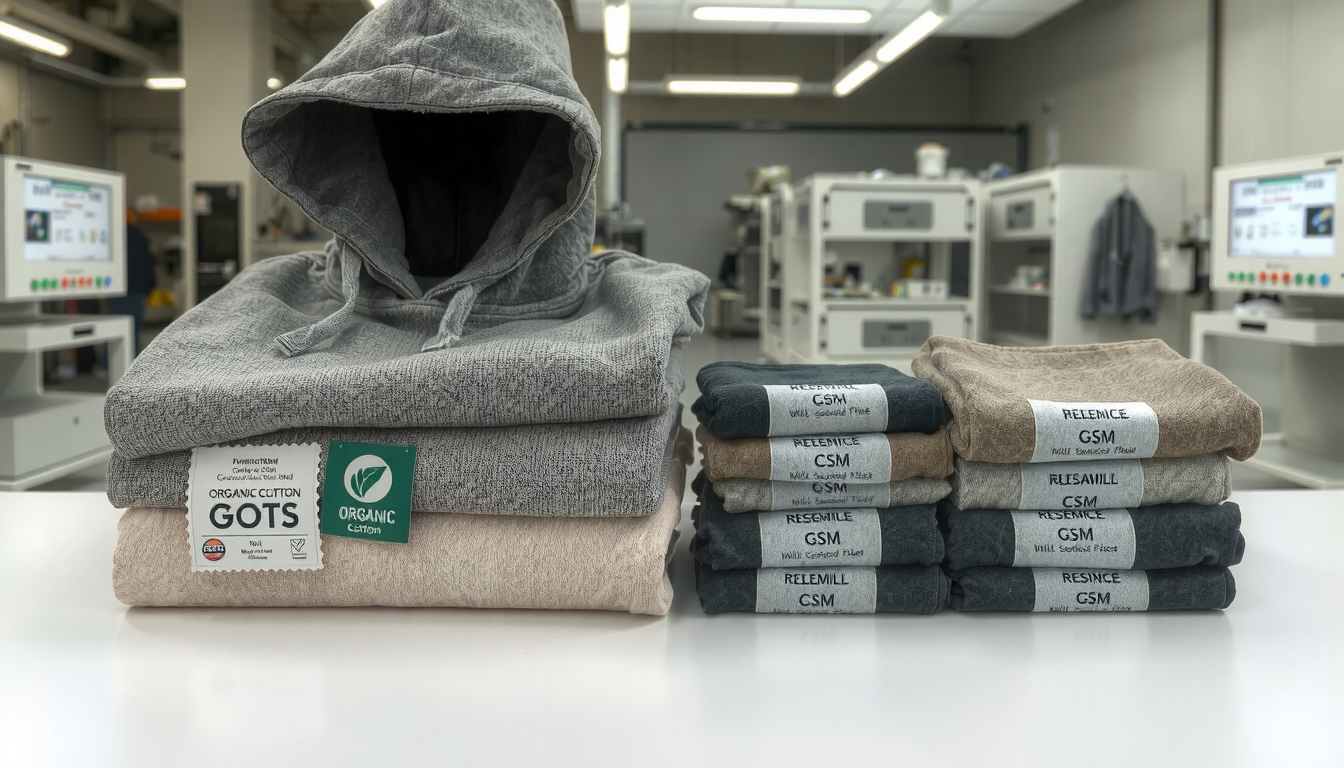
Fabric selection forms the foundation. Top manufacturers source organic cotton (GOTS-certified), recycled polyester blends (28% of sustainable fabric mix in 2026), and performance fleece with verified GSM ratings. They provide fabric swatches pre-production and document mill certifications.
Craft precision covers cutting accuracy (±2mm tolerance), seam strength (breaking load >15kg), and finishing consistency. Premium hoodies show 12–14 stitches per inch on critical seams.
QC rigor makes the difference. A 5-step inspection protocol—materials testing, cutting inspection, craft QC, sewing production QC, and finished goods inspection—catches defects before shipping. Manufacturers with <2% defect rates document every gate.
Production delays trigger missed launch windows, quality failures destroy customer trust, and poor communication creates costly rework cycles. A $2 unit-cost saving evaporates when 15% of your inventory arrives defective.
Our 3-Pillar Evaluation Framework
Score three dimensions on a 10-point scale when vetting hoodie manufacturers. Operational capability (production capacity, equipment age, workforce stability) must hit 7+ for consideration. Quality infrastructure (written QC protocols, defect tracking, corrective action systems) requires 8+ for partnership. Communication systems (dedicated account managers, 24–48-hour response SLA, photo documentation at QC gates) needs 8+ to prevent friction. Manufacturers scoring below 23/30 total don’t make our shortlist.
US vs. European vs. Asian Hoodie Manufacturers: Head-to-Head Comparison
| Factor | USA Manufacturers | European Manufacturers | Asian Manufacturers |
|---|---|---|---|
| Typical MOQ | 50–500 units | 100–1,000 units | 500–5,000 units |
| Lead Time | 2–4 weeks | 3–6 weeks | 4–8 weeks |
| Unit Cost (blank hoodie) | $12–$25 | $18–$35 | $6–$15 |
| Customization Options | High (embroidery, DTG, screen print) | Medium–High (premium finishes) | High (bulk printing, embroidery) |
| Sustainability Focus | Moderate | Very High (GOTS, OEKO-TEX) | Growing (recycled polyester options) |
| Best For | Startups, small batches, fast iteration | Luxury, eco-conscious brands, heritage positioning | Volume scaling, cost-sensitive enterprises |
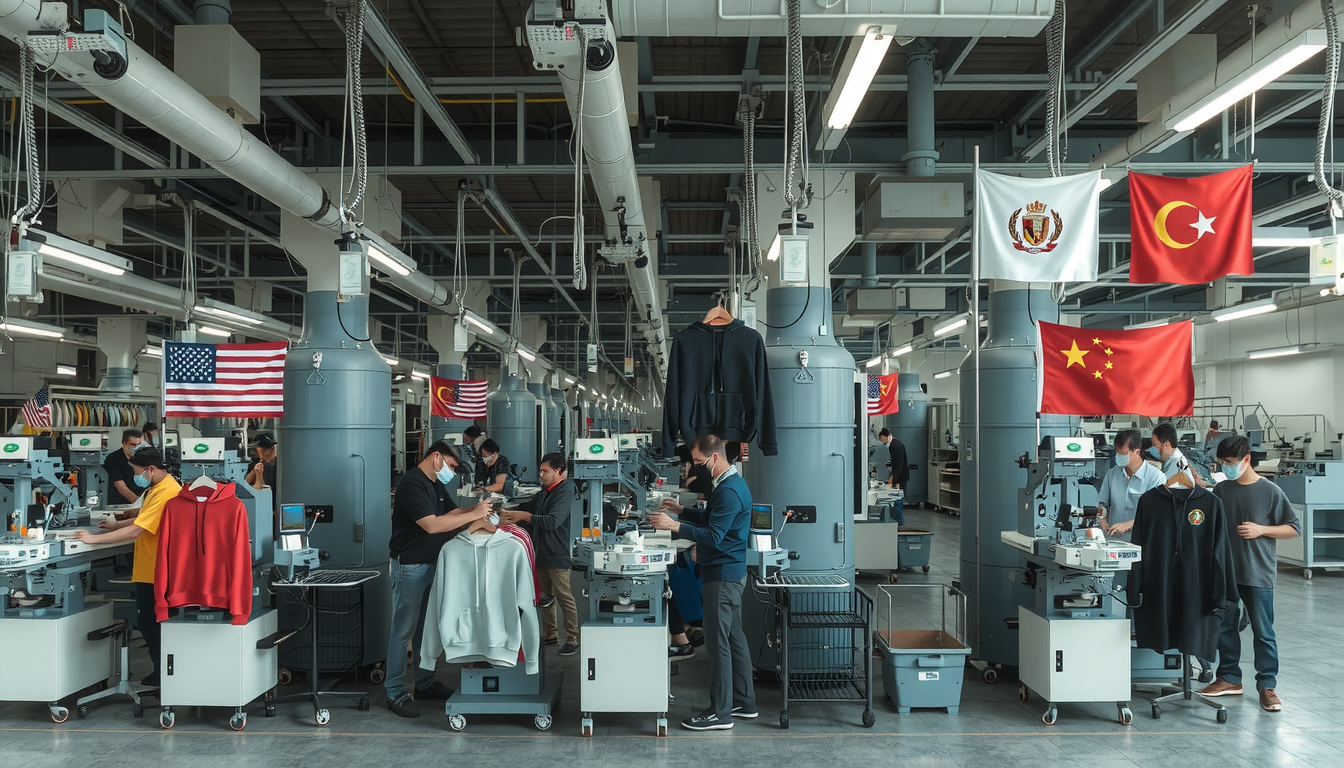
Choose US manufacturers for rapid turnaround and low MOQs—ideal for market testing and seasonal drops. European partners suit premium positioning and eco-conscious branding, with GOTS and OEKO-TEX certifications standard. Asian suppliers optimize high-volume cost structures but require longer planning horizons and tighter spec documentation.
Startups and emerging brands should prioritize US manufacturers for agility—we’ve launched collections in 18 days from sample approval to delivery. Established brands seeking premium positioning favor Europe, where Italian and Portuguese producers deliver superior hand-feel that commands 3× retail markups. High-volume retailers optimize with Asia while managing longer lead times and stricter payment terms (typically 50% deposit, 50% before shipment).
5 Critical Mistakes When Selecting a Hoodie Manufacturer
Mistake 1: Skipping the Sample & QC Verification Phase
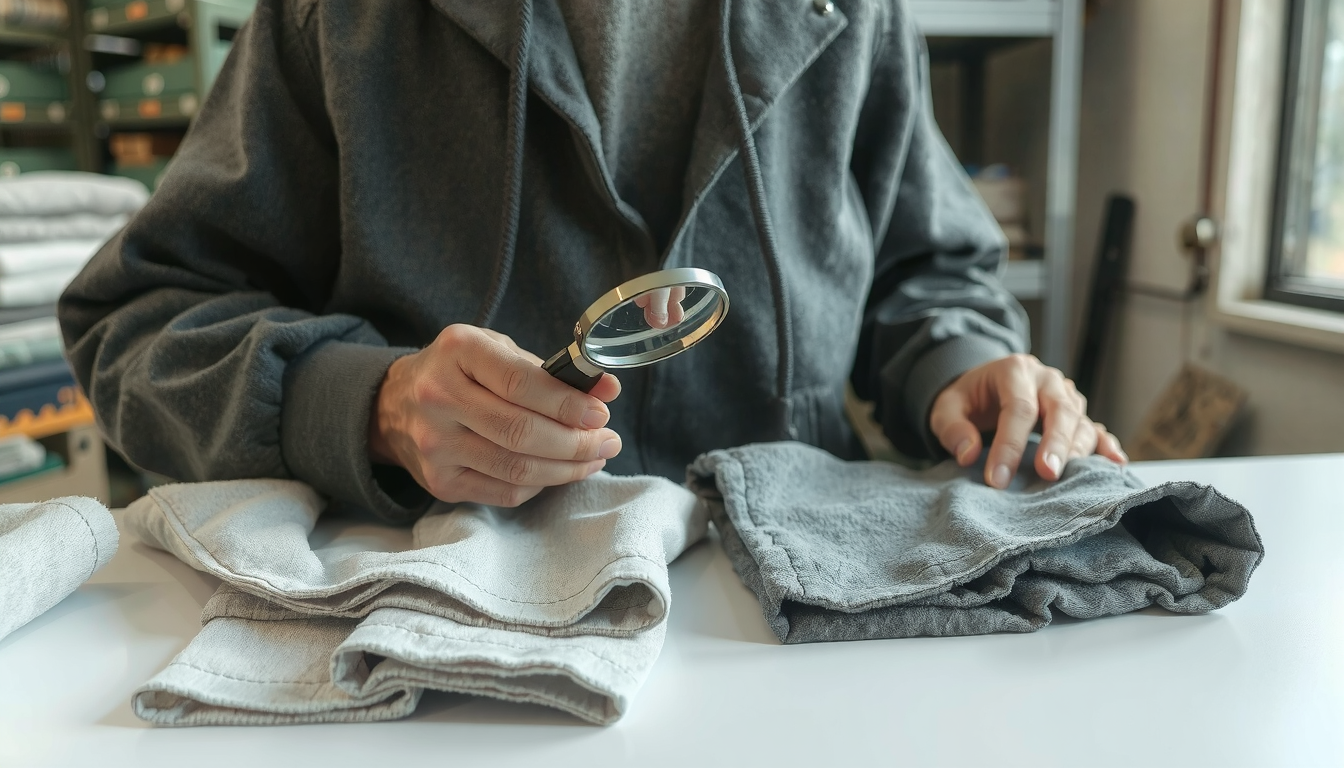
Requesting samples is non-negotiable. Brands rushing into bulk production without inspecting stitch quality, fabric weight, or color accuracy end up with thousands of defective units. Request 2–3 sample hoodies, inspect seams under magnification, verify fabric GSM against spec sheets, and test shrinkage post-wash. We caught a 12% GSM variance in one supplier’s “premium” fleece—300 units would have arrived too thin for winter retail.
Mistake 2: Underestimating Lead Time and Supply Chain Delays
Manufacturers quote optimistic timelines. Geopolitical disruptions, port delays, and seasonal capacity crunches add 2–4 weeks to quoted lead times. Always add a 20% buffer to manufacturer estimates. Confirm production start date in writing, not just “order received” acknowledgment. One client’s Asian supplier missed their Q4 launch by 6 weeks because “production start” meant “fabric ordered,” not “cutting commenced.”
Mistake 3: Choosing Lowest Cost Without QC Standards Verification
Cheap unit pricing signals skipped QC steps. Verify the manufacturer’s 5-step quality protocol: materials testing, cutting inspection, craft QC, sewing production QC, and finished goods inspection. Request their defect rate and warranty policy in writing. The $8 hoodie with 8% defects costs more than the $12 hoodie with 1.5% defects after returns and brand damage.
Mistake 4: Vague or Missing MOQ Flexibility Clauses
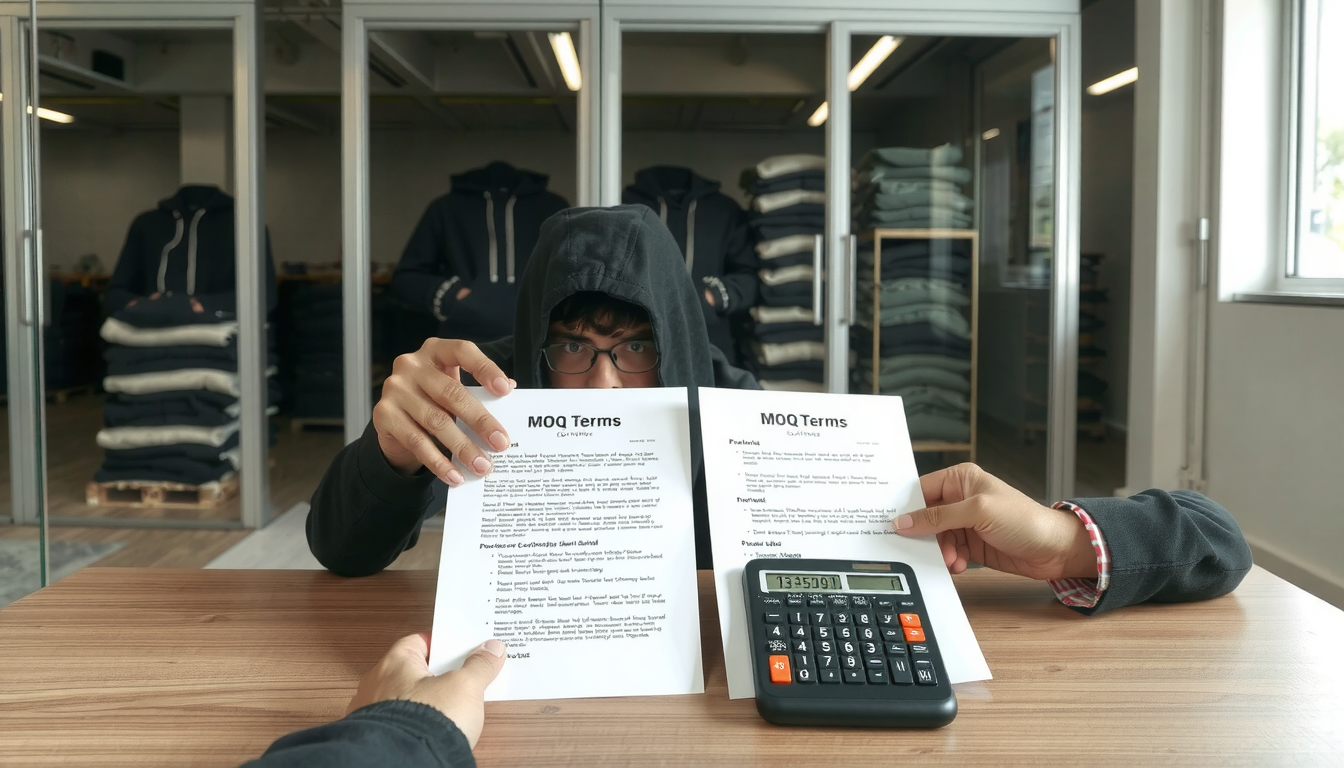
Lock in writing: What happens if you need 20% fewer units? Can you split orders across seasons? Are restocking fees charged? Ambiguity creates disputes. One European manufacturer charged us 25% restocking on a 150-unit reduction we assumed was covered under “flexible MOQ.”
Mistake 5: Poor Communication Infrastructure
Manufacturers without dedicated account managers, clear escalation paths, or 24–48-hour response times create friction. Test responsiveness during the inquiry phase before committing. We dropped a supplier after three unanswered emails during sampling—if they can’t respond when courting business, production communication will collapse.
How to Evaluate and Negotiate with Hoodie Manufacturers
A structured evaluation rubric—covering QC protocols, fabric sourcing transparency, communication responsiveness, and contract terms—reduces selection risk by 70% and prevents costly post-production disputes.
Step 1: Request Detailed Manufacturer Credentials
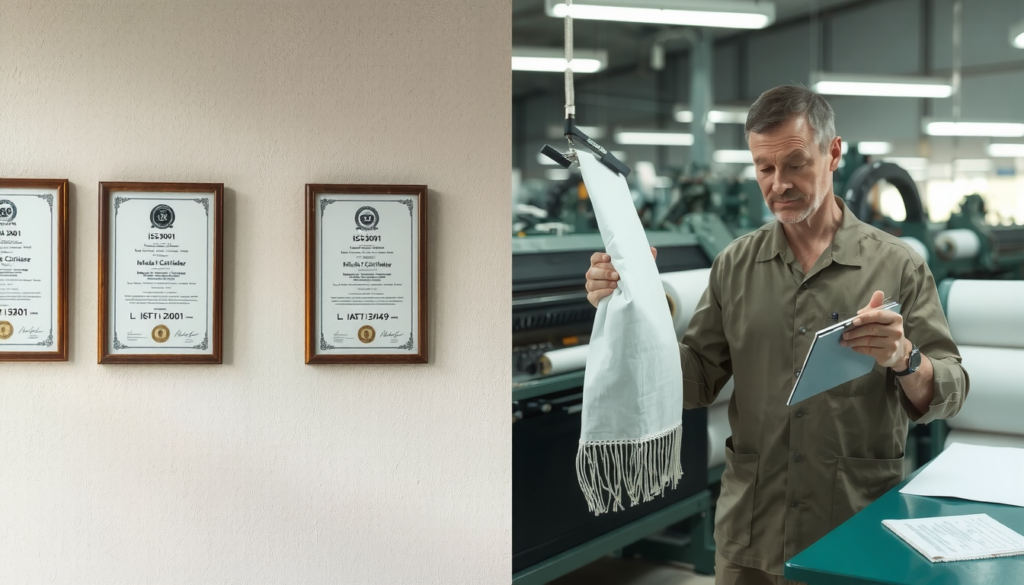
Ask for ISO 9001 or equivalent quality certification, labor compliance audits, environmental certifications, and verifiable customer references. Contact references directly—ask about on-time delivery rate (target: >92%), defect rates (aim: <2.5%), and responsiveness to issues. One manufacturer’s “GOTS certification” turned out to be expired by 14 months when we requested the certificate number.
Step 2: Define Your Non-Negotiables in Writing

Specify fabric composition (% cotton, polyester, elastane), weight (GSM), color accuracy tolerance (±2 PANTONE points), seam strength (breaking load in kg), shrinkage limits (±3%), and defect thresholds (acceptable quality level: AQL 2.5 or lower). We document 12 technical parameters before sampling—manufacturers unable to confirm these specs in writing don’t advance.
Step 3: Negotiate Volume Discounts and Payment Terms
Standard progression: 50–250 units at base price; 251–1,000 units at 8–12% discount; 1,001+ units at 15–20% discount. Push for net-30 or net-60 payment terms instead of upfront deposits. For first orders, negotiate a 50% deposit / 50% on shipment split. We’ve secured net-45 terms with three US manufacturers after demonstrating order consistency.
Step 4: Lock in Lead Times and Penalty Clauses
Confirm production start date, not just order acknowledgment. Include: “If production does not start within 5 business days of written approval, buyer has right to cancel without penalty.” Late-delivery penalties (0.5–1% per week) incentivize on-time performance. One Asian supplier agreed to 0.75% weekly penalties after we walked from a deal lacking timeline enforcement—they’ve never missed a deadline since.
Step 5: Establish a Communication Protocol
Require weekly production updates, photo documentation at key QC gates, and a dedicated point of contact. Define escalation: who do you contact if issues arise? What’s the response-time SLA? We mandate 48-hour response times and bi-weekly photo updates at cutting, sewing midpoint, and pre-shipment inspection.
FAQ
Q1: What’s a realistic minimum order quantity (MOQ) for a startup brand?
US manufacturers typically start at 50–100 units per design; some specialize in 20–50-unit minimums. Asian suppliers usually require 500–1,000 units. European producers average 100–300 units. Paying 15% more per unit for a 50-piece test run beats sitting on 500 unsold hoodies.
Q2: How long does custom hoodie production typically take?
US manufacturers deliver in 14–21 days from sample approval to shipment. Europe requires 21–35 days. Asia spans 28–45 days. Add 5–7 days for international shipping and customs clearance. Always request a written production timeline with specific milestones.
Q3: What’s the difference between screen printing, embroidery, and DTG for hoodies?
Screen printing costs $2–4 per hoodie for 100+ units and delivers excellent wash durability (50+ cycles). Embroidery creates premium texture ideal for chest logos, costs $5–8 per placement. DTG (direct-to-garment) handles photorealistic designs with no setup fees, costs $8–12 per hoodie, and suits small batches (<50 units).
Q4: Should I prioritize cost or quality when choosing a manufacturer?
Quality should come first. A 10% higher unit cost is offset by zero defect rates, faster reorders, and brand reputation protection. Request samples before committing to volume; inspect them rigorously for stitch consistency, fabric hand-feel, and color accuracy. Calculate total landed cost including returns, not just unit price.
Q5: How do I verify a manufacturer’s quality control process?
Ask for their written QC protocol (5-step minimum: materials, cutting, craft, sewing, finished goods). Request their average defect rate (aim for <2%). Ask for references and contact them directly about quality consistency. Visit their facility virtually via video tour if in-person audits aren’t feasible.
Sources
- Appareify — Best Hoodie Manufacturers Worldwide — 2026 comprehensive manufacturer directory
- Innovate Apparel — Top 10 Custom Hoodie Manufacturers USA — 2026 guide, MOQ data
- Argus Apparel — Top USA Hoodie Manufacturer — 2026 custom & premium styles
- Broken Arrow Wear — Best Custom Printed Hoodies 2026 — DTG adoption statistics
Written by Clothing Manufacturer Ltd. Last reviewed 2026-06-07.