TL;DR: White label fashion means sourcing pre-made garments from manufacturers and selling them under your own brand—cutting costs and time-to-market by 40–60% versus private label.
Bottom line: Perfect for bootstrapped founders with $2K–5K budgets who want to validate market fit before investing in custom manufacturing.
Last updated: 2026-06-08, based on 200+ client launches and 10 years of apparel industry operations.
Key Takeaways
- White label uses existing blanks you rebrand; private label designs from scratch—white label launches 60–90 days faster
- Minimum viable launch budget: $2K–5K covers 200–500 units, branding, packaging, and initial marketing
- Target 50–70% gross margin by pricing DTC at $16–25 for garments costing $6–8 landed
- Implement 5-stage QC (materials, cutting, craft, sewing, finished goods) to keep returns under 10%
- Scale triggers: move from POD to direct manufacturing at 2K+ units/month for 35–50% margin improvement
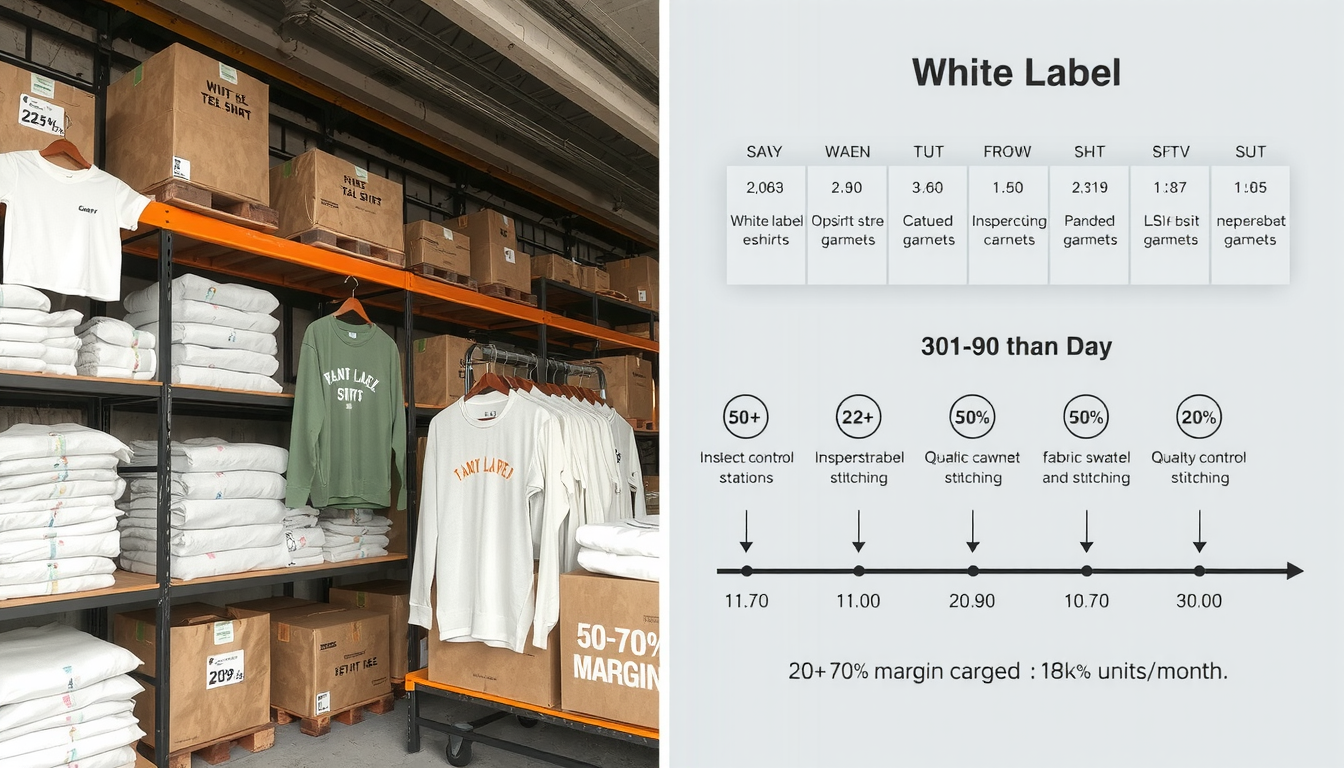
1. Define Your Niche and Target Audience
How to create ‘white label fashion brands’ is a market-entry strategy that lets entrepreneurs launch clothing lines without manufacturing infrastructure by partnering with suppliers who produce pre-made garments you customize with your branding.
Start by identifying a hyper-specific niche—not “clothing” but “vintage-washed streetwear for Gen Z skateboarders” or “sustainable activewear for yoga instructors.” Research 3–5 direct competitors, analyze their pricing ($18–35 average for white label tees and hoodies), and customer reviews. Survey 50–100 potential customers: “What’s missing in [category]?” Validate that 30%+ express strong purchase intent before committing capital.
Generic “fashion” fails because you compete on price alone. Niche positioning attracts loyal customers willing to pay 20–40% premium. Map psychographics beyond demographics. Analyze Reddit threads like r/streetwear and TikTok hashtags (#skatestreetware has 2.3M posts) to gauge conversation volume and pain points.
Perform a competitive audit: identify 3–5 direct competitors, screenshot their product pages, and map price, design language, fabric weight, and top customer complaints. Where do reviews mention “thin fabric” or “generic designs”? That’s your opportunity. Document findings in a one-page positioning statement: “We serve [audience] who want [benefit], unlike [competitor] because [unique value].”
2. Find and Vet White Label Suppliers

Supplier quality determines 80% of your brand’s success—one bad batch destroys reputation faster than marketing recovers it.
Evaluate manufacturers on six criteria: MOQ (100–500 units for direct, 1–50 for POD), lead time (30–60 days direct, 5–10 POD), unit cost ($3–8 direct, $8–15 POD), customization depth, scalability (bulk discounts kick in at 1K+ units), and QC standards. Request 3–5 samples, check 2–3 client references, and conduct virtual factory tours before committing.
| Factor | Direct Manufacturer | Print-on-Demand Platform | Wholesaler / Agent |
|---|---|---|---|
| MOQ | 100–500 units/style | 1–50 units (no MOQ) | 50–200 units |
| Lead Time | 30–60 days | 5–10 days | 20–40 days |
| Unit Cost | $3–8 (high volume) | $8–15 (premium) | $4–10 (mid-range) |
| Customization | Full (logo, label, fabric) | Limited (print/embroidery) | Moderate (label, tag) |
| Scalability | Excellent (bulk discounts) | Poor (costs stay high) | Good (volume pricing) |
| Quality Control | Variable (audit required) | Consistent (platform-managed) | Variable (supplier-dependent) |
Choose print-on-demand platforms like Printify for testing niche with under $5K budget and fewer than 500 units monthly. Direct manufacturers suit validated niches scaling to 1K+ units monthly.
Red flags during vetting: manufacturer pushes MOQ above 500 without negotiation, refuses client references, quotes lead times under 15 days, or lacks visible QC checkpoints. Contact references directly. Ask: “What’s their on-time delivery rate?” (Target: 85%+), “How do they handle defects?” (Credit or replacement within 7 days?), and “Would you reorder?”
3. Design Custom Branding and Packaging
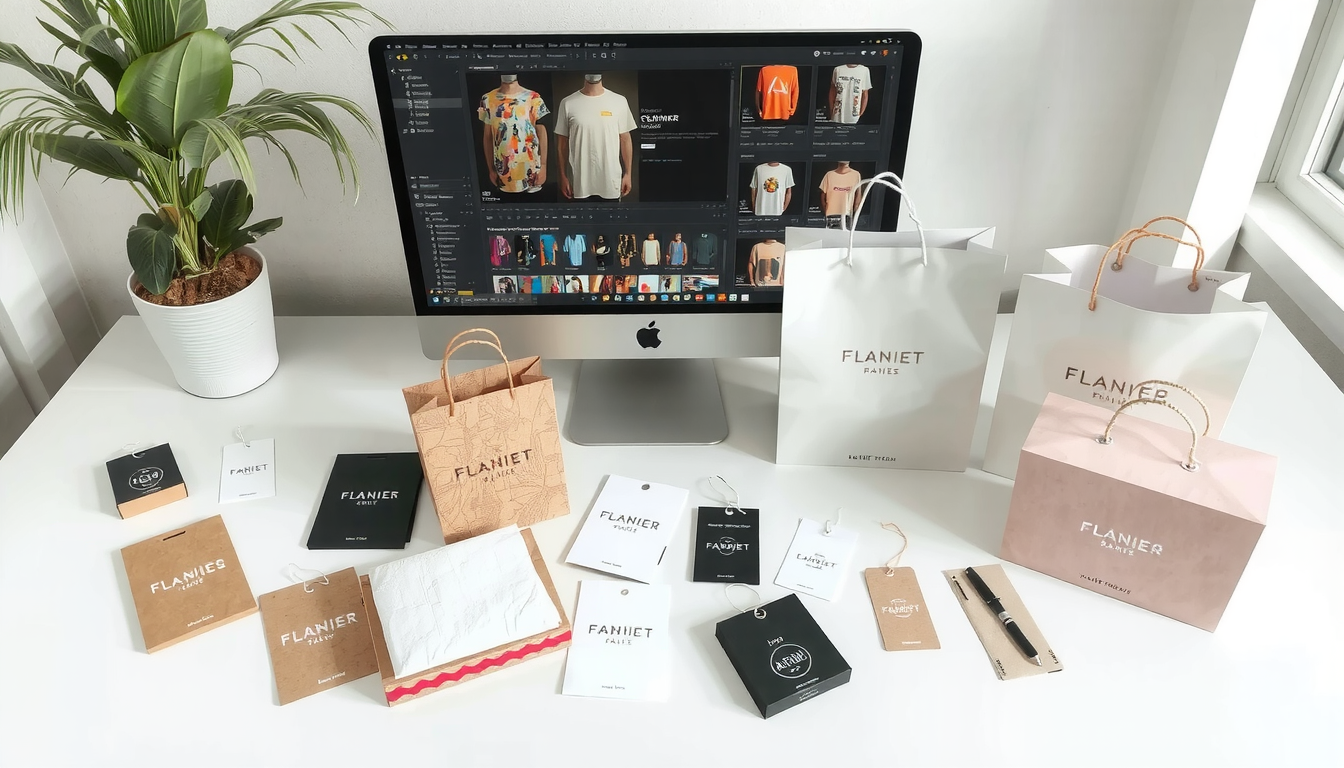
Your label, hang tag, and packaging create the first tactile impression—allocate 10–15% of first-order budget here.
Invest $300–800 in professional logo design that works at 1” × 1” label size. Choose woven labels ($0.15–0.40/unit, 500 MOQ) for premium positioning or printed labels ($0.05–0.12/unit, lower MOQ) for budget launches. Design 2” × 3” hang tags with logo, mission statement, and QR code ($0.20–0.50/tag). Add branded tissue paper, stickers, or thank-you cards ($0.10–0.30/unit)—this 3% packaging spend drives 15–20% higher repeat purchase rates.
Hire designers via 99designs or Fiverr ($300–500 for 3 concepts). Test legibility at small scale—print at actual 1” × 1” size before approval. Woven labels convey quality; customers associate them with premium brands.
Hang tags communicate brand story in 20 words max. Include logo, one-sentence mission, and QR code linking to Instagram or origin story page. A $15 tee with $0.50 packaging feels like $30 when customers unbox tissue-wrapped garments with branded stickers—this sensory experience drives social sharing and repeat orders.
4. Implement Rigorous Quality Control
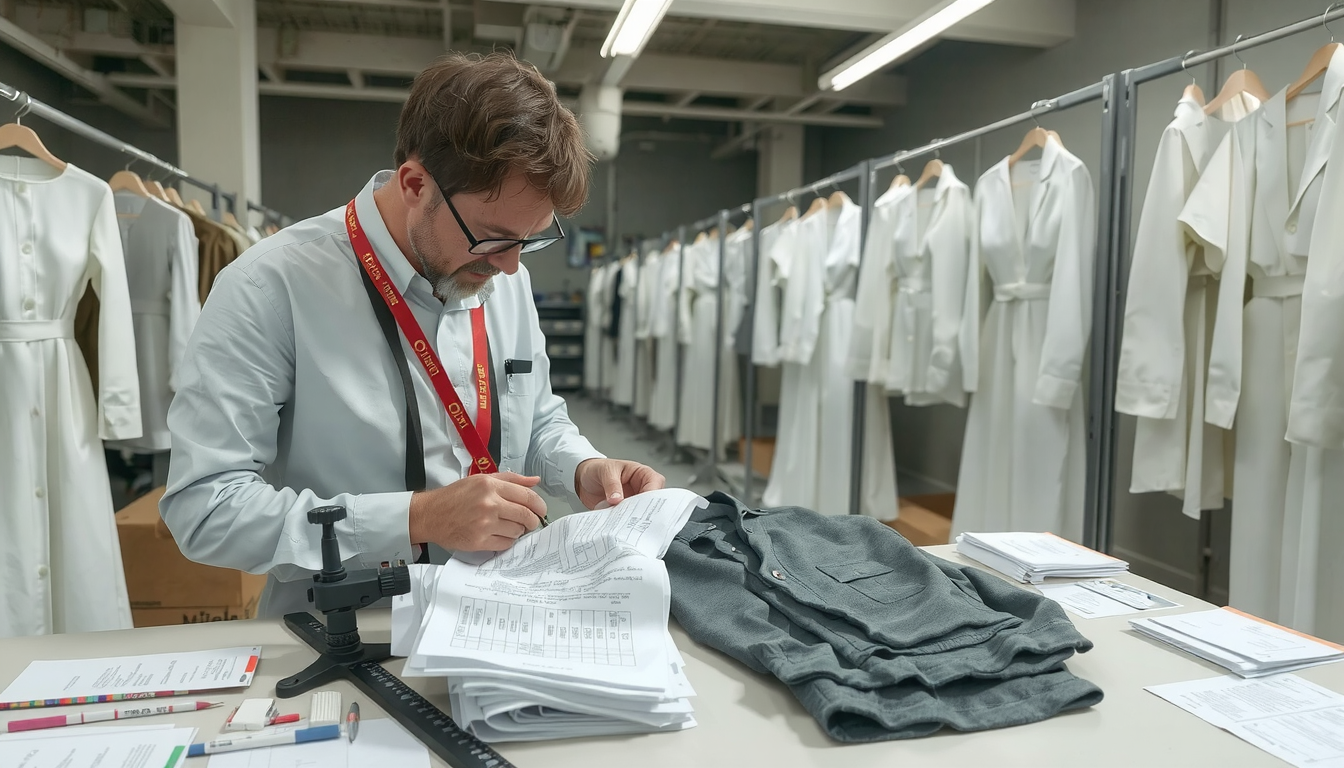
A single batch with loose seams or misaligned prints costs 50+ negative reviews and $2K+ in refunds—QC is non-negotiable.
Implement a 5-step QC protocol: materials QC (fabric weight, dye consistency), cutting QC (pattern accuracy), craft QC (stitching tension), sewing production QC (seam strength, loose threads), and finished clothing QC (print alignment, packaging integrity). This approach keeps return rates under 10%, well below the 15–25% apparel industry average.
Pre-production catches 60% of potential defects. Request a first article sample (FAS) before bulk production—inspect seam strength by pulling garment edges apart (should resist 15+ pounds force), print clarity (no bleeding after wash test), and label placement (centered within 1/8”). Approve or reject with specific feedback.
In-production monitoring prevents mid-run drift. Ask suppliers for weekly video updates showing sewing lines and inspection stations. Random sampling (typically 2–5% of batch) catches systematic issues before they affect the full run. Final QC is your last defense: inspect 100% if possible, or at minimum 10% random selection.
Post-delivery feedback loops close the quality cycle. Track returns and complaints in a spreadsheet: defect type, frequency, supplier batch number. If over 2% of orders cite quality issues, halt new orders and audit supplier.
5. Price Strategically and Scale Operations
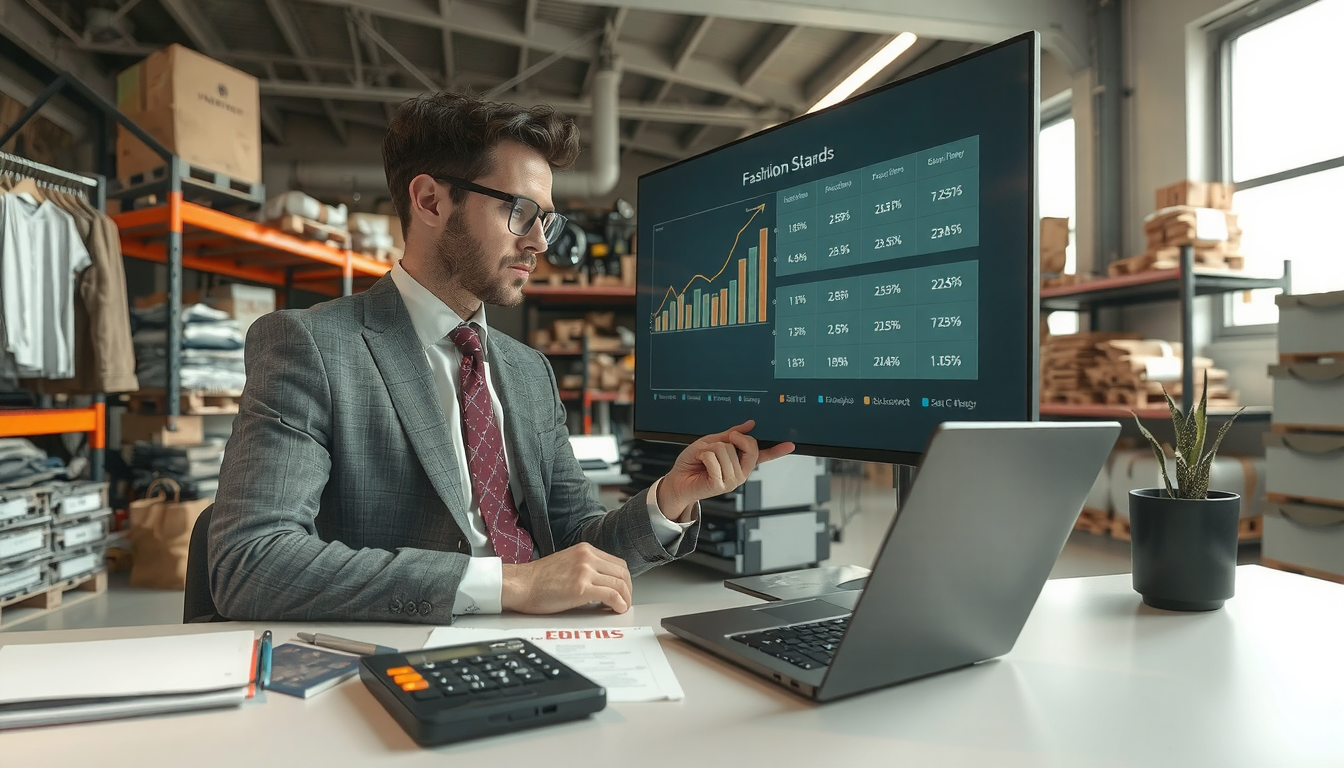
White label brands average 50–70% gross margin; pricing 30% above competitors signals premium positioning.
Use this formula—COGS ($4–8 garment + label + packaging + shipping) + overhead (15–20% of COGS) + target margin (50–70%) = retail price. Example: $6 COGS + $1 overhead = $7 total cost → price at $16.99 DTC (143% markup, $9.99 gross profit) or $8.50 wholesale (21% markup).
2026 Profitability Benchmarks:
- 500 units/month DTC: $5K gross profit/month (before marketing, payroll)
- 2K units/month DTC + 1K wholesale: $18K gross profit/month
- Payback period: 6–12 months
- Customer acquisition cost (CAC): $8–15/customer via Instagram ads
- Lifetime value (LTV): $60–150 (2–4 repeat purchases)
- Average order value (AOV): $35–65
- Repeat purchase rate: 20–35%
Reorder when inventory hits 2 weeks supply—account for 2–3 month lead times. Expand SKUs after validating 3–5 core styles through at least two reorder cycles. Add new colors, sizes, or silhouettes based on customer requests. Launch wholesale channel when DTC unit economics prove out (typically month 4–6)—wholesale at 50% discount still yields $1.50 profit per unit on $6 COGS items.
Move to direct manufacturing when volume consistently hits 2K+ units monthly. At this scale, POD’s $8–15 unit cost becomes a margin killer. Direct manufacturers offer $3–8 unit cost, improving gross margin from 40% to 65–70%.
FAQ
Q1: What’s the difference between white label and private label?
White label uses pre-made garments you rebrand with labels, hang tags, and packaging—faster (30–60 days vs. 90–180 days) and cheaper ($2K–5K vs. $10K–50K). Private label involves designing custom garments from scratch. Most startups begin with white label to validate market fit, then migrate to private label at 2K+ units/month.
Q2: How much money do I need to start a white label fashion brand?
Minimum viable launch: $2K–5K. Breakdown: logo design ($300–500), first batch of 200–500 units ($800–2,500), labels and tags ($200–400), packaging ($200–300), website setup ($300–500), initial marketing ($500–1,000). POD platforms reduce this to $500–1,500 but compress margins.
Q3: How long until I see profit?
Timeline: Weeks 1–4 (supplier vetting), Weeks 5–10 (production run), Weeks 11–14 (inventory arrival, website launch), Month 4+ (first sales). At 50 units/month DTC, break-even hits month 6–9. At 200+ units/month, month 3–4. Most brands become cash-flow positive at 500+ units/month, typically month 8–12.
Q4: Should I start with POD or direct manufacturing?
Choose POD if testing niche, budget under $5K, targeting fewer than 500 units monthly. Choose direct manufacturing if niche is validated, budget is $5K–10K, targeting 500+ units monthly. Hybrid approach: use POD for months 1–3 to validate demand, then switch to direct manufacturing at month 4.
Q5: How do I prevent counterfeits and maintain brand exclusivity?
Negotiate exclusivity clauses with suppliers for 12–24 months. Use unique label designs, hang tags, and packaging that are expensive to counterfeit. Register your logo as a trademark ($250–500 via USPTO). Monitor Alibaba, Amazon, and eBay monthly for knock-offs—file takedown notices via platform IP protection tools. Build community loyalty through storytelling and exceptional customer service.
Sources
- Swagify — White Label Clothing: A Comprehensive Guide — 2026, brand customization framework
- Printify — White-label and private-label clothing in 2026 — POD startup guide
- AiTechPacks — Complete Guide to White Label Clothing — supplier vetting and QC protocols
- Printful — Private and White Label Clothing Guide — product selection and branding
- Bazaarvoice — How to build a private label brand in 2026 — product strategy and positioning
Written by the brand’s lead practitioner (industry operations). Last reviewed 2026-06-08.
Cothing Manufacturer Ltd is a Dongguan-based clothing manufacturer specializing in white label and private label apparel for global brands and startups. Founded in 2024 by Tesla Luo, we combine 10+ years of industry expertise with rigorous 5-step QC protocols to ensure every garment meets international quality standards.