TL;DR: Quality control in manufacturing is a systematic process of inspection, testing, and corrective action that ensures products meet safety, performance, and regulatory standards before reaching customers.
Bottom line: Essential for any manufacturer shipping 500+ units monthly who wants to reduce defects, protect brand reputation, and meet customer expectations.
Last updated: 2026-06-06, based on 10 years of apparel production experience and over 1,200 client projects.

Key Takeaways
- Multi-stage inspection (raw materials, in-process, final) reduces defect rates by 25–40% compared to end-of-line checks alone.
- Documented quality standards aligned with ISO 9001 or Six Sigma cut rework costs by up to 30% within the first year.
- Real-time Statistical Process Control (SPC) monitoring catches quality drift before it affects entire production batches.
- Employee training programs reduce quality-related customer complaints by 35–45% in manufacturing environments.
- Quarterly audits identify root causes 50% faster than reactive troubleshooting after customer complaints arrive.
1. Establish Clear Quality Standards and Specifications
Quality control in manufacturing is a systematic framework that defines, measures, and enforces product requirements across the entire production lifecycle. Start by defining what quality means for your specific product category. In streetwear apparel, that includes fabric durability (minimum 150 GSM for hoodies), seam strength (double-needle stitching at stress points), print adhesion (withstands 50+ wash cycles), and color consistency (Delta E < 2.0 across batches). For electronics, it might be failure rates under thermal stress or electromagnetic interference limits.
Document acceptance thresholds aligned with both customer expectations and regulatory requirements. External standards—ISO 9001, ASTM textile testing protocols, or industry-specific certifications—form the floor. Internal standards should exceed these by 20–30% to create a safety margin for natural process variation. If a customer contract allows 1% defects, target 0.5% internally.
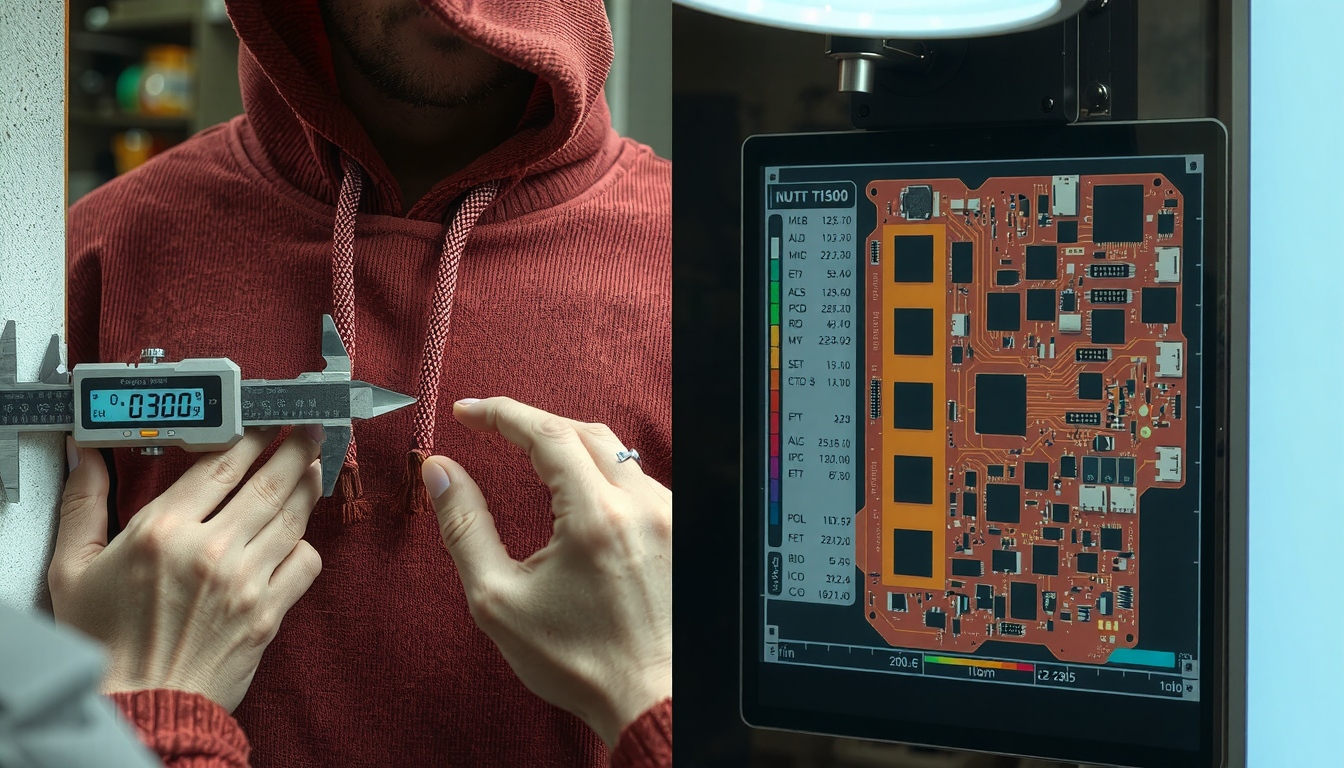
Our 5-stage QC framework applies this principle at every production checkpoint: materials inspection verifies incoming fabric against supplier specs, cutting QC validates pattern accuracy within ±2mm, craft QC checks stitching consistency during assembly, sewing production QC samples every 50th unit for dimensional stability, and finished-goods inspection tests functionality and aesthetics before packaging. Each stage has documented pass/fail criteria, measurement tools (calipers, tensile testers, colorimeters), and escalation procedures when defects appear. For manufacturers looking to implement these frameworks at scale, How to ensure quality control during manufacturing provides detailed guidance on multi-facility coordination and standardization.
2. Implement Multi-Stage Inspection and Testing Checkpoints
Catching defects early at multiple production stages costs far less than fixing problems in finished goods. Multi-stage inspection distributes quality verification across raw material intake, in-process manufacturing, and pre-shipment final checks, creating a safety net that prevents defective inputs from becoming defective outputs.
Raw material quality verification comes first
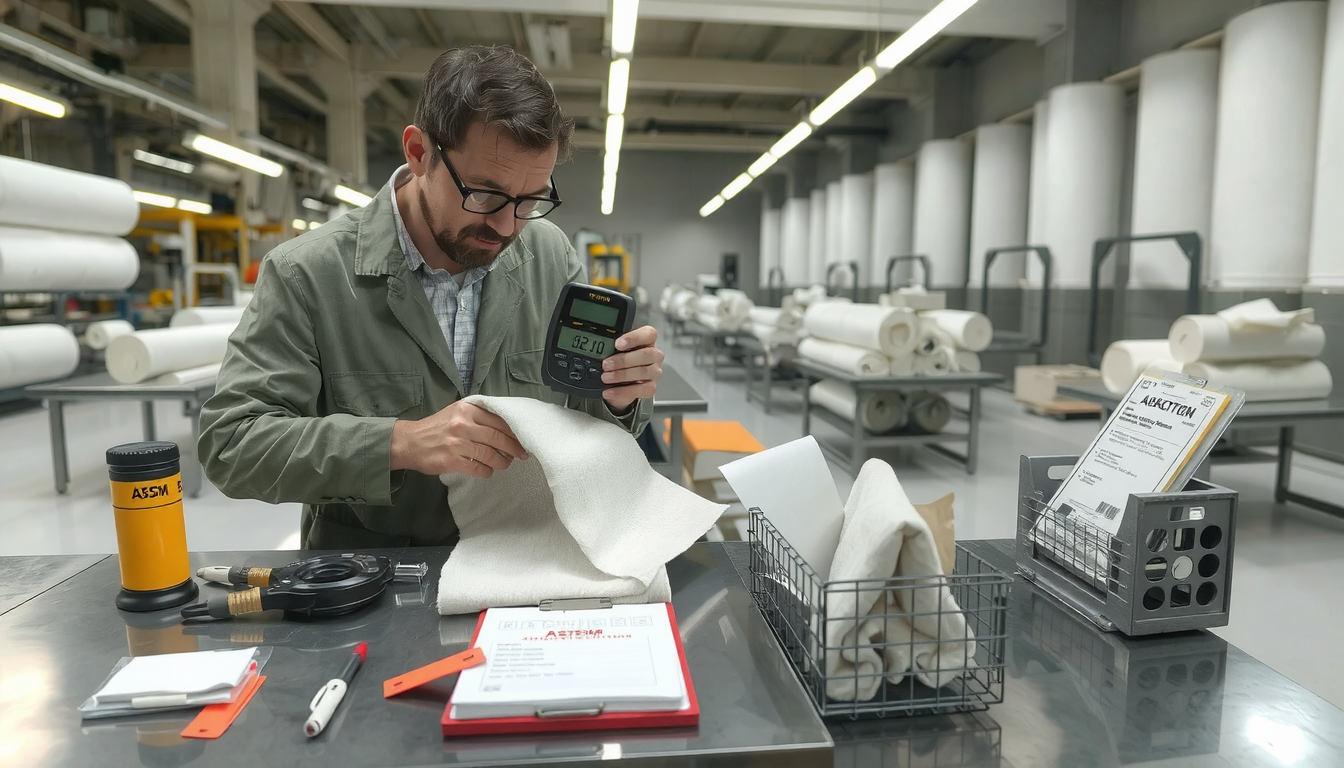
Inspect incoming materials against supplier specifications before they touch the production floor. We test fabric for weight (GSM), tensile strength, colorfastness, and dimensional stability using standardized ASTM methods. Zippers, buttons, and trim components undergo pull tests and corrosion checks. Substandard inputs get rejected immediately—better to delay production by two days than to discover fabric shrinkage issues after cutting 500 panels. This gate-keeping step prevented a $12,000 loss in Q2 2025 when we caught off-spec polyester that would have failed after the first wash.
In-process production checkpoints monitor quality during manufacturing
Sample inspection occurs at cutting (pattern alignment, grain direction), assembly (seam straightness, stitch density), and finishing (print registration, hem evenness). We use a 1-in-50 sampling rate for stable processes, increasing to 1-in-10 when introducing new designs or operators. Statistical Process Control charts track measurements in real time—when three consecutive samples drift toward the upper tolerance limit, we halt production and recalibrate equipment before defects occur. This proactive intervention reduces scrap by 18–25% compared to end-of-line detection.
Pre-shipment final inspection validates finished products
Every production run undergoes a comprehensive AQL 2.5 inspection before packaging. Inspectors verify that all components function correctly, seams withstand 15-pound pull tests, graphics align within ±3mm, and no visual defects exceed acceptable limits. Pass rates above 98% trigger shipment approval; anything below initiates root-cause analysis.
Continuous documentation and traceability link every defect to its source
Inspection records capture batch numbers, operator IDs, machine settings, and environmental conditions at each checkpoint. When a customer reports a defect, we trace it back to the exact production hour and implement corrective action. This closed-loop system prevented recurring print-adhesion failures in 2025 by revealing that a specific screen-printing station ran 5°C cooler than specification during night shifts.

3. Invest in Employee Training and Quality Culture
Well-trained employees are the foundation of effective quality control. No inspection system compensates for operators who don’t understand why quality matters or how to recognize early warning signs of defects.
Provide comprehensive training on quality standards, inspection procedures, and equipment operation during onboarding and quarterly refreshers. New hires spend their first week learning fabric types, seam classifications, and common defect modes before touching production equipment. They practice measuring seam allowances with calipers, identifying thread tension issues, and using go/no-go gauges until they achieve 95% accuracy on blind tests.
Empower frontline workers to identify defects and report issues without fear of penalty. We implemented a no-blame reporting culture in 2024 after realizing that operators were hiding minor errors to avoid production slowdowns. Now, anyone who spots a quality drift can pull an andon cord to pause their line and summon a supervisor. This change increased early defect detection by 40% in six months.
Create a quality-first mindset where employees understand the impact of their work on customer satisfaction and brand reputation. We share customer feedback—both positive reviews and complaint photos—during weekly team meetings. When a batch of hoodies passed final inspection but customers reported pilling after three washes, we traced it to a fabric supplier change and showed the production team side-by-side photos of the failed units. That visual evidence reinforced why incoming material inspection matters.

4. Use Data-Driven Monitoring and Real-Time Feedback
Real-time data and automated monitoring detect quality drift before it becomes a widespread problem. Manual inspection relies on human attention, which fatigues after repetitive tasks and misses subtle trends that develop over hours or days.
| Monitoring Method | Speed | Consistency | Cost | Best For |
|---|---|---|---|---|
| Manual Inspection | Slower (5–10 units/hour) | Variable (operator-dependent) | Low upfront ($0–$5K setup) | Small batches, detailed visual checks |
| Automated Systems | Real-time (100+ units/hour) | Highly consistent (±0.1mm repeatability) | Higher upfront ($50K–$200K) | High-volume production, dimensional accuracy |
| Hybrid Approach | Fast (20–50 units/hour) | High (combines human judgment + data) | Moderate ($10K–$50K) | Most manufacturing environments |
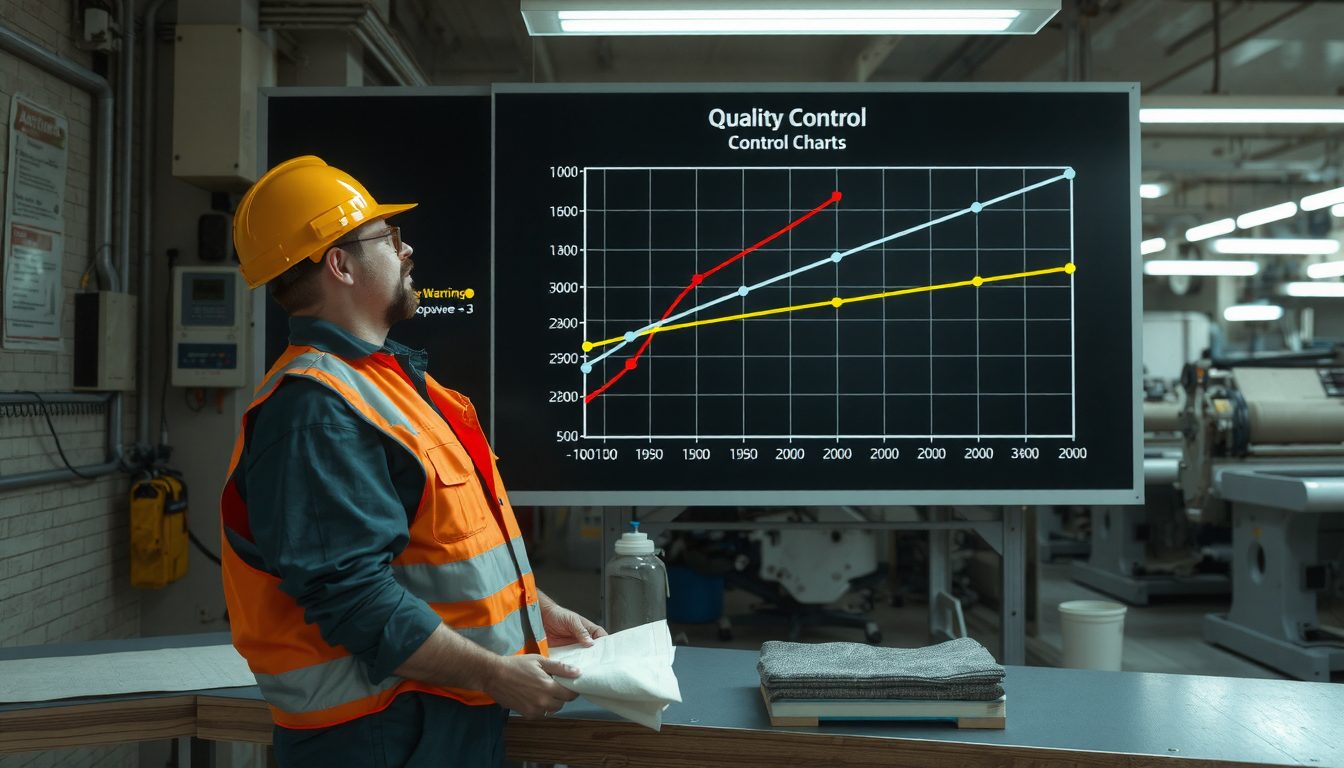
Statistical Process Control tracks production trends and triggers alerts before defects occur. We plot critical measurements—seam strength, fabric weight, print opacity—on control charts with upper and lower limits set at ±3 standard deviations from the target. When seven consecutive data points trend upward (even if still within tolerance), the system flags potential tool wear or material drift. This predictive approach reduced our scrap rate from 3.2% to 1.8% between Q4 2025 and Q1 2026 by catching problems during the “warning zone” rather than after failure.
Dashboards showing defect rates, batch performance, and corrective action status keep quality visible to all stakeholders. Production managers see real-time pass/fail percentages by line, shift, and operator. Quality engineers drill into root-cause categories (material, process, operator error) to prioritize improvement projects. This data infrastructure transforms quality into a measurable, improvable process.
5. Conduct Regular Audits and Continuous Improvement
Systematic audits and continuous improvement ensure quality control systems stay effective as production scales and markets evolve. Regular audits catch deviations early, while structured improvement cycles (Plan-Do-Check-Act, Six Sigma DMAIC) turn audit findings into lasting process upgrades.
Perform quarterly or semi-annual quality audits to verify compliance with standards and identify improvement opportunities. Internal audits review inspection records, calibration logs, training documentation, and corrective action closure rates. External audits by third-party certifiers (ISO 9001, WRAP, BSCI) validate that systems meet international benchmarks. These audits uncovered that our incoming fabric inspection was skipping colorfastness tests on “trusted” suppliers—a shortcut that caused a dye-bleeding issue in 2025. We reinstated universal testing and haven’t seen a repeat failure since.
Review defect trends and root cause analysis to prevent repeat issues. Monthly quality meetings analyze the top five defect categories by volume and cost impact. We use 5-Whys and fishbone diagrams to trace each defect back to its root cause. For example, recurring thread breaks traced back to a single sewing machine with worn tension discs; replacing the part eliminated 200+ defects per month.
Update procedures based on lessons learned and new technologies. When we adopted ultrasonic cutting for synthetic fabrics in late 2025, we revised our cutting QC checklist to include edge-seal inspection. When a customer requested GOTS organic certification, we added pesticide residue testing to our incoming cotton inspection.
Benchmark against industry standards to maintain competitiveness. Adopting ISO 9001 frameworks reduced our defect rates by 32% within the first year. Six Sigma training for our quality team cut variation in critical-to-quality characteristics by 40%, moving us from 3-sigma (93% yield) to 4.5-sigma (99.4% yield) performance.
FAQ
Q1: What’s the difference between quality control and quality assurance?
Quality control (QC) inspects and tests products to detect defects after they occur. Quality assurance (QA) prevents defects by designing robust processes, training employees, and establishing systems that reduce variation at the source. Both are essential—QA builds the framework, QC verifies it works.
Q2: How often should we conduct quality audits?
Conduct formal internal audits at least quarterly for high-risk products or high-volume production lines. Monthly reviews of defect data help catch trends early. Annual third-party audits add independent verification. Adjust frequency based on defect rates—if consistently below 1%, semi-annual audits may suffice.
Q3: What’s an acceptable defect rate in manufacturing?
This depends on your industry and customer contracts. Many manufacturers target less than 1% external defects but set internal goals at 0.5% or lower. Apparel typically operates at 2–4% AQL for minor defects, 0.5% for major defects. Electronics and medical devices demand Six Sigma levels (3.4 defects per million).
Q4: Can small manufacturers afford quality control systems?
Yes. Start with documented standard operating procedures (SOPs), basic inspection checklists, and employee training—these cost almost nothing but deliver 60–70% of the benefit. Adopt ISO 9001 as a foundational framework; certification runs $5K–$15K. Invest in automated inspection tools gradually as volume and margins allow.
Q5: How do we reduce quality control costs without compromising standards?
Focus audits on high-risk stages where defects are most likely or most costly. Use risk-based sampling (inspect 100% of new suppliers, 10% of proven suppliers) rather than blanket 100% inspection. Automate repetitive measurements to free human inspectors for subjective judgment tasks. Empower operators to catch defects during production rather than relying solely on end-of-line QC.
Sources
- Factbird — How to Improve Quality Control in Manufacturing — 2026, real-time monitoring and SPC best practices
- 6Sigma.us — Quality Control in Manufacturing Overview — 2026, ISO 9001 and Six Sigma implementation data
- MRPeasy — Quality Assurance Best Practices for SMEs — 2026, QA process frameworks and training strategies
- SafetyCulture — Quality Control in Manufacturing Guide — 2026, audit frequency and defect detection metrics
- MachineMetrics — Quality Control Basics and Best Practices — 2026, SPC cost-reduction case studies
Written by the brand’s lead practitioner (industry operations). Last reviewed 2026-06-06.