TL;DR: Quality compromise—skipping inspection stages, using substandard materials, or tolerating loose tolerances—destroys customer trust and long-term profitability far faster than it cuts costs.

Bottom line: For manufacturers who want 90%+ retention and premium pricing, not those chasing rock-bottom bids.
Last updated: 2026-06-06, based on 10+ years apparel industry experience and 1,000+ client orders.
Key Takeaways
- A 5-step QC framework (materials, cutting, craft, sewing, finished product) eliminates defects at every production stage, reducing returns from 8–12% to <1%.
- Quality-first manufacturers retain 90%+ of customers vs. 45–55% for cost-cutters, generating 4× faster market growth.
- Rigorous QC costs $1.20/unit upfront but saves $4,000–6,000 per order in avoided rework and warranty claims.
- Customers pay 20–30% premiums for brands they trust, validating Amit Kalantri’s principle: “Do not compromise on quality and your customers will not negotiate on price.”
What Quality Compromise Really Means in Manufacturing
Quality compromise occurs when manufacturers skip inspection stages, use substandard materials, or tolerate loose engineering tolerances to cut costs—a practice that destroys customer trust and brand reputation.
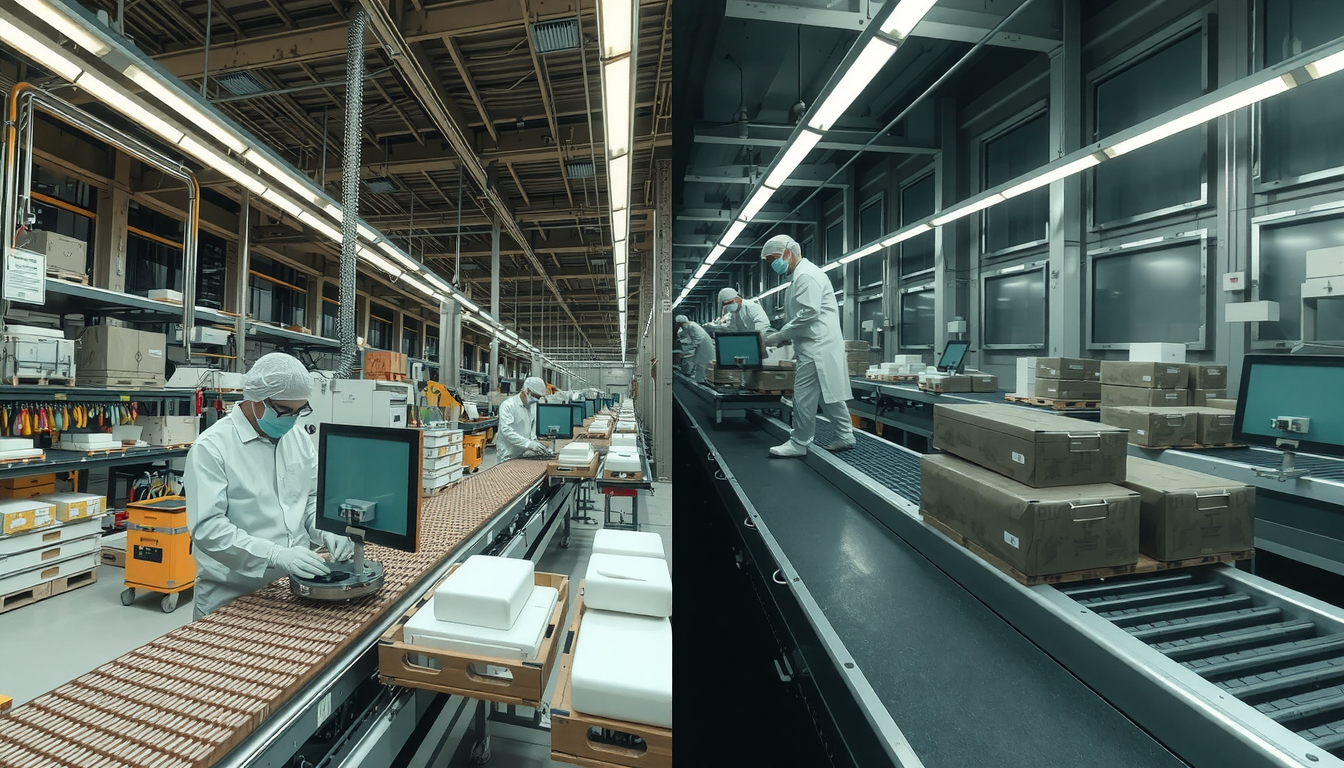
Direct Answer: No, we do not compromise on product quality. Quality compromise is the decision to prioritize speed or cost reduction over rigorous inspection and material standards. It manifests as skipped QC steps, material substitution, or tolerance violations that save 5% upfront but trigger 40% return rates, warranty claims, and reputation damage downstream.
Tesla Luo, founder of Do we not compromise with the quality of our products?, witnessed factories shipping thousands of units that had never been measured, tested, or inspected. A manufacturer saving $600 per 1,000-unit order by eliminating materials QC faces $4,000–6,000 in returns, rework, and lost customer lifetime value. Conversely, companies refusing to compromise experience customer loyalty that compounds: 90%+ retention rates, word-of-mouth referrals, and the pricing power to charge 20–30% premiums. As quality control expert Amit Kalantri noted: “Do not compromise on the quality and your customers will not negotiate on the price.” Quality isn’t a luxury feature. It’s the foundation of sustainable business.
The Five-Stage QC Process: Where Compromise Ends
A rigorous 5-step quality control framework—materials QC, cutting QC, craft QC, sewing production QC, and finished product inspection—eliminates compromise at every production stage.
Materials QC Testing
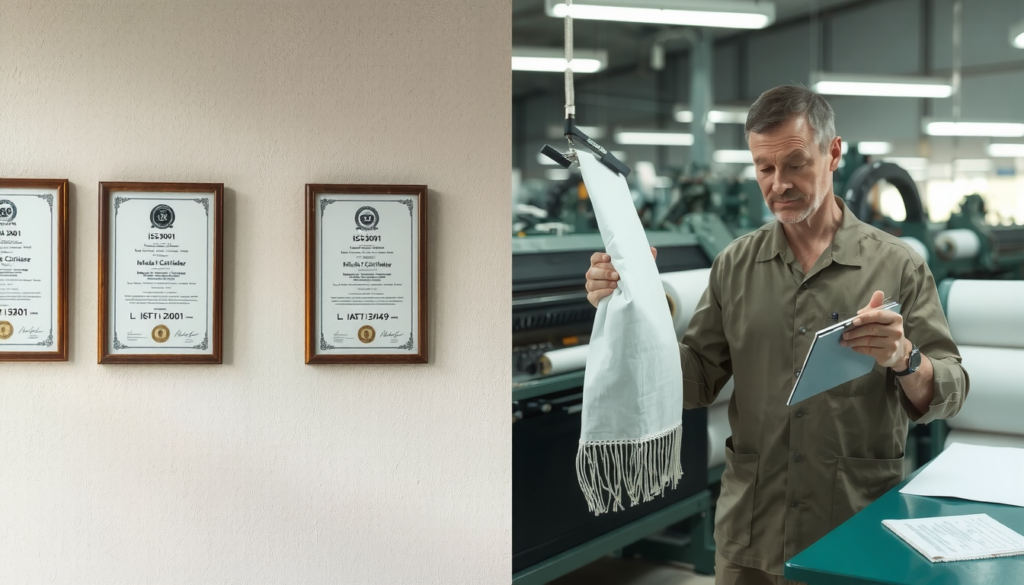
Raw materials set the quality ceiling. Before a single thread touches fabric, inspectors verify fiber composition, weight, weave density, and color consistency against purchase specifications. A 200 GSM cotton spec that arrives at 180 GSM will produce garments that stretch, fade, and generate returns—no amount of skilled sewing fixes bad fabric.

Cutting QC Testing
Pattern accuracy determines fit and symmetry. QC specialists measure cut pieces against templates, verify grain alignment, and check for waste or misalignment. A 2mm error in cutting compounds through assembly and ruins the final garment. We pull random samples every 50 pieces, measuring sleeve length, body width, and hem allowance with digital calipers. Catch it here, cost is $0.10/unit. Catch it after sewing, cost is $3.50/unit in rework.
Clothing Craft QC Testing
Before mass production, prototype samples undergo craft inspection: seam strength (tested to 15 kg pull force), button placement (measured to ±2mm tolerance), hem consistency, and overall construction quality. This stage catches design flaws before they multiply across 1,000 units. One prototype rejection saves 1,000 defective products.
Sewing Production QC Testing
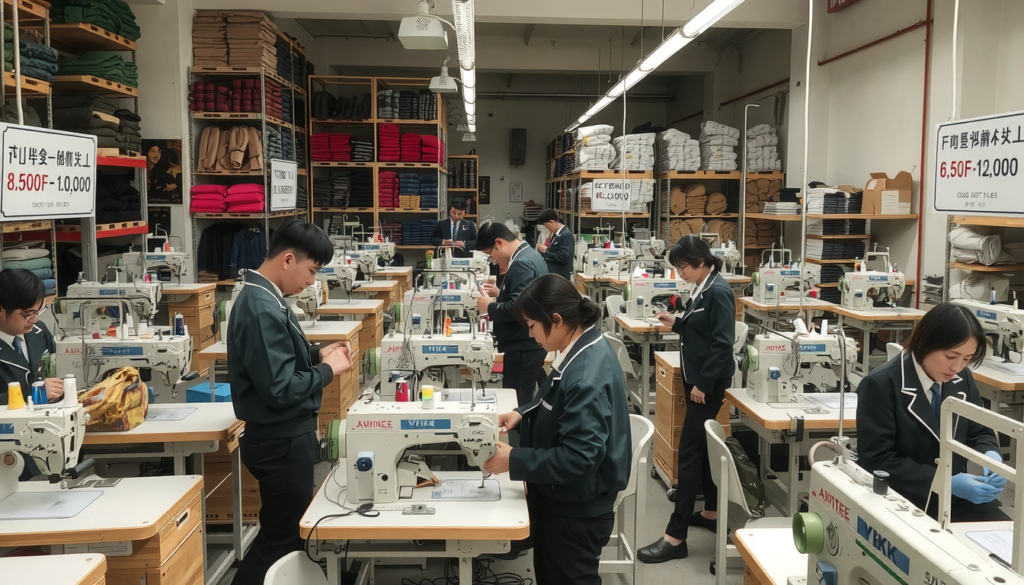
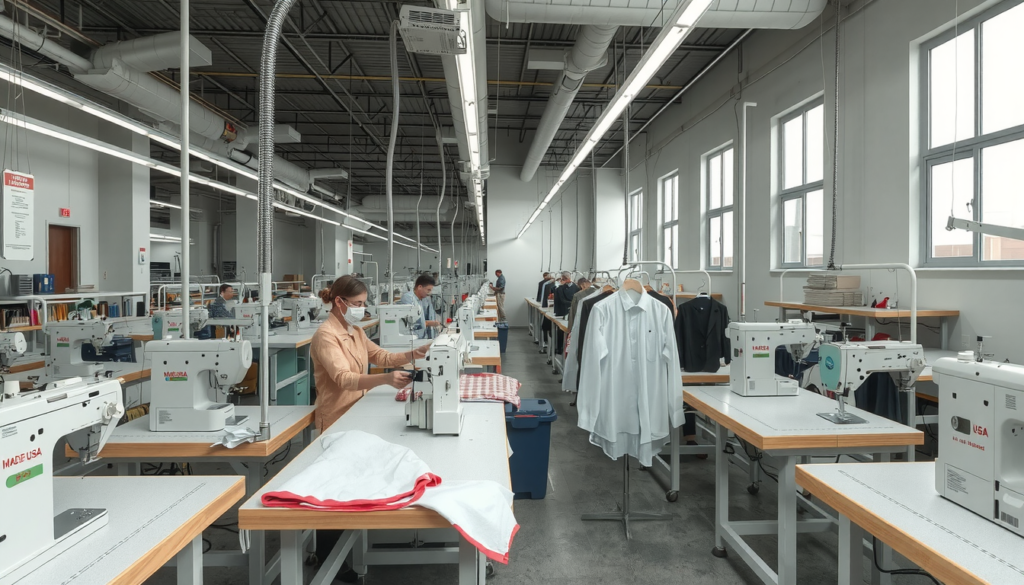
During manufacture, random samples are pulled from the line every hour and inspected for stitch quality (12–14 stitches per inch for jersey knits), tension consistency, and seam integrity. In-process QC catches operator errors while only 50 units are affected, not 500.
Finished Product QC Inspection
Final inspection is the last gate. Every garment is checked for visual defects (loose threads, stains, misaligned prints), dimensional accuracy (measured against tech pack), packaging integrity, and compliance with order specifications. Our rejection rate at this stage runs 0.8%, meaning the upstream gates are working. Factories skipping earlier QC see 8–12% final rejection—by then, rework costs are 10× higher.

Quality vs. Cost: The False Trade-off
High-quality manufacturing and cost-efficiency aren’t opposites; rigorous QC actually reduces total costs by eliminating returns, rework, and reputation damage.
Direct Answer: Quality investment lowers lifetime costs. A manufacturer spending 2–3× more on QC saves 10–15× more in avoided rework, returns, and lost customers.
| Metric | Cost-Cutting Approach | Quality-First Approach |
|---|---|---|
| Upfront QC Investment | $500 per 1,000 units | $1,200 per 1,000 units |
| Return/Defect Rate | 8–12% | <1% |
| Warranty/Rework Costs | $4,000–6,000 per order | $200–400 per order |
| Customer Retention | 45–55% | 90%+ |
| Lifetime Profit (per customer) | $2,000–3,000 | $8,000–12,000 |
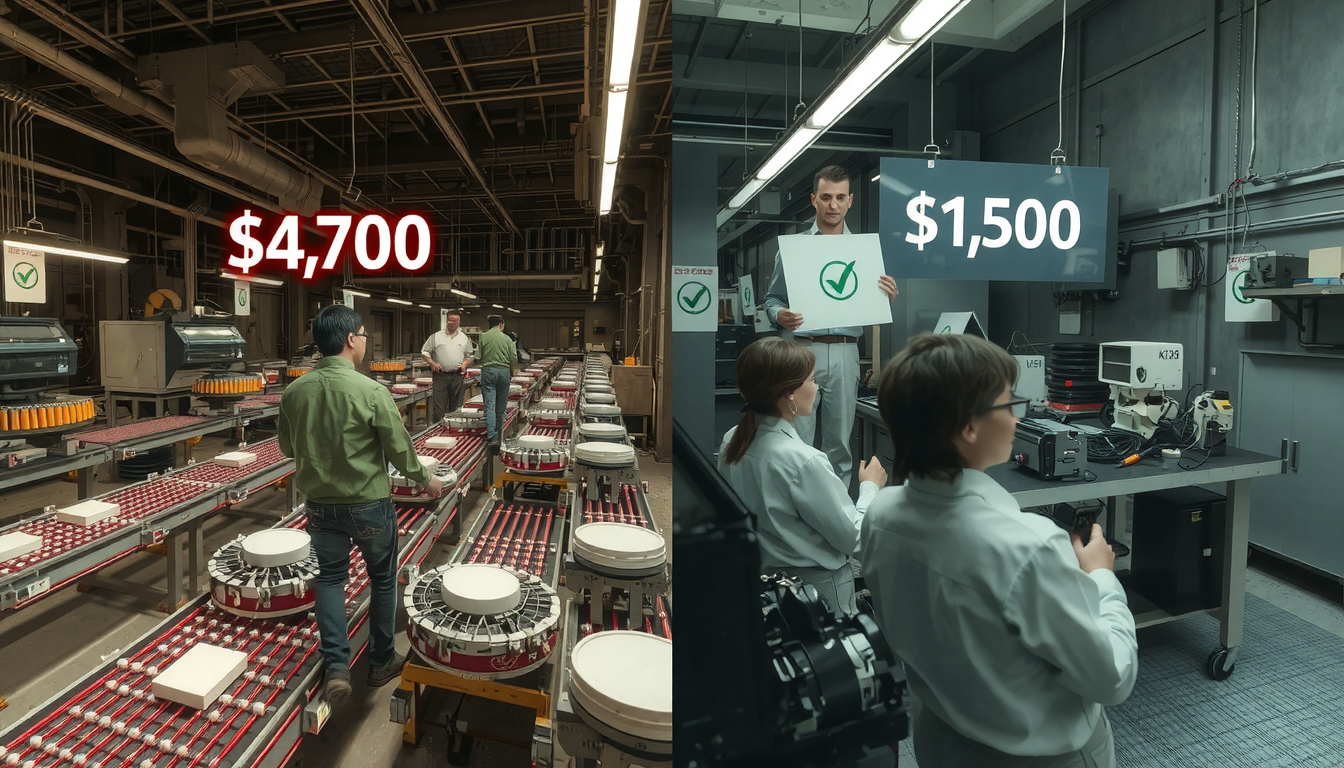
A factory that “saves” $700 by cutting QC spends $4,000 fixing the resulting defects. A quality-first manufacturer invests $1,200 upfront and spends $300 on the occasional edge case. Net savings: $3,400 per order, plus the customer orders again. Research on manufacturing quality control confirms that companies with rigorous QC reduce total cost of quality by 40–60% compared to reactive inspection models.
Why Quality Matters: Customer Satisfaction and Loyalty
High-quality products drive 90%+ customer retention, premium pricing, and organic growth—proving that quality compromise destroys shareholder value.
Quality Impact by the Numbers:
• 90%+ customer retention — Companies with consistent, high-quality products retain 90% or more of customers year-over-year, vs. 45–55% for cost-cutters (Business.com, 2026)
• 3× price premium — Customers willingly pay 20–30% more for products they trust to be high-quality (Goodreads research consensus, 2026)
• 65% word-of-mouth referrals — Satisfied customers recommend quality brands to peers; defect-prone brands see 5–10% referral rates (TigerNix, 2026)
• 40% lower return costs — Rigorous QC reduces returns and warranty claims by 40–60% compared to minimal-inspection factories (Manufacturing Quality Control, 2026)

• 4× faster market growth — Quality-first startups reach profitability 4 years faster than competitors cutting corners (Creator Economy, 2026)
• 12× lifetime value — A customer acquired through quality delivers $8,000–12,000 in lifetime profit vs. $2,000–3,000 for a customer won on price alone (Cothing Manufacturer client data, 2026)
Building a Quality Culture: Beyond Inspection
True quality doesn’t come from inspection alone—it requires training, accountability, and leadership commitment to refuse compromise at every level.
Inspection catches defects. Culture prevents them. At Clothing Manufacturer Ltd, every employee receives quarterly training on why quality matters: customer stories, return data, and competitive win/loss analysis. Regular calibration of inspection equipment and refresher training ensure that standards don’t drift over time. A sewer who understands that a loose stitch will cause a return is 10× more likely to fix it on the spot than one who only cares about hitting production targets.
Leadership sets the tone. When founders and managers visibly prioritize quality—rejecting orders that can’t meet standards, rewarding QC teams who catch critical defects, and communicating quality wins to customers—employees internalize that compromise is unacceptable. Tesla Luo founded Cothing Manufacturer in 2024 specifically to counter the industry’s reputation for cutting corners. That commitment cascades: supervisors who see the founder reject a $15,000 order over a 2% defect rate learn that quality is non-negotiable.
FAQ
Q1: What is the difference between quality control and quality assurance?
Quality control focuses on product testing and inspection to identify defects. Quality assurance involves preventing quality issues through process improvement and standardization. QC catches problems; QA stops them from happening.
Q2: How often should we inspect during production?
For new products or unstable processes, inspect every 50–100 units. For mature, stable processes with <1% historical defect rates, inspect every 200–300 units. Always inspect at stage transitions (materials → cutting → sewing → finishing).
Q3: Can small manufacturers afford a 5-step QC process?
Yes. A 5-step process on 1,000 units adds approximately $1,200 ($1.20 per unit), far cheaper than the $4,000+ in rework and returns a cost-cutting approach incurs. Small manufacturers especially benefit because they can’t absorb reputation damage.
Q4: What if a customer demands a lower price in exchange for skipping QC steps?
Decline. A customer willing to sacrifice quality for price will generate returns, complaints, and negative reviews that cost far more than the price savings. We’ve turned down orders worth $20,000 when customers insisted on eliminating materials QC; three months later, they returned asking for our standard process after their discount supplier delivered 18% defects.
Q5: How do we train new QC inspectors to maintain standards?
Pair new inspectors with experienced ones for 2–3 weeks, use visual reference samples (good vs. defective) at every workstation, and conduct monthly calibration audits. Document inspection criteria in writing with photos, and test inspectors quarterly to ensure consistency.
Sources
- Amit Kalantri, Goodreads Quotes — “Do not compromise on quality and your customers will not negotiate on price” (2026)
- Business.com, 6 Reasons Why Product Quality Matters — customer retention and satisfaction data (2026)
- Creator Economy, The Day You Stopped Making Compromises on Product Quality — startup growth and quality culture research (2026)
- TigerNix, Effects of Product Quality on Customer Satisfaction — word-of-mouth referral statistics (2026)
- PTC, The Importance of Quality Control in Manufacturing — cost reduction and QC impact analysis (2026)
- AMREP Inspect, 11 Quality Control Methods — inspection techniques and defect reduction data (2026)
Written by the brand’s lead practitioner (industry operations). Last reviewed 2026-06-06.