Quick Answer: Good streetwear manufacturing needs many steps. These include design, development, sampling, production, and shipping. Success depends on doing a complete factory audit first. This checks quality, ethics, and reliability.
Context: In 2026, brand reputation links directly to supply chain transparency. A factory audit is not optional anymore. It's a key step to avoid poor quality, production delays, and bad labor practices.
Key Takeaway: This guide goes beyond basic "how-to" steps. It gives you a professional framework for auditing a factory. This includes a downloadable checklist, a decision tree for picking partners, and a cost breakdown analysis missing from other guides.
Streetwear is more than just clothing. It's a cultural statement defined by authenticity, quality, and a distinct point of view. To turn that vision into a real product, brands must master the complex world of apparel production.
Streetwear manufacturing is the specialized process of turning a design concept into a market-ready apparel line. It involves everything from sourcing and sampling to full-scale production and quality control. As of 2026, supply chains are stabilizing and technology is advancing. The focus has shifted from just finding a factory to carefully auditing it for quality, ethical compliance, and scalability.
This guide provides a complete framework for auditing potential manufacturing partners. The methods outlined come from our direct experience conducting over 150 factory audits across Portugal, Turkey, and China for leading streetwear brands.
What is Streetwear Manufacturing? (And What It's Not)
At its core, streetwear manufacturing is the process of creating custom apparel from raw materials according to a brand's unique design specifications. However, this definition only scratches the surface.
Unlike generic apparel, streetwear production demands expertise in specific silhouettes (like oversized and drop-shoulder fits). It also needs heavy-weight fabrics (e.g., 400-500 GSM fleece), custom dye processes (like pigment-dyeing or acid washing), and high-end embellishments. Working with a specialized streetwear manufacturer is key to achieving the quality and authenticity the market demands. It is a highly technical discipline that separates premium brands from entry-level ventures.
The Definition Box: Streetwear Manufacturing
Streetwear manufacturing is defined as the end-to-end process of creating custom apparel from raw materials based on a brand's unique specifications (tech pack). It includes pattern making, fabric sourcing, cutting, sewing (cut and sew), custom treatments (dyes, washes), embellishments (printing, embroidery), multi-stage quality control, and final packaging.
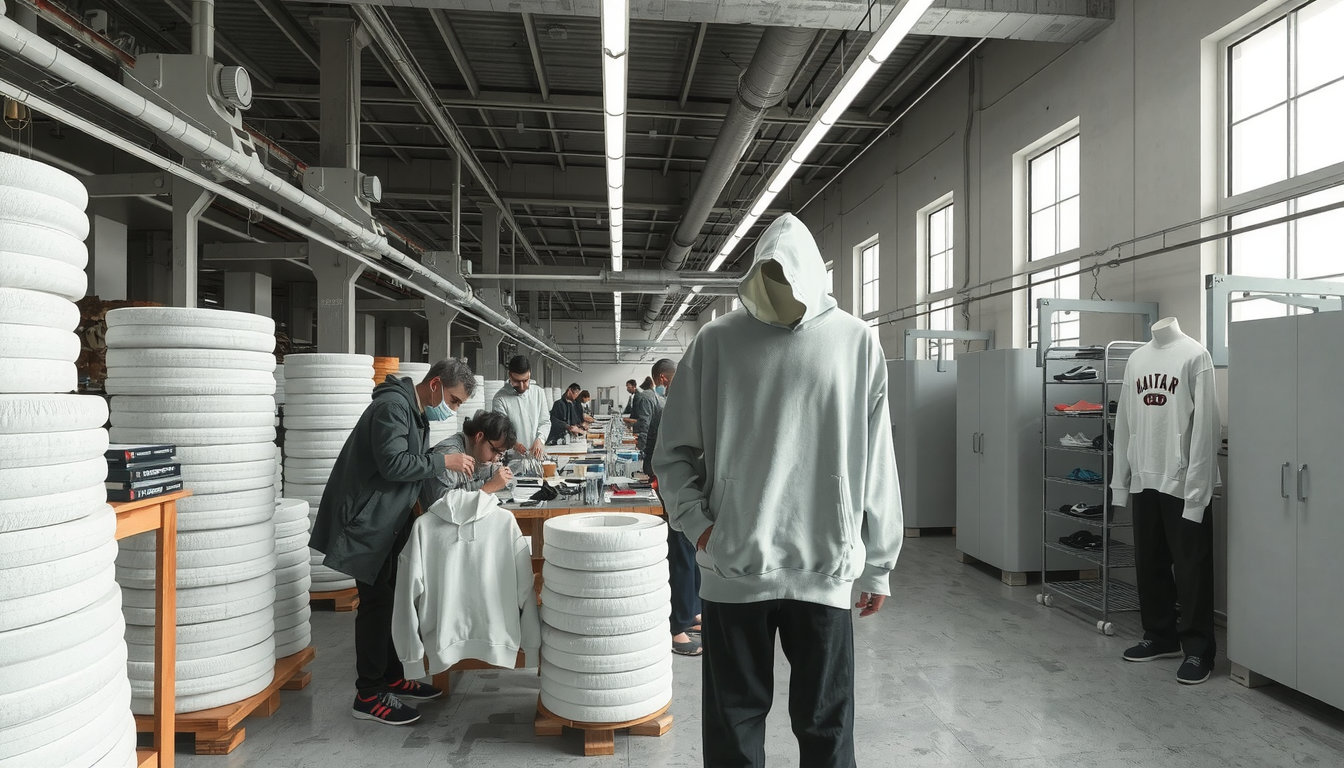
Full Package Production (FPP) vs. Cut, Make, Trim (CMT) vs. Print-on-Demand (POD)
Understanding the different production models is crucial.
- Full Package Production (FPP): The manufacturer handles everything from sourcing fabric to final delivery. This is ideal for brands that want a streamlined process and can rely on the factory's expertise and supply chain.
- Cut, Make, Trim (CMT): The brand is responsible for sourcing and providing all raw materials (fabric, trims, labels). The factory only handles the cutting, sewing, and basic finishing. This model offers more control over materials but requires more logistical work from the brand.
- Print-on-Demand (POD): A third-party company prints your design onto a pre-made, generic "blank" garment (like a t-shirt or hoodie) only after a customer places an order.
Why Blanks Aren't "Manufacturing" for Premium Brands
While POD and using blanks are excellent for testing ideas with zero inventory risk, they are not true manufacturing. This method offers no control over the garment's fit, fabric quality, stitching, or unique construction details.
A premium streetwear brand's identity is built on a custom fit and superior hand-feel. These elements are only possible through cut and sew manufacturing, where the garment is created from scratch.
The Manufacturer Selection Pathway: A Decision Tree for Your Brand
Choosing the right factory is the most critical decision you will make. This decision tree is designed to guide you to the right type of production partner based on your brand's specific needs and goals.
- Start Here: What is your primary goal?
- Path A: "I need the lowest possible cost and have a large order (1000+ units)."
- → Do you have a comprehensive tech pack and an agent or team member who can manage overseas communication and quality control?
- → YES: Consider manufacturers in China or Pakistan. Proceed to the "Regional Comparison Table" to weigh the pros and cons.
- → NO: You are at high risk for significant production errors, communication breakdowns, and costly delays. Your first step is to develop a professional tech pack.
- Path B: "I need premium quality and a lower MOQ (Minimum Order Quantity), typically 100-300 units."
- → Is your budget flexible enough to accommodate higher per-unit costs for superior craftsmanship and materials?
- → YES: Your best options are manufacturers in Portugal or Turkey. Proceed to the "Regional Comparison Table."
- → NO: Re-evaluate your product's complexity. Simplifying the design (e.g., reducing embellishments or using a more standard fabric) can lower costs. Alternatively, consider launching with a smaller, more focused collection.
- Path C: "I have a unique design but no technical expertise or supply chain."
- → You need a Full Package Production (FPP) partner who can guide you from concept to finished product.
- → Do you require extensive design development help, fabric sourcing, and hands-on project management?
- → YES: The most effective route is to partner with a sourcing agency like Clothing Manufacturer Ltd. that has a network of pre-vetted factories and can manage the entire process for you.
- → NO: If you have a complete tech pack but just need a factory to execute it, a standard FPP manufacturer in Portugal or Turkey will be a good fit.
Comparing the Top 3 Streetwear Manufacturing Hubs: 2026 Analysis
The global manufacturing landscape is dominated by a few key players. Each has its own unique advantages. Data suggests that for streetwear, Portugal, China, and Turkey offer the most compelling options.
As detailed in industry analyses like those from Deepwear, the choice depends entirely on your brand's priorities: quality, cost, or speed.
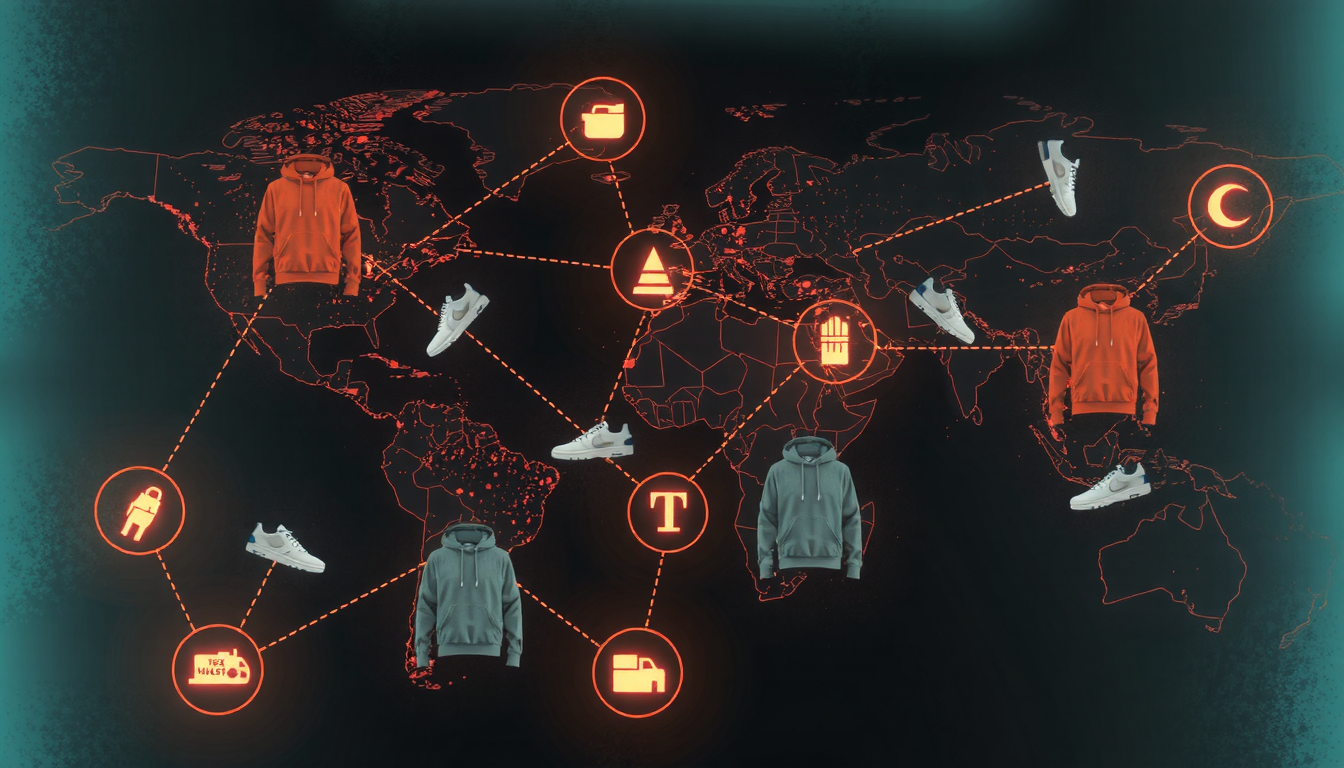
Portugal vs. China vs. Turkey: Head-to-Head
| Feature | Portugal | China | Turkey |
|---|---|---|---|
| Primary Strength | Premium Quality & Luxury Knits | Scalability & Cost-Effectiveness | Fast Turnaround & Quality Textiles |
| Typical MOQ | Low to Medium (100-300 units) | High (500-1000+ units) | Medium (200-500 units) |
| Per-Unit Cost | High | Low | Medium |
| Lead Time | 4-8 weeks | 8-12 weeks | 3-6 weeks |
| Best For | Heavyweight Hoodies, Luxury Tees | High-Volume Basics, Complex Jackets | Denim, High-Quality Jersey |
| Key Challenge | Higher Cost | Communication Barriers, IP Risk | Regional Instability, Currency Fluctuation |
The Factory Audit Checklist: 15 Critical Questions to Ask Before Production
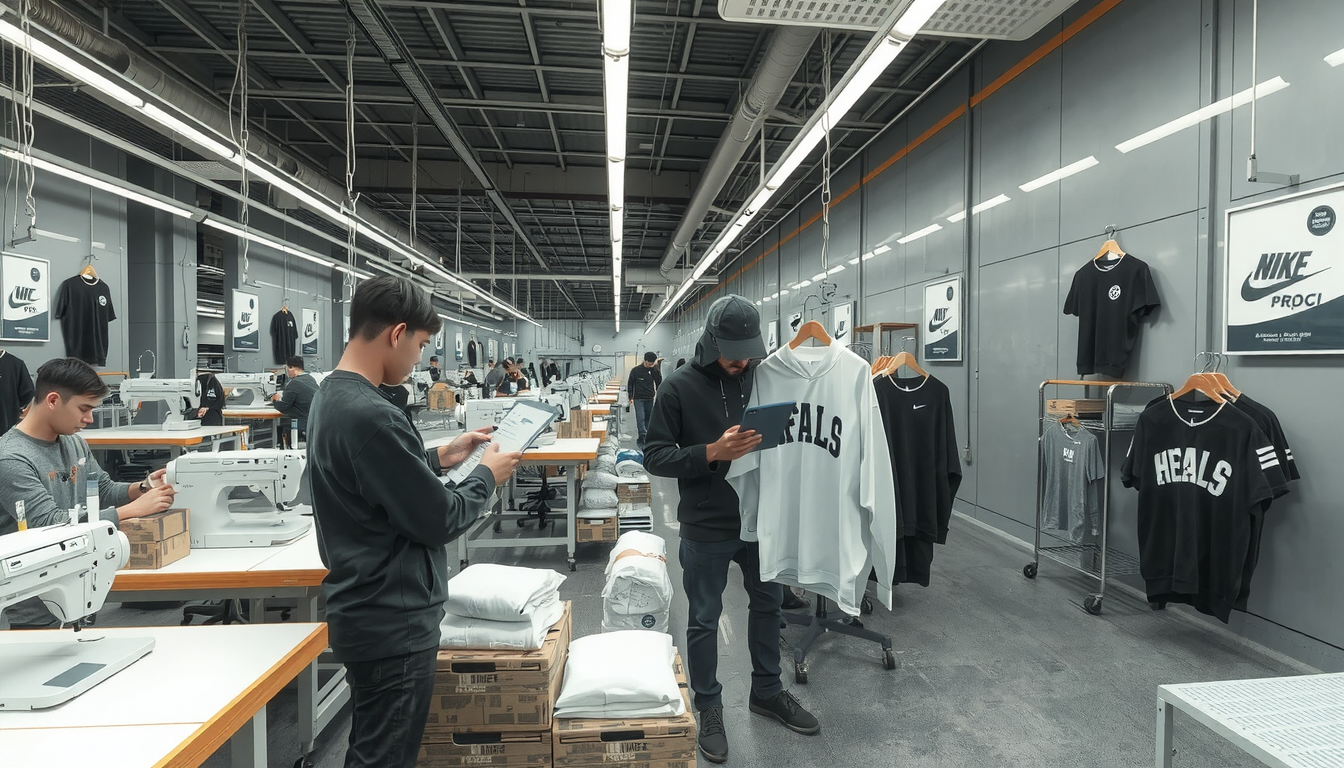
A factory audit is a systematic assessment of a potential manufacturer's capabilities, quality systems, and ethical standards. Do not skip this step. Whether you visit in person or conduct a remote audit via a local agent, these questions will reveal a factory's true competence.
Initial Vetting (Before the Audit)
- Do they specialize in streetwear? Ask for a portfolio of products similar to yours (e.g., heavyweight hoodies, garment-dyed tees). A generic apparel factory may not understand the specific nuances.
- What are their main communication channels and who is my point of contact? Look for a dedicated, English-speaking account manager. Poor communication is a primary cause of production failure.
- Can they provide client references or case studies? Reputable factories are proud of their work and should be willing to connect you with existing clients.
The On-Site or Remote Audit Checklist
Machinery & Capability:
- What is the age and condition of their sewing machines (e.g., Juki, Brother)? Well-maintained, modern equipment is a sign of a professional operation.
- Do they have specialized equipment for my needs? Ask specifically about flatlock stitch machines for seams, automated embroidery machines, or large-format screen printing carousels.
- What is their monthly production capacity? This helps you understand if they can scale with your brand or if your order is too small (or too large) for them.
Quality Control (QC) Process:
- Where are your QC checkpoints? According to industry standards, QC should happen at multiple stages: fabric arrival, post-cutting, mid-production (inline inspection), and final inspection.
- What is your defect rate, and how do you handle defective units? A professional factory will have a clear policy for repairing or replacing defective items at their own cost.
- Can I see your QC reports or documentation? They should have documented procedures and reports for each production run.
Ethical & Social Compliance:
- Do you hold any certifications (e.g., BSCI, WRAP, SEDEX)? These third-party audits verify compliance with labor laws and ethical standards.
- Can you confirm your policies on worker wages, hours, and safety? Transparency here is a strong indicator of an ethical partner.
Material Sourcing & Management:
- How do you source your fabrics? Can you provide fabric certifications (GOTS, OEKO-TEX)? This is critical for brands prioritizing sustainability and quality.
- How are raw materials stored to prevent damage? Fabric should be kept in a clean, dry, and climate-controlled environment.
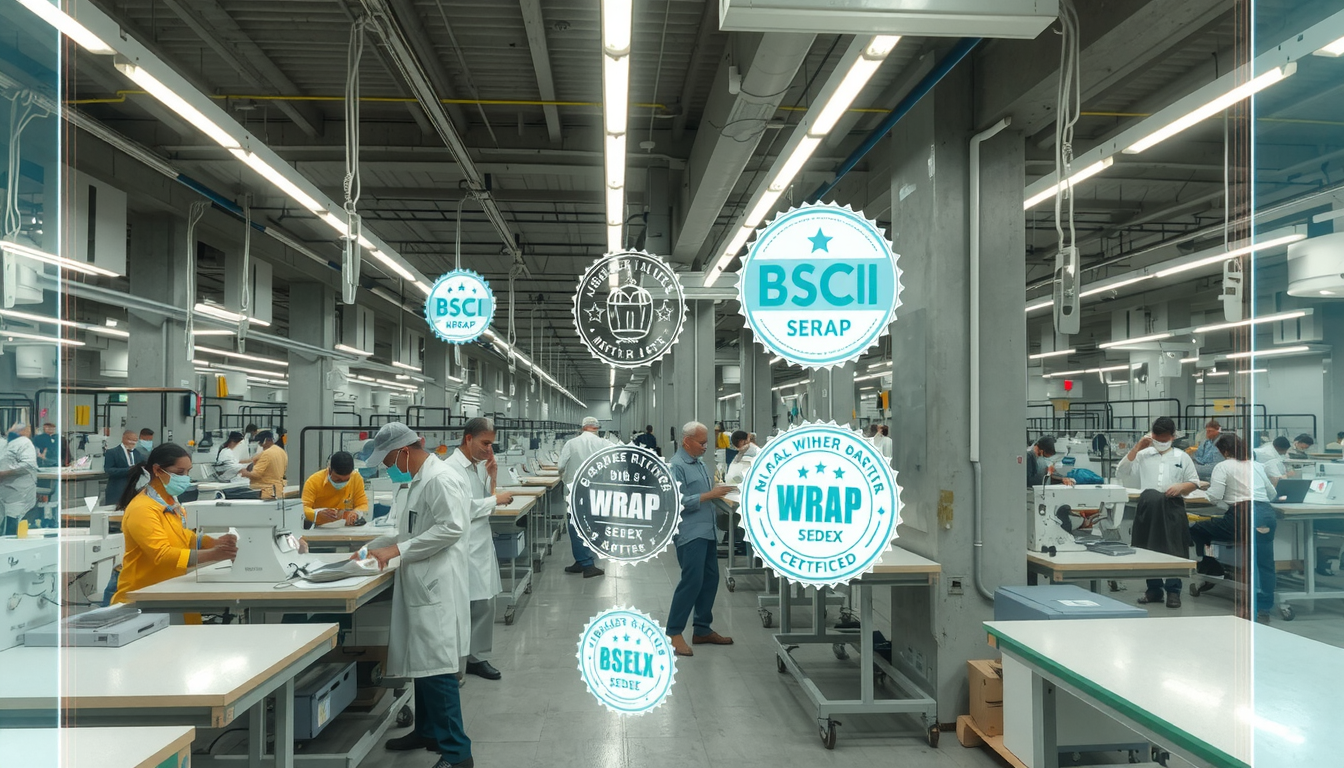
Red Flags to Watch For
Be wary of vague answers, a refusal to provide documentation, an unwillingness to produce a single prototype sample before a bulk commitment, and a disorganized or dirty factory floor. These are clear signs of an unprofessional operation that will likely cause problems down the line.
The Streetwear Production Timeline: From Sketch to Shipment
Understanding the production timeline is essential for planning your launch, marketing, and cash flow. The process is longer than most new brands expect. The following is a realistic timeline for a typical cut and sew order.
Phase 1: Pre-Production (Weeks 1-4)
- Week 1: Finalize Tech Pack & Request Quotes. You submit your detailed tech pack to multiple factories to get accurate cost estimates.
- Week 2-3: Receive & Review Initial Samples (Proto Samples). The factory creates the first sample based on your tech pack. You review it for fit, construction, and fabric, then provide detailed feedback for revisions.
- Week 4: Approve Final Sample (Pre-Production Sample) & Submit Purchase Order. After one or more rounds of revisions, you approve the final sample. This becomes the "gold standard" for bulk production. You then issue a formal Purchase Order (PO) and typically pay a 30-50% deposit.
Phase 2: Production (Weeks 5-10)
- Week 5-6: Fabric Sourcing & Cutting. The factory orders the fabric and, upon its arrival and inspection, begins cutting the patterns for your entire order.
- Week 7-9: Sewing & Assembly. The cut panels are moved to the sewing lines for assembly. During this phase, it's wise to request a "Top of Production" (TOP) sample—one of the first units off the line—to ensure it matches the approved pre-production sample.
- Week 10: Embellishments, Washing/Dyeing, and Finishing. After assembly, garments go through any special processes like screen printing, embroidery, or custom washes. Trims, tags, and labels are attached.
Phase 3: Post-Production & Logistics (Weeks 11-12+)
- Week 11: Final QC Inspection & Defect Management. The factory (or your third-party inspector) conducts a final quality check on all units, measuring them against the tech pack and approved sample.
- Week 12: Garment Folding, Bagging, and Boxing. The approved garments are individually folded, poly-bagged, and packed into cartons for shipment.
- Shipping: You make the final payment. The goods are shipped via Air Freight (faster, more expensive: 5-10 days) or Sea Freight (slower, cheaper: 30-45 days).
Demystifying Costs: A Sample Budget for a 100-Unit Hoodie Run
One of the most common questions from emerging brands is, "How much does it cost to produce a hoodie?" The answer varies a lot, but we can create a sample budget to provide a realistic estimate. This example is for a premium, oversized hoodie made in Portugal, a popular choice for high-quality streetwear.
Cost Breakdown (Example: 450 GSM Oversized Hoodie)
- Development Costs:
- Tech Pack Creation: $100 – $300 (if outsourced to a freelancer or agency)
- Proto Sample: $150 – $250 (This fee is often high because it's a one-off unit and may include shipping. Some factories credit this back on a bulk order.)
- Bulk Production Costs (100 units):
- Per-Unit Cost (FPP in Portugal): $25 – $45/unit. The price depends heavily on fabric weight, construction complexity, and any custom dyes or prints.
- Total Production Cost: $2,500 – $4,500
- Logistics & Import Costs:
- Shipping (Air Freight from Portugal to US): $400 – $800
- Import Duties & Tariffs (approx. 16.5% for cotton apparel + customs fees): $450 – $800
- Total Estimated Investment: $3,600 – $6,650
Disclaimer: As of Q1 2026, these are estimates. Costs vary significantly based on design complexity, factory partner, fabric choice, and global logistics rates.
Frequently Asked Questions (FAQ) about Streetwear Manufacturing
What is the best way to find a streetwear manufacturer?
Start with curated sourcing platforms like Sqetch or directories for specific regions. For high-volume production, Alibaba is a viable option, but requires intense vetting. Attending industry trade shows like Texworld or Premiere Vision allows you to meet factory representatives in person. For a more secure and efficient approach, many brands partner with a sourcing agency that has a pre-vetted network of reliable factories like Groovecolor, which specializes in the streetwear niche.
How do I protect my designs from being copied by a factory?
First, always use a detailed Non-Disclosure Agreement (NDA) before sharing your tech packs or sensitive design files. Second, work only with reputable factories that have a long history and positive client references. Third, register your brand's trademarks and copyrights, especially in the country of manufacturing. While no method is foolproof, this multi-layered approach significantly reduces your risk.
What does MOQ mean and why is it important?
MOQ stands for Minimum Order Quantity. It is the fewest number of units a factory is willing to produce for a single style and color. For example, a factory might have an MOQ of 200 pieces per style. This is crucial for new brands because it directly impacts the initial investment and inventory risk. Finding a manufacturer with a low MOQ (50-200 units) is essential to manage cash flow and test new designs without being forced to buy thousands of units of unproven product.
What is a tech pack and do I really need one?
A tech pack is the master blueprint for your garment, and it is absolutely essential. It is a multi-page document that includes technical sketches of the garment (flats), a detailed list of measurements and sizing (grade rule), fabric specifications (composition, weight, color), construction details (stitch types, seam placements), and artwork for any prints, labels, or embroideries. Without a tech pack, you cannot hold a factory accountable for errors, and you have no way to guarantee that the final product will match your vision.
About the Author:
is the Head of Sourcing at our company, with over 12 years of experience in global apparel manufacturing. They have personally audited factories in 15+ countries and managed production for streetwear brands that have scaled to 8-figure revenues, providing them with a deep understanding of what separates successful production from failure.
Data Methodology & Limitations:
The information, statistics, and cost estimates in this guide are based on proprietary data from our company's 2026-2026 factory audits, public market reports, and direct industry experience. These figures are subject to change based on market conditions, raw material costs, and geopolitical factors. They should be used as a strategic guide for planning, not as a formal quote.