We’ve all been there. Your favorite sweater or t-shirt comes out of the dryer looking like it belongs to a child. This feeling is something we all know too well.
For many clothes, this problem can be fixed. You can often stretch your clothes back to their normal size with some simple steps.
The key is to relax the fabric fibers. The best way to do this uses lukewarm water and something you already have: hair conditioner. We’ll explain how it works in detail.
In this guide, we’ll cover everything you need to save your clothes.
- Which fabrics you can (and cannot) stretch
- The universal water-and-conditioner method
- Specific techniques for denim, wool, and more
- Critical mistakes to avoid
First, Check Your Fabric: The Key to Successful Stretching

Before you go , yoou must boonk what your wearable is tae of . Succwss clculate solely on the textiile .
Stretching works by relaxing and reshaping fibers, which works much better on natural materials. Natural fibers like cotton and wool can absorb water, relax, and be reshaped. Wool is very stretchy and can stretch up to 30% when wet without damage.
Synthetic roughage likke polyester and nylon are essentially plastic . These fibre are set withh passion when pepare , give them very heavily to remold . Tryimg to adulterate them ofttimss betray or damge teh wear .
To help you know if your clothing can be stretched, we’ve made a Fabric Stretchability Index. Checking this guide, along with advice from sources like the Good Housekeeping Institute’s textile experts, is the best first step.
Fabric Stretchability Index
| Fabric Type | Stretch Potential | Best Stretching Method | Risk Factor |
|---|---|---|---|
| Cotton (100%) | High | Soaking (Conditioner Method) | Low – Very forgiving. |
| Wool | High | Soaking (Gentle Conditioner Method) | Medium – Risk of over-stretching or felting. |
| Cashmere | High | Soaking (Gentle Conditioner Method) | High – Very delicate, requires extreme care. |
| Denim | Medium | Wear-While-Damp / Soaking | Low – Very durable and responds well. |
| Rayon / Viscose | Medium | Soaking (Quick Method) | High – Can become weak and tear when wet. |
| Polyester | Very Low | Gentle Heat & Manual Stretching | High – Risk of melting fabric. Minimal results. |
| Nylon | Very Low | Not Recommended | High – Extremely stable fabric, won’t stretch. |
The Universal Method: How to Stretch Cotton, Blends, and Knits

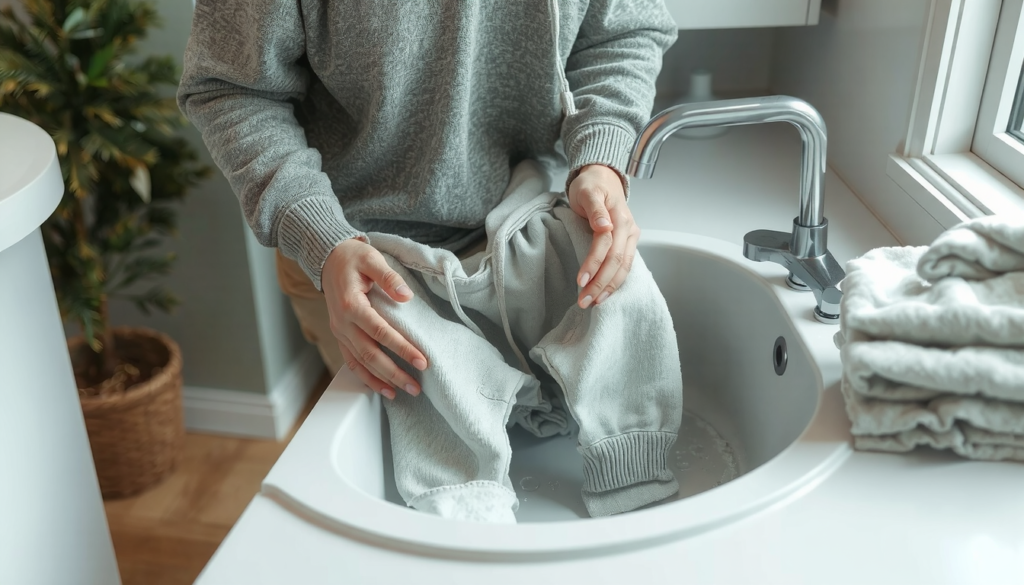
This is our best method for most natural-fiber clothes like t-shirts, cotton sweaters, and knits. It uses hair conditioner or baby shampoo to soften the fibers, making them easy to stretch.
Before you begin, get these items: a clean basin or sink, lukewarm water, hair conditioner or baby shampoo, and two clean towels.
1. Prepare the Soaking Solution
Fill your basin with lukewarm water. We use lukewarm because hot water can shrink some fibers more, while cold water doesn’t relax them as well.
Add one tablespoon of hair conditioner or baby shampoo for each quart of water. Mix until it dissolves fully.
2. Soak the Garment
Put your shrunken item completely in the solution, making sure water gets into all the fibers.
Let it soak for at least 30 minutes. For tighter weaves or badly shrunk items, soaking for up to two hours works better.
3. Gently Rinse (or Don’t!)
After soaking, drain the water. You have two choices here. You can lightly rinse under cool water to remove some slipperiness.
Or you can skip rinsing. Leaving some conditioner in the fabric helps keep fibers soft as they dry, but it might feel slightly stiff when dry.
4. Remove Excess Water
This step is very important: do not wring or twist the clothing. This can stretch the fabric unevenly and damage the wet fibers.
The best way is to gently squeeze the garment into a ball to press out water. Then lay it flat on a thick, dry towel. Roll the towel with the garment inside, pressing firmly to soak up as much water as possible.
5. The Stretching Process
Unroll the towel and put the damp garment on a second dry towel on a flat surface. Now start stretching.
Work in an orderly way. Gently pull the fabric, starting with the main body. Grip the neckline and hem and pull gently to add length. Then grip the sides and pull for width.
Do the same for sleeves. Always pull gently and evenly to keep the shape looking right. If you need to hold the stretched shape while drying, use heavy, smooth objects (like books with plastic covers) along the edges.
6. Air Dry Flat
Never hang a wet, stretched garment to dry. The water weight will pull it down, causing bad stretching, especially at the shoulders.
Let it air dry completely on a flat surface, away from direct sun or heat. This ensures it keeps the new shape you’ve made.
Advanced Techniques for Specific Materials

While the main method works for most clothes, some fabrics need a special approach.
How to Stretch Denim (Jeans and Jackets)
Denim is a tough cotton fabric that stretches very well. For jeans that are just a bit tight, wearing them while damp works great.
- Fill a spray bottle with lukewarm water.
- Spray the tight areas—like the waistband, thighs, or seat—until they’re damp but not soaking.
- Put the jeans on. It feels strange, but this is the best way to fit denim to your body.
- For the next 30-60 minutes, move around. Do lunges, squats, sit down, and walk. Your movements will stretch the damp fibers exactly where needed. Let them dry while wearing them, or take them off and lay flat to finish drying.
How to Stretch Wool and Cashmere
These animal fibers stretch well but are very delicate. You can use the conditioner-soak method, but do every step very gently.
When stretching wool or cashmere, be careful not to pull too hard, as you can easily stretch it too much. For exact shaping, try using blocking mats and T-pins, tools that knitters use. These let you pin the garment to exact dimensions while it dries.
For more detailed instructions on saving these delicate items, check out this comprehensive guide on rescuing shrunken clothes, which explains the careful handling needed.
Stretching Synthetics (Polyester, Rayon) – A Word of Caution
We must be clear: stretching synthetic fabrics like pure polyester is very difficult, with minimal results. These fibers are set in place with heat when made.
The only method with a small chance of success uses careful, gentle heat while stretching. You can use a garment steamer or hair dryer on low to warm a section of fabric. While warm, gently pull and stretch it.
Warning: there is a high risk of melting or permanently damaging the fabric this way. Use extreme caution and only as a last resort.
Troubleshooting: What to Do When Stretching Goes Wrong
Even with good instructions, problems can happen. Here’s how to fix common issues.
Problem: “My garment smells musty after soaking.”
This usually happens from slow drying in humid air. To fix it, make sure air flows around the drying garment—a small fan helps a lot. If the smell stays after it’s dry, quickly rinse in cool water with a splash of white vinegar to remove odors before drying again.
Problem: “I over-stretched part of my shirt, and now it’s misshapen.”
Don’t worry, this can usually be fixed. Focus on just the over-stretched area (like a wavy hem or long sleeve). Wet that section with a spray bottle of plain water. Then use a hair dryer on medium heat while shaping the fibers back with your hands. The heat helps shrink them slightly.
Problem: “The stretching is uneven.”
This happens when pulling isn’t balanced. The solution is to soak the whole garment again for about 15-20 minutes and try again. This time, be more methodical. Stretch the left side, then the right, and keep checking for evenness.
Problem: “The fabric feels stiff or sticky after drying.”
This means too much conditioner stayed in the fabric. It’s easy to fix. Just give the garment a quick but thorough rinse in cool, clean water and let it air dry flat again.
Prevention: How to Stop Clothes from Shrinking in the First Place

The best way to deal with shrunken clothes is to prevent shrinking completely. Some simple laundry habits can save your whole wardrobe.
- Read the Care Label: This is the most important rule of laundry. The symbols on the tag are the maker’s direct instructions for keeping the garment in perfect condition.
- Use Cold Water: Hot water is the main cause of shrinkage. Washing clothes, especially natural fibers like cotton and wool, in cold water is gentler and prevents most problems.
- Avoid High Heat Drying: High heat and tumbling ruins many fabrics. Air-drying on a flat surface or rack is always safest. If you must use a dryer, choose the lowest heat setting or no-heat cycle.
- Choose Blends for Stability: If you often have laundry accidents, look for fabrics with some synthetic material. A 95% cotton/5% spandex blend is much more stable and resistant to shrinking than 100% cotton.
Final Thoughts: Stretch with Confidence
That feeling of dread when you see shrunken clothing doesn’t have to mean defeat. With patience and the right knowledge, many favorite items can be saved from the donation pile.
Remember the key steps: always check the fabric first, use the conditioner-soak method for natural fibers, and handle your garments gently throughout the process.
Now you know how to rescue your favorite shrunken clothes and care for them better in the future.
FAQ About How to Stretch Clothes
- What fabrics can be successfully stretched after shrinking?
Natural fibers like cotton and wool have high stretch potential, while synthetics like polyester and nylon are very difficult to stretch. - How can I stretch cotton clothes that have shrunk?
Soak the garment in lukewarm water with hair conditioner for 30 minutes, then gently stretch and lay flat to dry. - What’s the best method to stretch tight jeans?
Spray the tight areas with lukewarm water until damp, then wear them and move around for 30-60 minutes to stretch the fibers. - Can I use a hair dryer to stretch clothes?
For synthetics only, you can carefully use low heat while stretching, but this comes with high risk of damaging the fabric. - How do I prevent clothes from shrinking in the first place?
Wash clothes in cold water, avoid high heat drying, and always read the care label instructions.