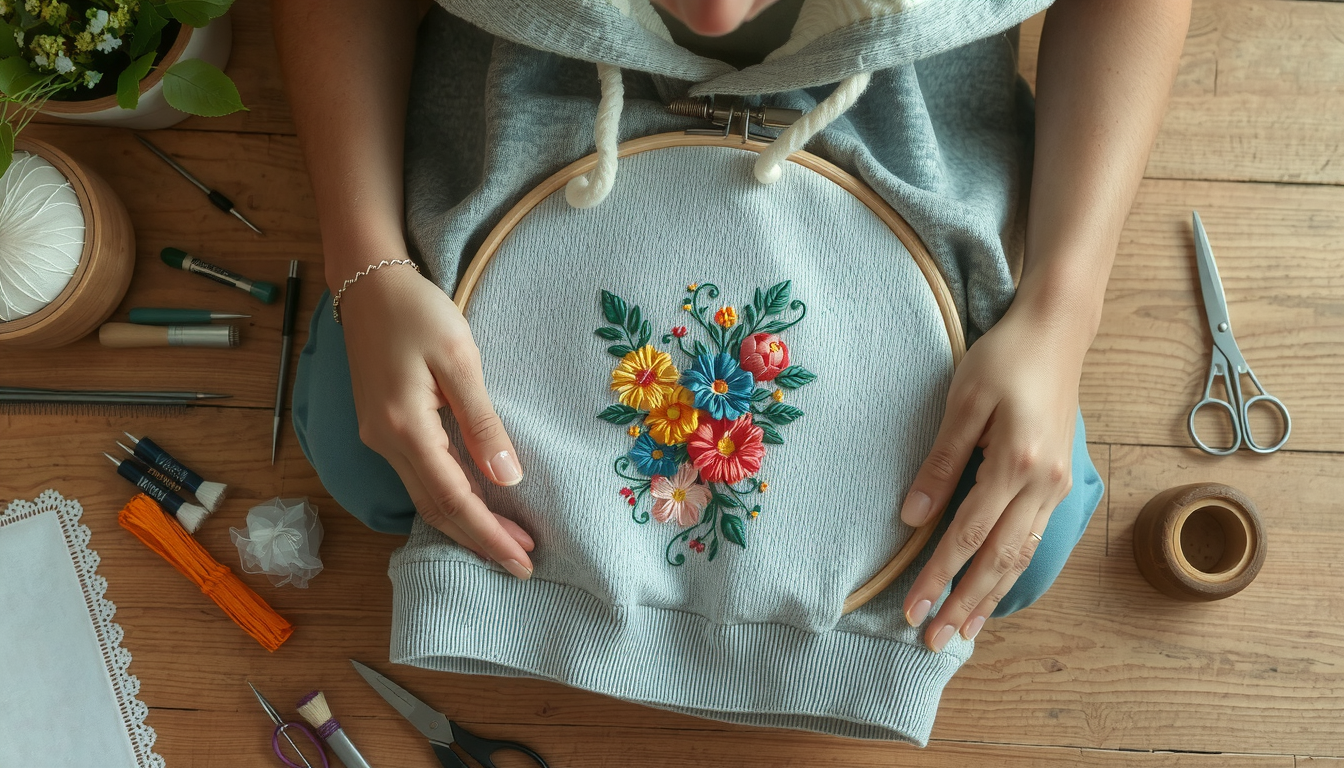
Images sewn on a hoodie are a fantastic way to make your own clothes in the unique and fashionable way in 2026. This project is a simple hoodie that is turned into a different item that one really loves to wear. You can use a fabric patch or cut out a cool design from an old t-shirt. This guide will teach you the process of sewing a picture onto a hoodie from the beginning to the end. We are going to include both hand sewing and machine sewing methods in this guide. Instead of buying a new hoodie, you can also use an old one, which is then fixed up. This guide will give you the tips needed to achieve the same results as professional tailors. There is also a wealth of ideas if you click on our team of custom clothing experts who have seen it all.
Major Points
- The First Step should be Preparation: Always start by washing your hoodies. Use a stabilizer to protect your image from stretching and wrinkles.
- Choose a Picture: You can use a patch that is customized for the occasion, cut-out a t-shirt design, or buy an embroidered patch. The advantages of each one are different.
- A Strong Stitch is a Must: For hand sewing, use a backstitch. For machine sewing, use a zigzag stitch. This stitches both the patch and the edges.
- Mark the Location: Put on the hoodie and check where the picture will sit before pin and sew.
- After Care is Important: Always wash your custom hoodie inside out in cold water and hang it to dry.
Before You Start: Getting Your Supplies
To sew a picture onto a hoodie well, you need the right tools. Getting everything ready first makes the job smooth and fun. Think of this as your project list.
What You Need:
- The Hoodie: Start with a blank hoodie, which is clean and washed. The fabric type matters a lot. Cotton and cotton blends are easy to work with, while fleece is thicker but also works great. A good choice of a blank hoodie comes from a reputable hoodie manufacturer.
- The Picture/Patch: This is your design. We will talk about how to pick and prepare it later.
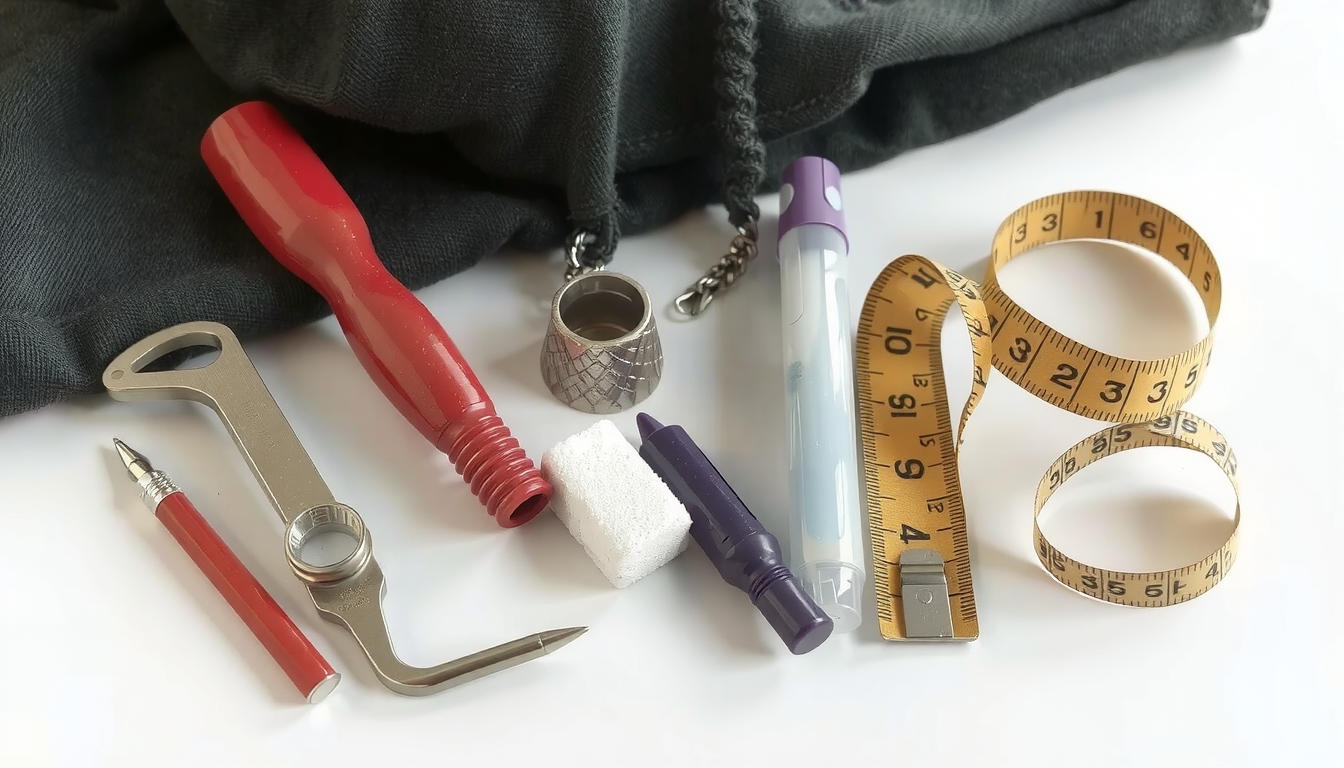
- Sewing Supplies: Try to find a heavy needle threading. Polyester thread is the one you can use for everything. Also, sharp fabric scissors, and lots of pins or fabric clips are must-have items.
- Stabilizer: This is a secret tool for great results. Iron-on interfacing is thin material you iron onto the back of your picture. It prevents the fabric from stretching and wrinkling when you sew.
Extra Tools That Help:
- Seam ripper (for fixing mistakes)
- Thimble (to protect your finger when hand sewing)
- Fabric chalk or disappearing ink pen
- Ruler or measuring tape
Selecting and Preparing Your "Picture"
When we talk about how to sew a picture onto a hoodie, we mean sewing fabric that has a picture on it. You have several good choices for what kind of "picture" to use. Your choice affects how it looks, feels, and what prep steps you need.
Here is a table to help you decide which type of picture works for your project.
| Picture Type | How to Prepare | Best For | Good Points | Bad Points |
|---|---|---|---|---|
| Printed Fabric Patch | Order custom-printed online or buy ready-made. Cut with a 1/4 inch border if needed. | Detailed photos, complex art. | High detail, clean edges. | Can be stiff, may need special printer. |
| Cut-out T-shirt Design | Carefully cut the design from an old shirt. Leave about a 1-inch border. Put iron-on interfacing on the back. | Bold logos, simple designs. | Reusing old clothes, soft feel. | Edges can fray without proper prep. |
| Embroidered Patch | Buy a ready-made patch or make your own with an embroidery machine. | Classic, textured style. | Very strong, premium look. | Can be thick and hard to sew by hand. |
Getting Ready is Key
Getting your picture ready the right way is the most important step for clean results.
For t-shirt designs, putting on iron-on interfacing is a must. Iron the interfacing onto the back of the design BEFORE you cut out the final shape. This is a pro tip to get clean edges that won't fray. We learned the hard way that skipping interfacing on a t-shirt design leads to wavy, messy results after the first wash. Take the extra 5 minutes. It's the worth.
This guide focuses on sewing. But some "pictures" start as iron-on transfers. You can add stitched borders to an iron-on for a more secure, custom look. This video shows the basic iron-on process. This is another popular way to customize clothes.
The Main Part: Sewing Your Picture
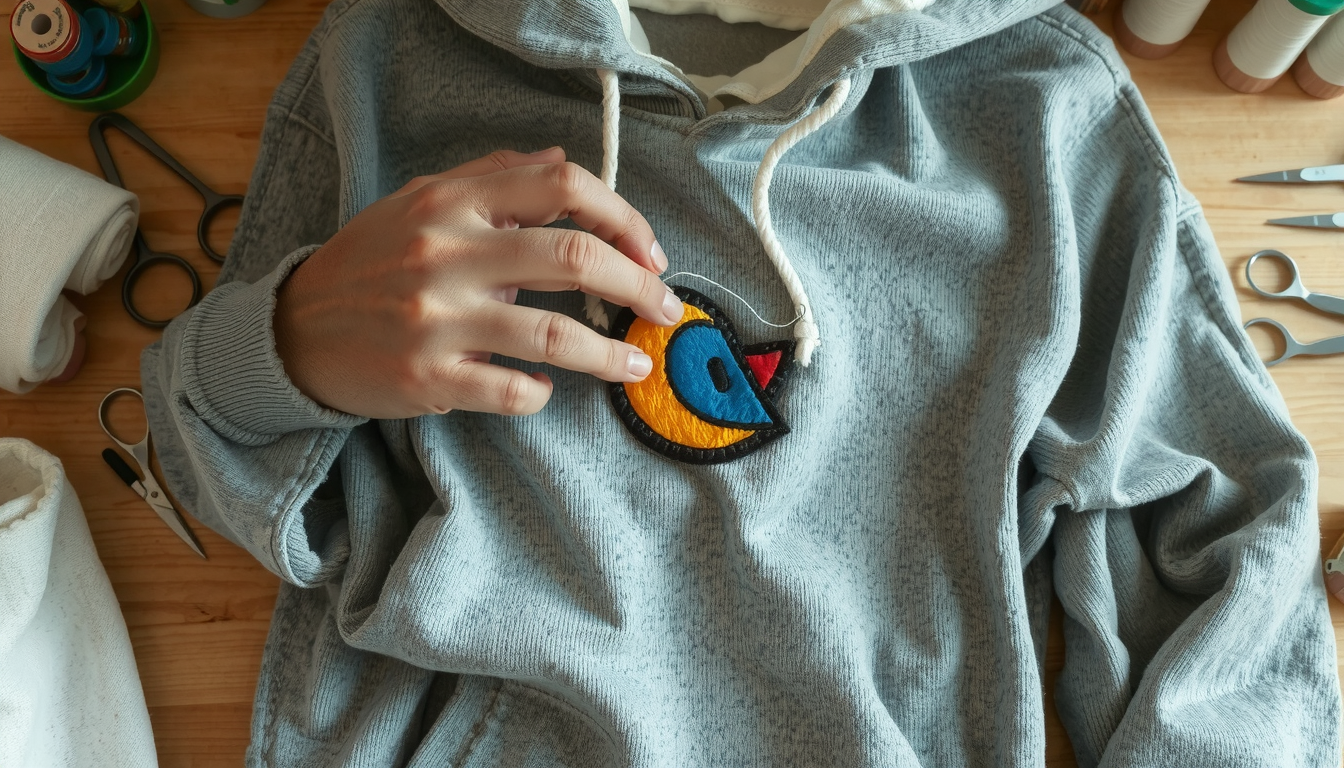
Now for the fun part. This step-by-step guide walks you through putting your picture on the hoodie. Follow these steps for results you can be proud of.
Step 1: Lay Out Your Picture
Lay your hoodie on a flat surface. Using a ruler, find the center of the chest or the area you want the design to go. A common point is about 3-4 inches below the collar.
Here's a handy tip: You can also try the hoodie on with the image lightly unused. Look at yourself in the mirror to see exactly where it sits on your body. After you're satisfied with the place, use enough pins or fabric clips to secure the image. More pins make it harder for the fabric to move.
Step 2: Get Ready for Sewing
This step is essential for getting rid of those puckered seams. Fold the hoodie inside out. If possible, you can use a piece of tear-away stabilizer inside the hoodie. Put it right under the spot where the patch will be. This additional support will keep the stretchy hoodie fabric from moving. The needle will not stress it. These steps are part of an intelligent strategy to keep your clothes looking new and lasting longer.
Step 3: Make Your Needle or Machine Ready
Color selection should be your first choice. You can either choose a color, which goes the same as your patch edge, that will hide a seam or you can use a different color, which will show the seam, as a part of the design.
In case you use a sewing machine, change it to a heavy duty or a denim needle (size 90/14 or 100/16). These needles go through thick layers of a hoodie and patch very well.
Step 4: Sew It!
The time has come for you to make it final! Whether you sew by hand or by machine, things need to go slowly and carefully.
If you are sewing by hand, your first stitch should come from inside the hoodie. This will cover the knot. We recommend that you stitch it with a backstitch for excellent strength. We will explain this in the next section.
For machine sewing, sew about 1/8 inch to 1/4 inch away from the edge of the patch all around. Go slowly, especially around corners. Do not forget to backstitch at the beginning and the end. This will fix your stitches so they don't come out.
Step 5: The Final Touch
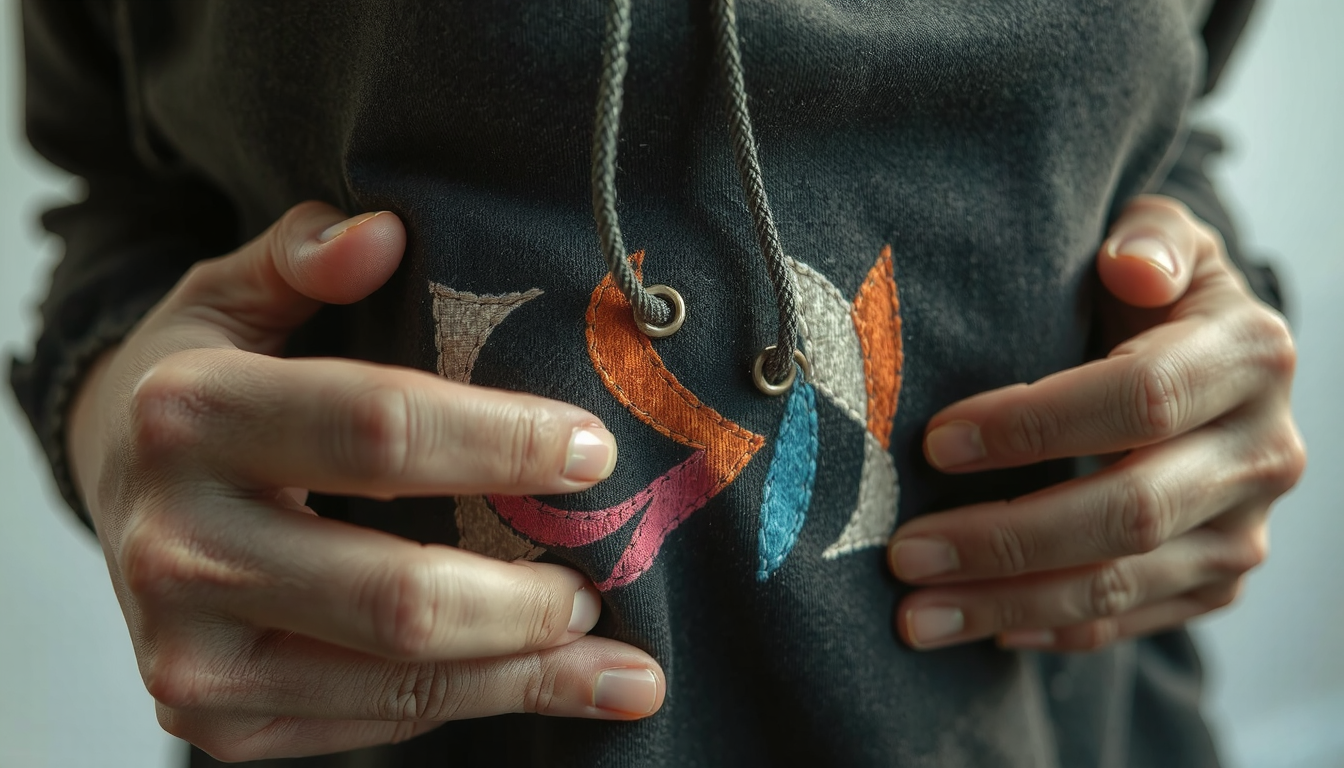
You are just about done! After covering the picture all the way, secure your thread. If you hand sew, make a strong knot on the hoodie side. But if you're using a machine, just use the backstitch function for some stitches.
Eliminate any stray threads for that nice clean look. If you used tear-away stabilizer, you can now gently tear it away from your stitches.
Sewing Tips for Strength and Endurance
The stitch you select has a critical impact on how your custom hoodie turns out and how long it lasts. The correct stitch is one of the main points to consider when planning your custom design. It affects the strength and style of your product. Here are the best stitches for this project.
For Hand Sewing
- The Running Stitch: This is the most basic stitch. It's fast and easy for beginners but it's not the strongest. It works best on decorative patches that will not be pulled on much.
- The Backstitch: This is the best choice for strong and durable work. It appears as a solid line and is close to machine stitching in strength. Each stitch overlaps the one that comes before it. This creates a very secure holding.
- The Blanket Stitch: This stitch is both decorative and strong. It wraps the thread around the edge of the patch.
For Machine Sewing
- The Straight Stitch: This is the standard stitch on any machine. Use a stitch length of about 2.5 to 3.0 mm. Sew a straight line close to the edge of your patch. For extra security, you can sew around the patch twice.
- The Zigzag Stitch: This is the best stitch for strength when you sew a picture onto a hoodie. A zigzag stitch goes over the raw edge of the patch. It locks it down and stops any fraying. This is the best choice for t-shirt designs. You can make the zigzag tight (short stitch length) for a smooth, satin-like border.
Taking Care of Your Custom Hoodie
You put in the work, so let's make sure it lasts. Proper care will keep your custom hoodie looking great for years.
- Washing: Always turn the hoodie inside out before you wash it. This protects the patch from rubbing against other clothes.
- Water Heat: Use cold water and pick the gentle cycle on your washing machine. Hot water can make some patches or threads shrink or warp.
- Drying: For best results, hang your hoodie to dry. If you must use a dryer, tumble dry on the lowest heat setting. High heat is bad for custom patches and can cause puckering.
- Ironing: Never iron directly on your picture, especially if it's printed or synthetic material. If the hoodie is wrinkled, iron it from the inside on low heat. Avoid the patch area.
FAQ: How to Sew a Picture onto a Hoodie
What's the best stitch for sewing a patch on a hoodie?
For hand sewing, the backstitch is the strongest and most reliable. For machine sewing, a zigzag stitch is excellent as it secures the patch and finishes the raw edge to prevent fraying.
Can I sew a patch on without a sewing machine?
Absolutely! Hand sewing is a great option. Use a strong needle, a thimble to protect your fingers, and a durable thread like polyester. The backstitch is your best friend for a secure, long-lasting hold.
How do I stop the hoodie fabric from stretching while I sew?
The key is to use a stabilizer. An iron-on fusible interfacing applied to the back of your picture/patch and a piece of tear-away stabilizer on the inside of the hoodie will prevent stretching and puckering, giving you a flat, professional finish.
How should I wash my hoodie after sewing on the picture?
To ensure your custom work lasts, always turn the hoodie inside out, wash in cold water on a gentle cycle, and either hang it to dry or tumble dry on the lowest heat setting.
Can I sew onto the pocket or sleeve of a hoodie?
Yes, but it can be tricky. For pockets, you must be careful not to sew the pocket shut. For sleeves, you'll be sewing through a narrow tube of fabric. It's much easier with a machine that has a "free arm," but for hand sewing, just work slowly and make sure you're only going through the top layer of fabric.
Conclusion: Wear Your Creation with Pride
You did it! By following these steps, you learned how to sew a picture onto a hoodie. Remember that picking the right picture, getting it ready with stabilizer, and using a strong stitch are the keys to a project that looks great and lasts long. This is a rewarding skill that opens up endless ways to make your clothes personal.
Now go create something that is uniquely you!