
Ringer T-Shirt Manufacturer Built on 5-Step QC
Partner with a trusted ringer t shirt manufacturer delivering premium streetwear tees, low MOQ, and rigorous quality control at every production stage — for brands worldwide.
Featured Ringer T-Shirt Styles & Customization Options
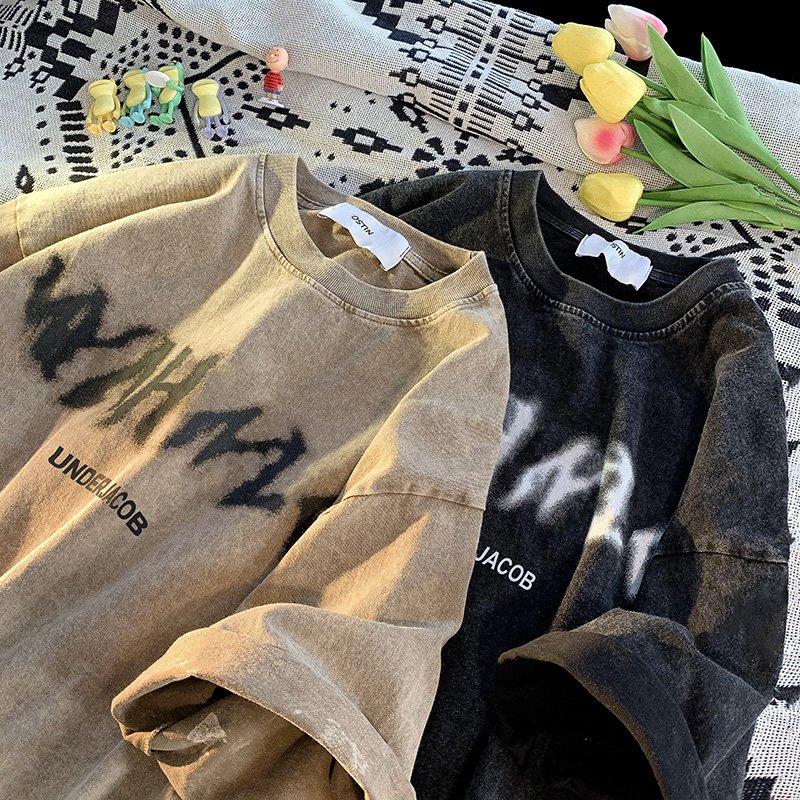
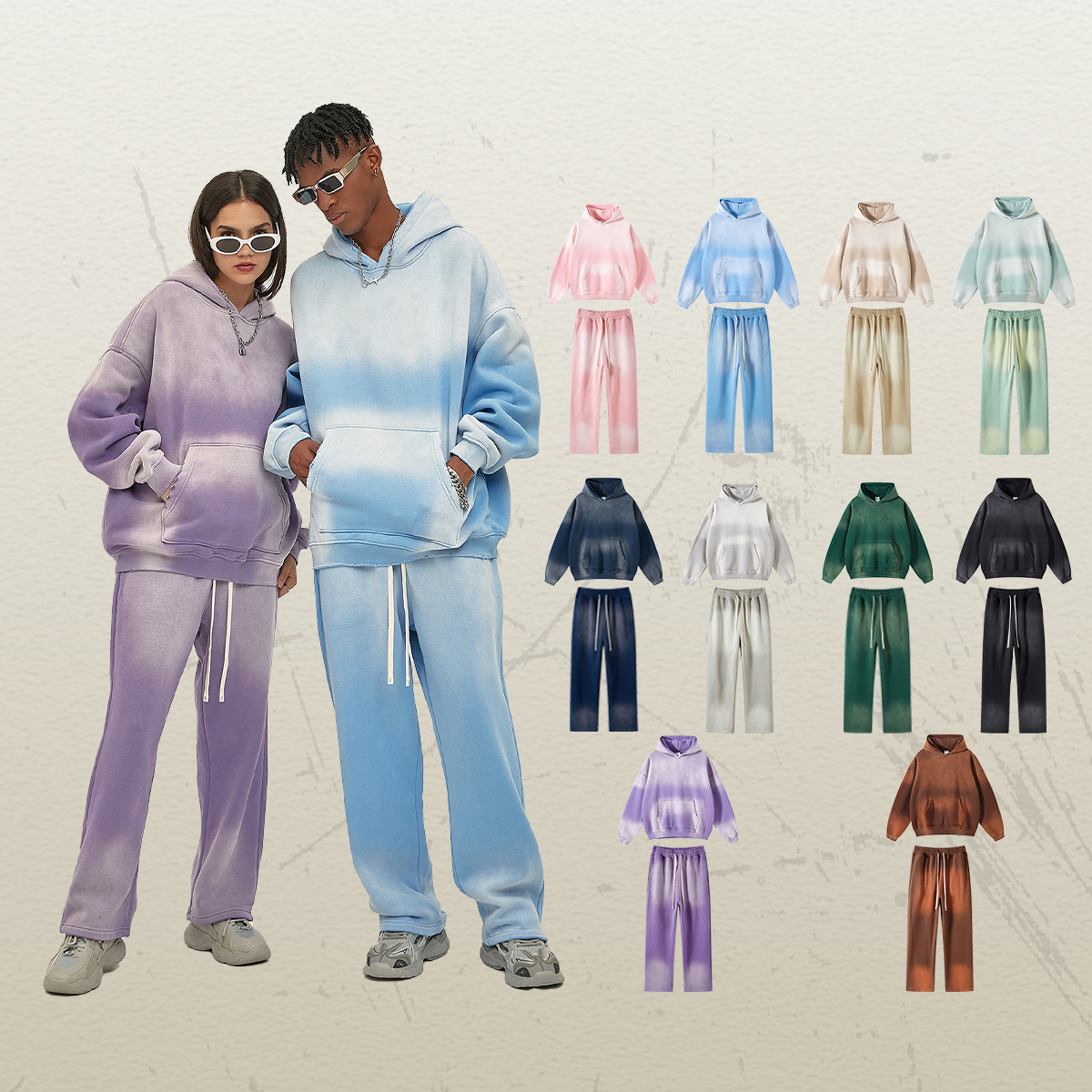
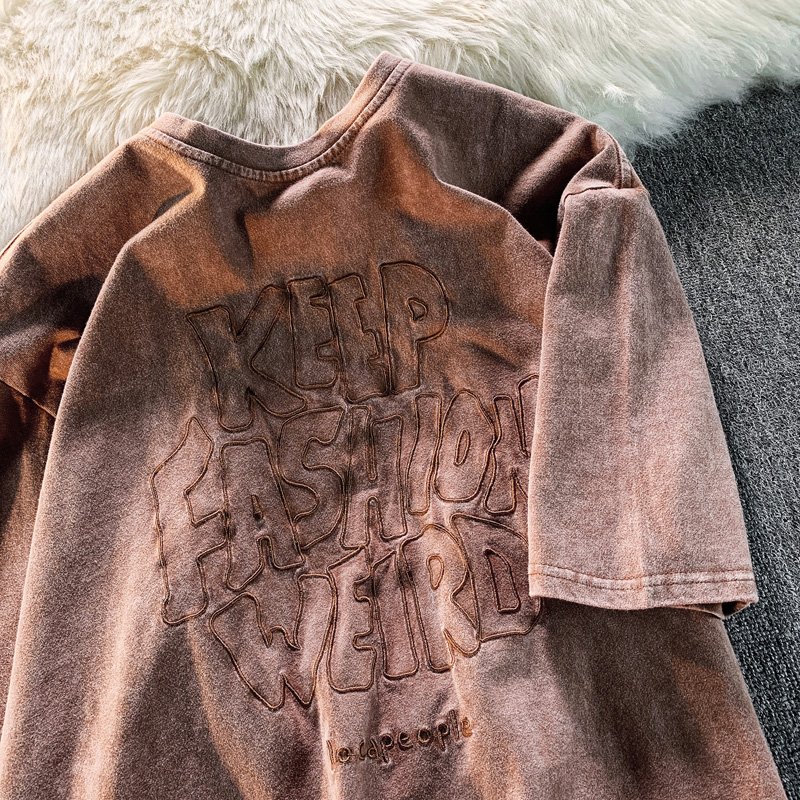
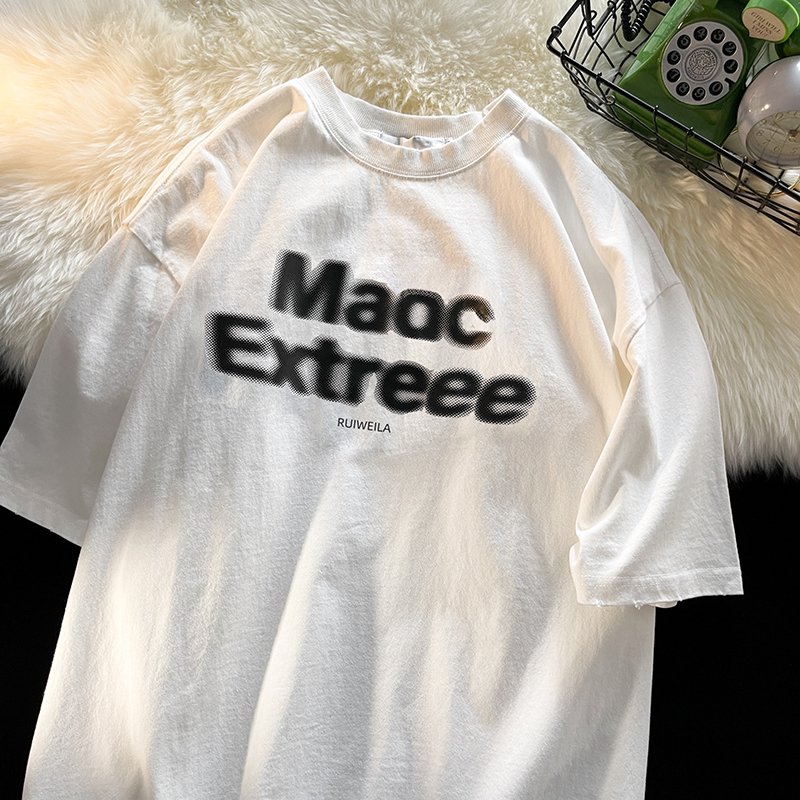
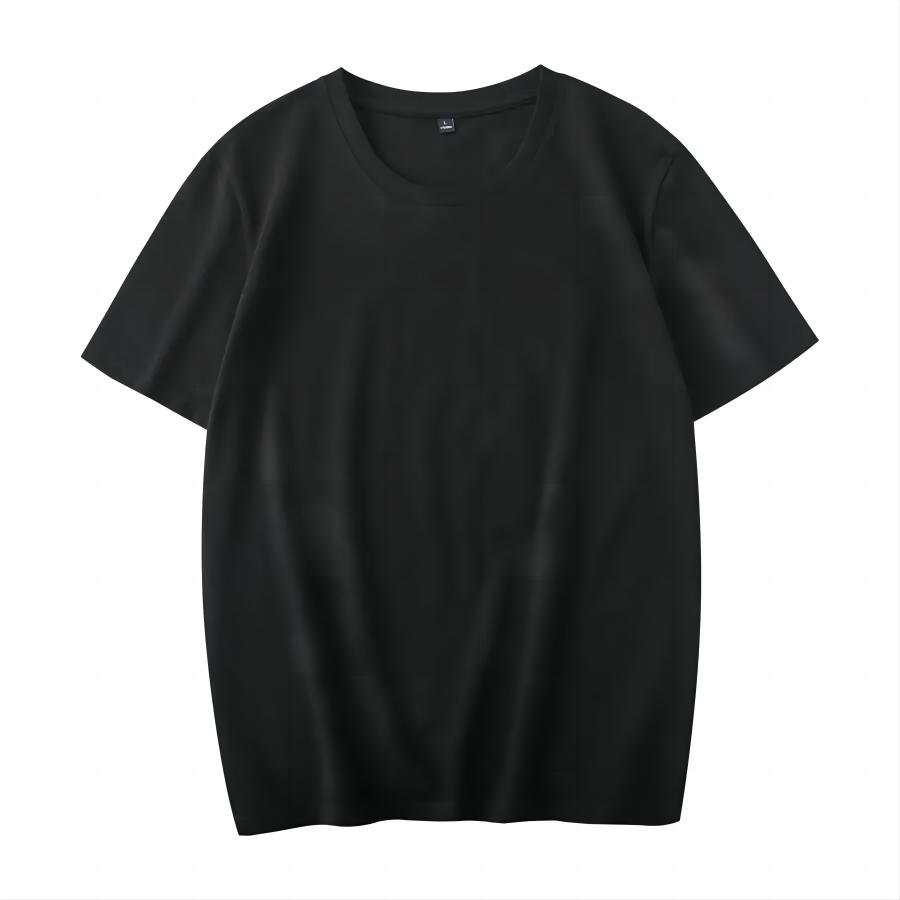
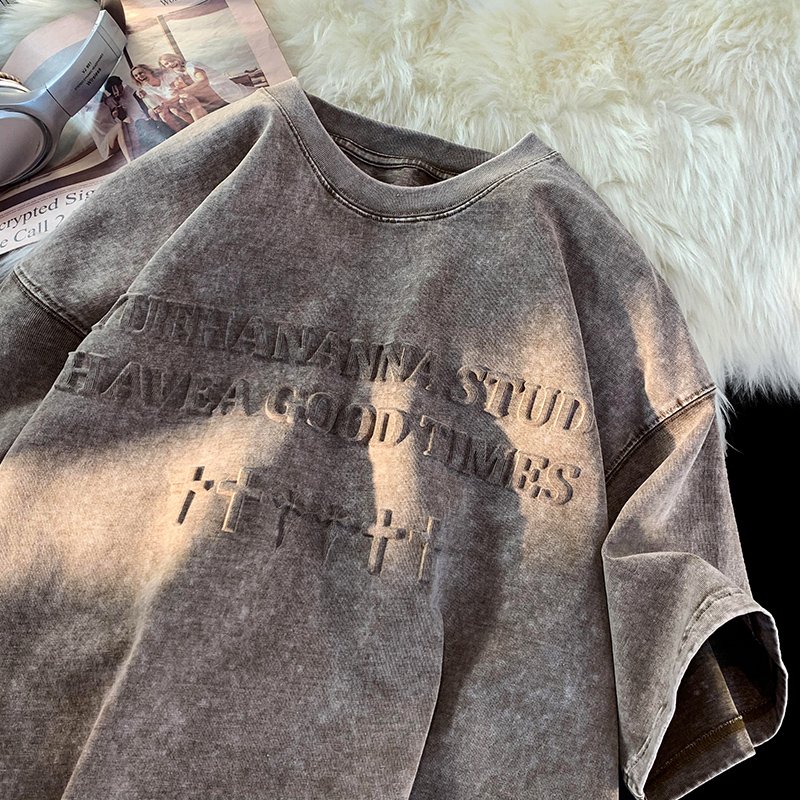
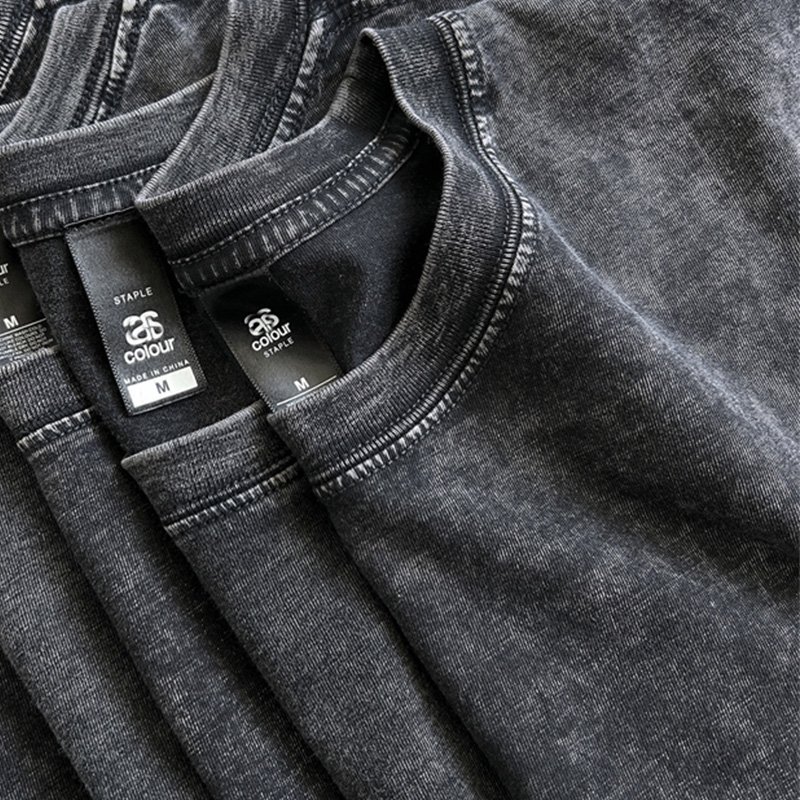
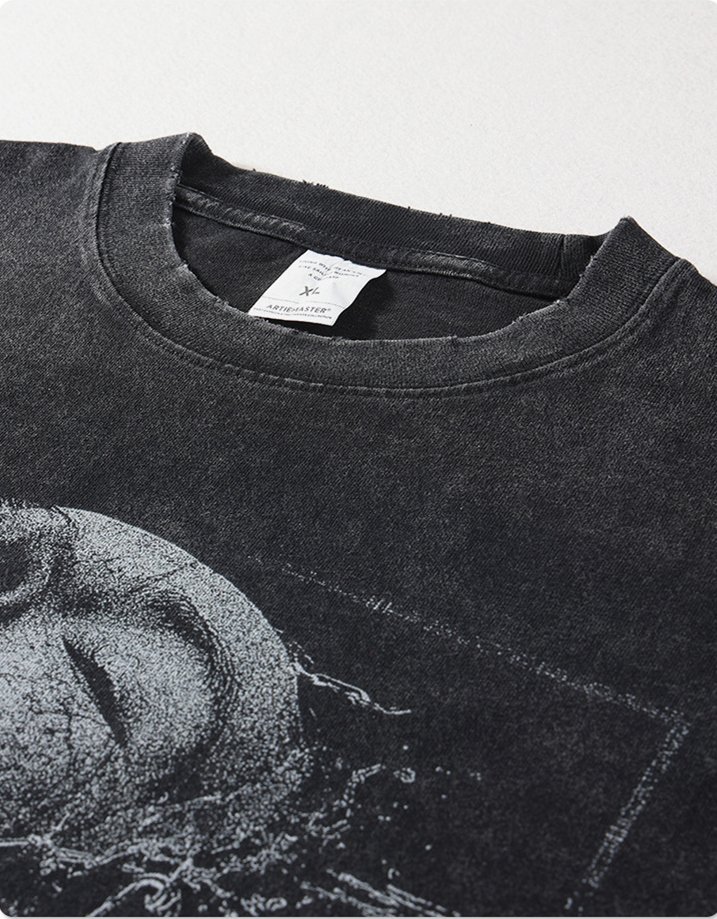
Why Our Ringer T-Shirt Manufacturer Leads in Quality
From materials to final stitch, every card below addresses a real buyer concern — and shows exactly how we solve it.
5-Step QC, Zero Compromises
Our proprietary QC process checks materials, cutting, craft, sewing, and finished goods — catching defects before they reach you.
50-Piece Minimum Order
Low MOQ lets startups and independent designers launch ringer tee lines without overcommitting capital on untested styles.
7-Day Sample Turnaround
Our in-house sampling team delivers physical prototypes in as little as 7 days, keeping your seasonal launch timeline on track.
Streetwear R&D Expertise
15-member in-house R&D team with 10 patents and deep streetwear fluency — skeleton, graffiti, animal print, and beyond.
Global Certifications & Compliance
ISO, WRAP, and BSCI certifications give retailers and brand buyers confidence in ethical, audit-ready production every order.
End-to-End Logistics Support
From customs declaration to door-to-door delivery across 100+ countries, we manage shipping so your brand scales without friction.
Ringer T-Shirt Manufacturer for Every Brand & Buyer Segment
From debut streetwear drops to global private label programs, our production capabilities and 5-step QC are built around your specific market, timeline, and growth stage.
Classic Ringer for Streetwear Brands
Streetwear labels need ringer tees that nail drop culture aesthetics — skeleton motifs, bold contrast bands, graffiti graphics — but most factories lack the cultural fluency to execute without losing edge.
Our ringer t-shirt manufacturer combines deep streetwear design expertise with 5-step QC and 14–21 day turnarounds, so your drops land on-trend, on time, and built to last.
Oversized Ringer Fit for Startups
Fashion startups building oversized ringer styles face steep MOQs, surprise sampling delays, and factories that compromise fit precision once bulk orders replace samples — killing the silhouette customers expected.
We deliver low 50-piece MOQs, in-house sampling, and sewing-stage quality checks so emerging brands get exact oversized ringer construction from sample to full run, every time.
Women’s Ringer for Independent Designers
Independent designers creating women's ringer collections need accurate pattern grading across every size and consistent fabric hand-feel — but bulk factories routinely deprioritize small orders and let standards drift.
Our 15-person R&D team and 5-step QC guarantee size accuracy and fabric consistency across every SKU, with minimums low enough for independent designers to launch and scale confidently.
Influencer Merch Ringer Lines
Creator brands must move from concept to merch drop in weeks, not months, but most manufacturers demand large minimums and can't produce the bold, culture-forward ringer graphics that convert audiences into buyers.
We have helped creators grow from zero to hundreds of thousands of followers. Fast production cycles, trend-driven ringer designs, and low MOQs make every influencer drop a brand-building event.
Retailer Private Label Ringer Programs
Global apparel retailers building private label ringer programs need scalable output, airtight quality, and end-to-end logistics coordination — but fragmented overseas suppliers create gaps that reach the shop floor.
As a full-service ringer t-shirt manufacturer with global shipping support and QC embedded at every production stage, we consolidate your supply chain and deliver retail-ready product at consistent scale.
Premium Fabrics From a Trusted Ringer T-Shirt Manufacturer
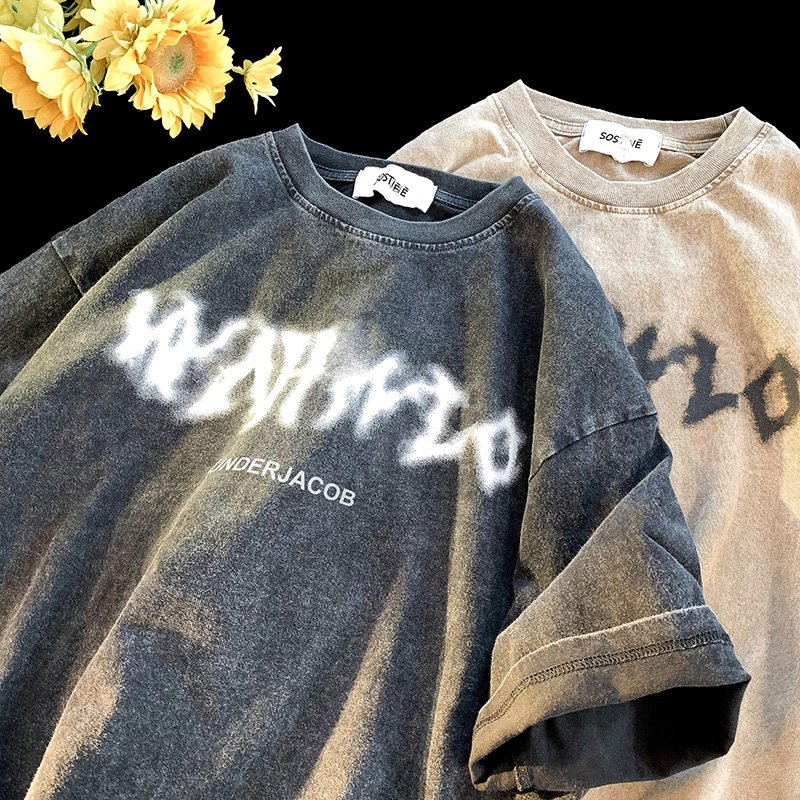
100% Combed Cotton
Ultra-smooth, breathable hand-feel achieved by removing short fiber staples before spinning. The go-to for everyday streetwear basics and branded ringer tees. Typically 160-180 GSM for a structured yet comfortable body drape.
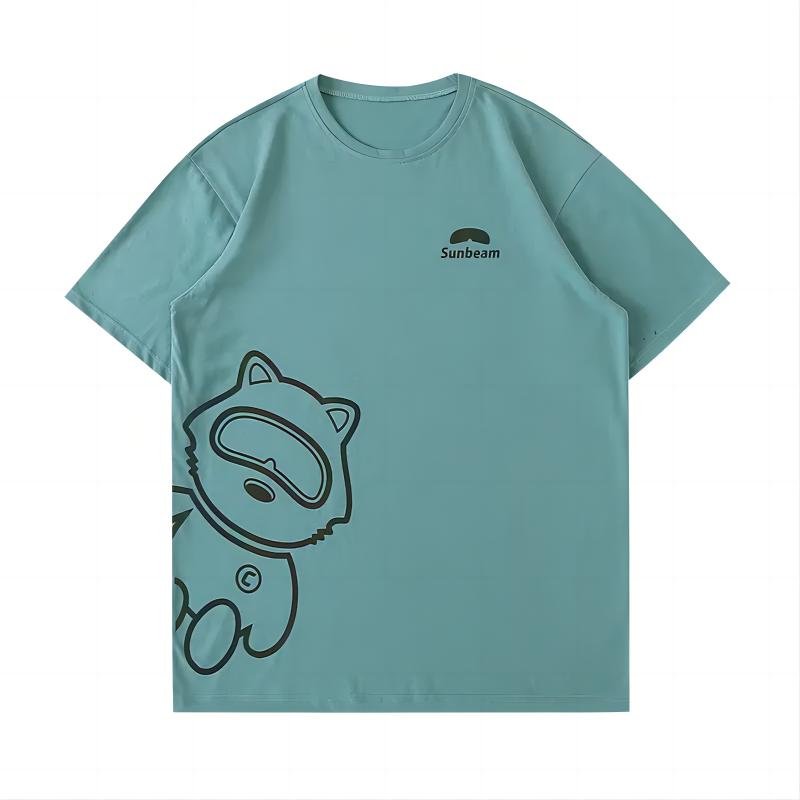
Cotton-Poly Blend
Merges cotton’s natural breathability with polyester’s shape retention for a wrinkle-resistant, durable finish. Ideal for high-volume retail ringer lines and activewear-adjacent streetwear. Standard 60/40 ratio runs 170-190 GSM for easy-care performance.
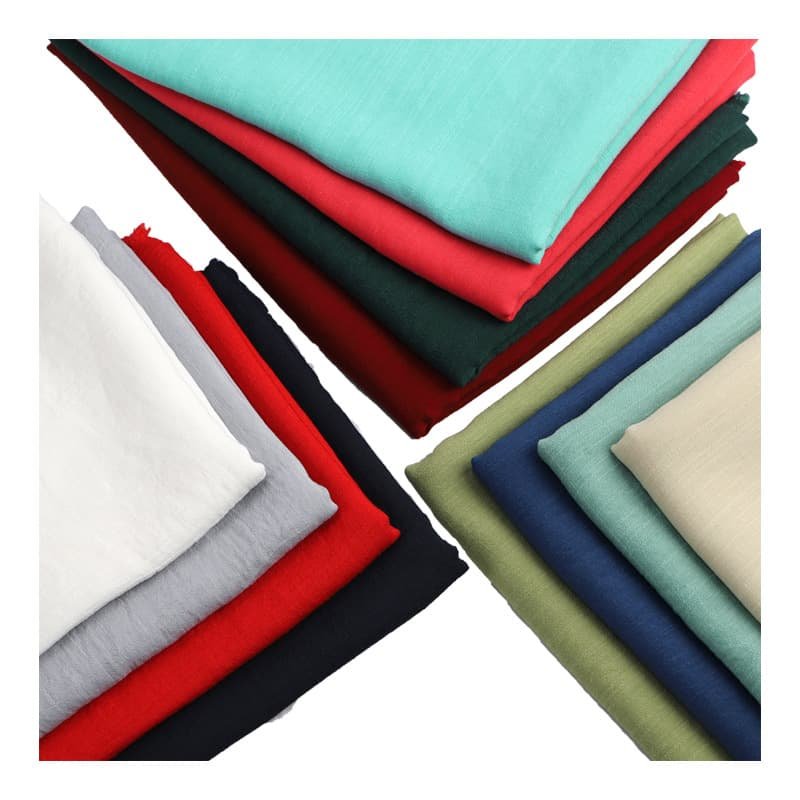
Slub Cotton
Irregular slub yarn creates a naturally textured, vintage surface prized in premium and limited-edition streetwear drops. Low post-wash shrinkage of approximately 3-5% makes it a reliable choice for branded capsule collections with strict fit standards.
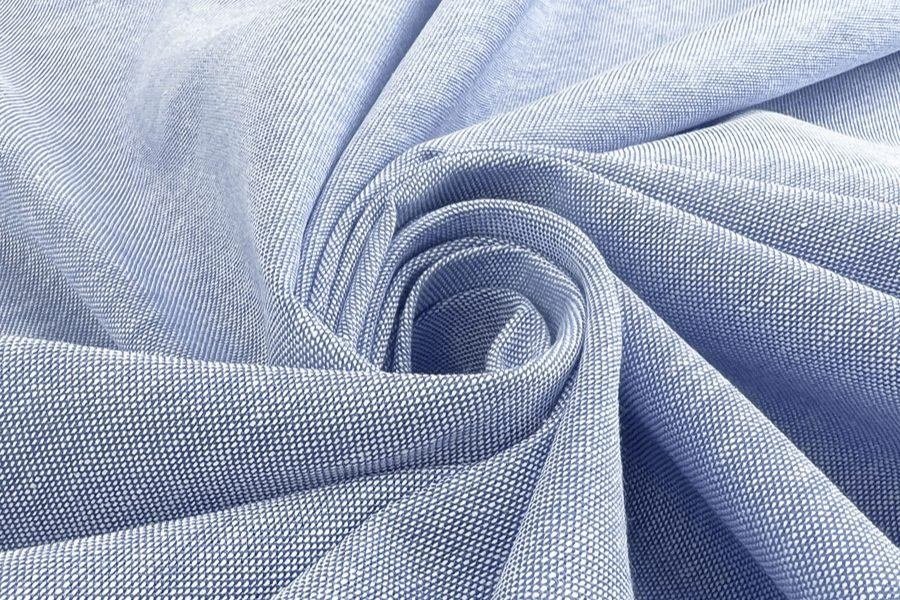
Organic Cotton
Grown without synthetic pesticides, delivering an ultra-soft, skin-safe hand-feel suited to eco-conscious and premium label lines. Highly breathable at 180-200 GSM, making it a strong choice for brands marketing sustainability alongside streetwear aesthetics.
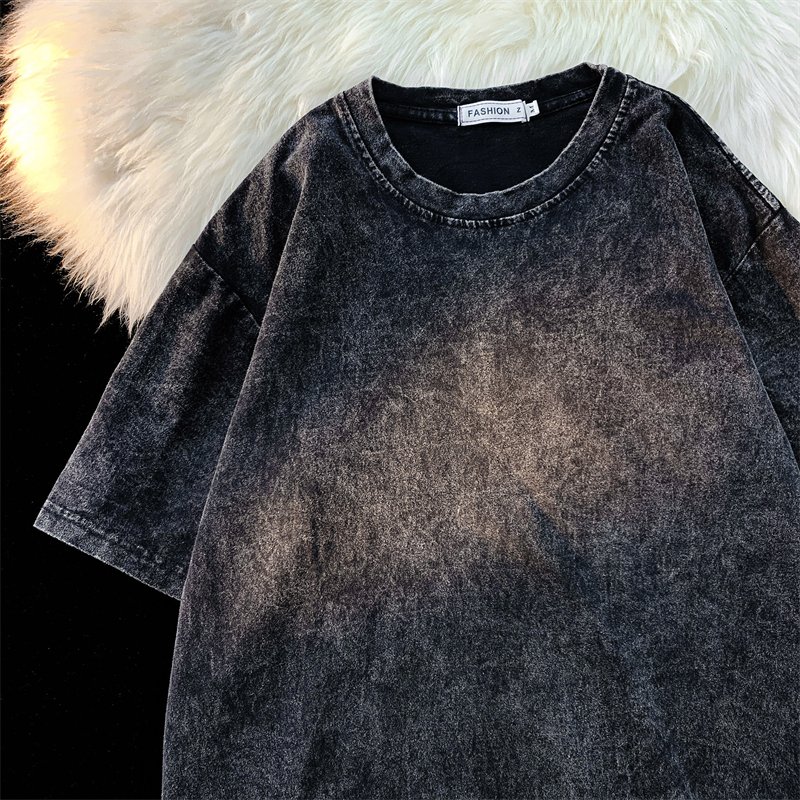
Pima Cotton
Extra-long staple fibers produce exceptional softness and long-lasting durability in one fabric. Preferred for luxury streetwear and influencer-driven ringer tee drops. Pre-shrink treatment keeps post-wash shrinkage as low as 2-3%, protecting your branded fit.
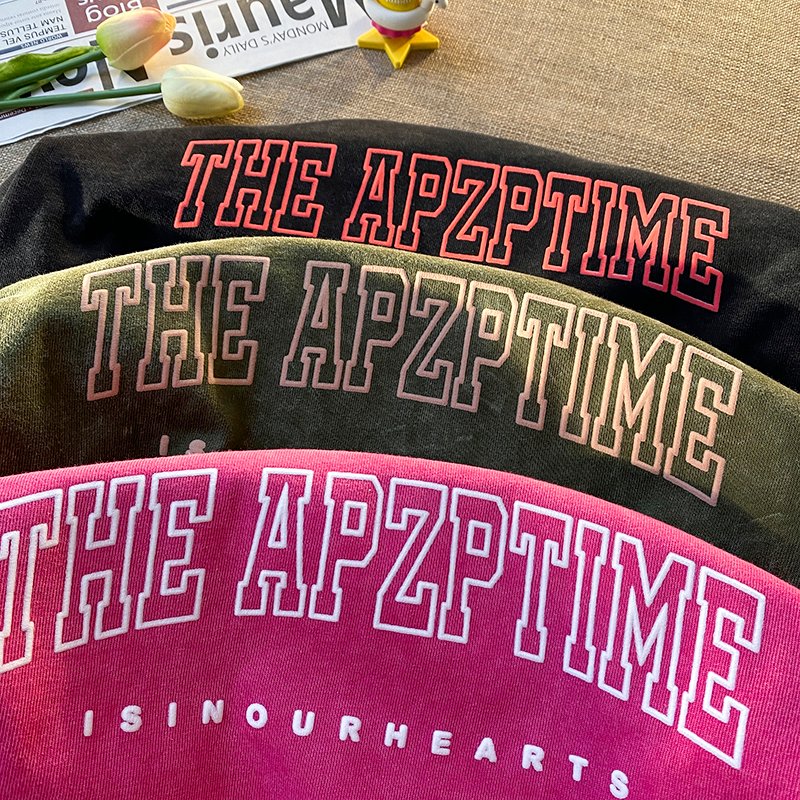
Ring-Spun Cotton
Tightly twisted fibers create a fine, smooth surface with a distinctly premium hand-feel and superior pilling resistance. A consistent performer for retail-quality ringer tees across basics and streetwear lines. Available from 150-200 GSM to suit varied seasonal weight needs.
Ringer T-Shirt Production & Finishing Techniques
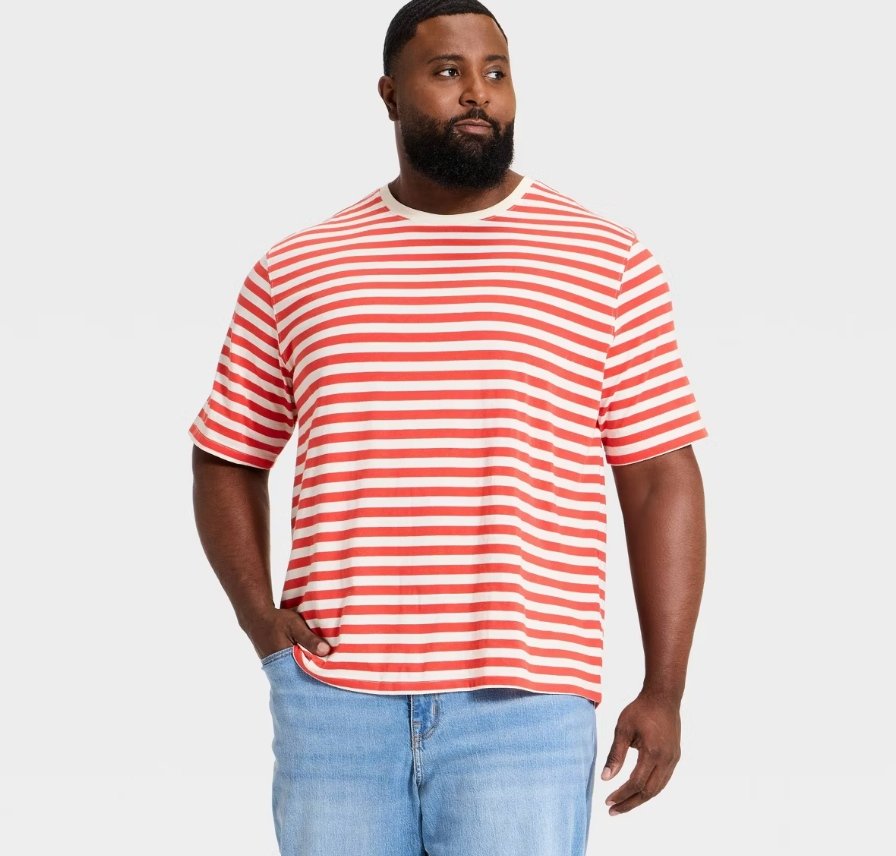
Precision Pattern Cutting
Computer-aided cutting systems slice every ringer tee body panel to exact tolerances, eliminating size drift across bulk runs. This stage feeds directly into our cutting QC checkpoint, catching deviations before sewing begins.
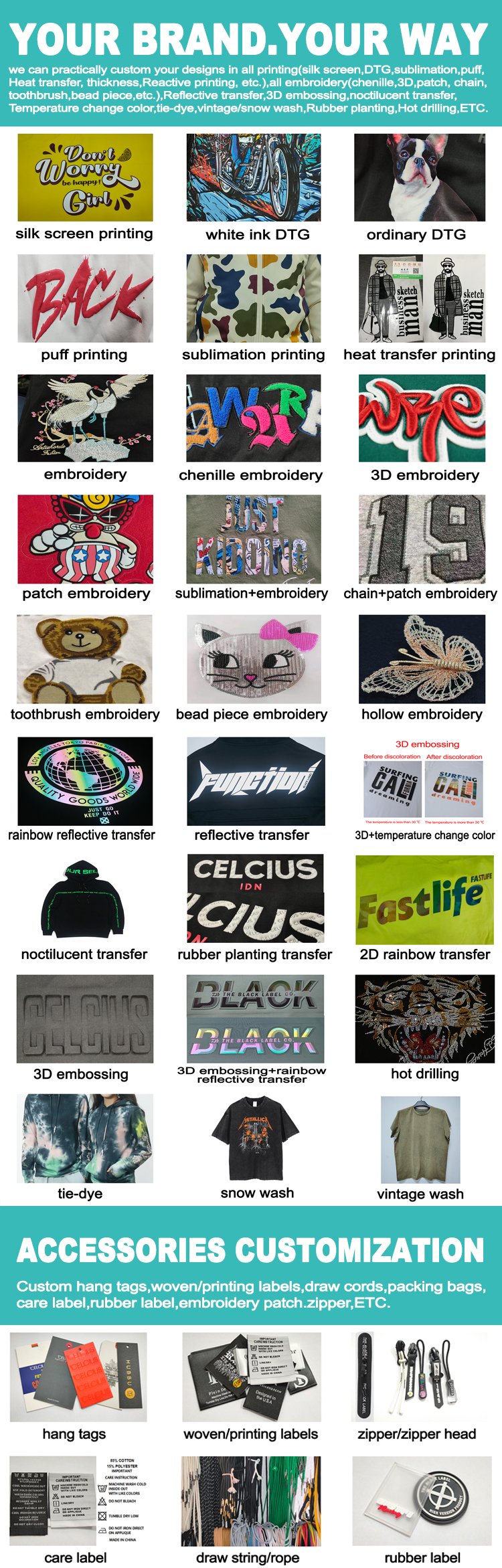
Contrast Binding Application
The defining detail of every ringer tee — contrast neck and sleeve banding — is applied with tension-controlled machinery for clean, even edges that stay flat, resist puckering, and hold color through repeated industrial washes.
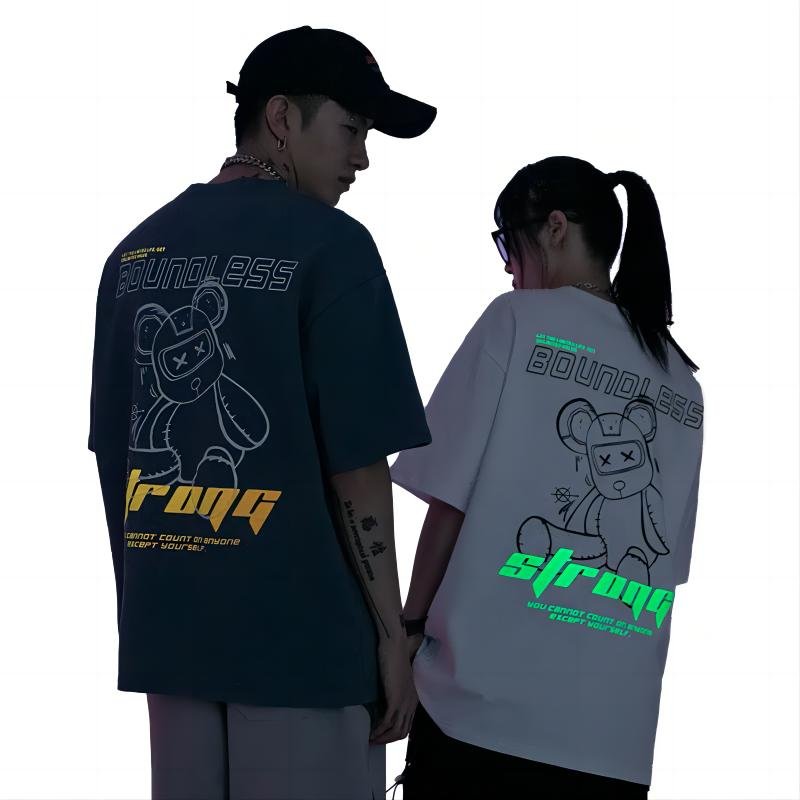
Screen Printing
Plastisol and water-based inks are pushed through precision-registered screens onto ringer tee bodies, producing bold, vibrant graphics with sharp edges and streetwear-grade color saturation built to last well beyond 50 wash cycles.
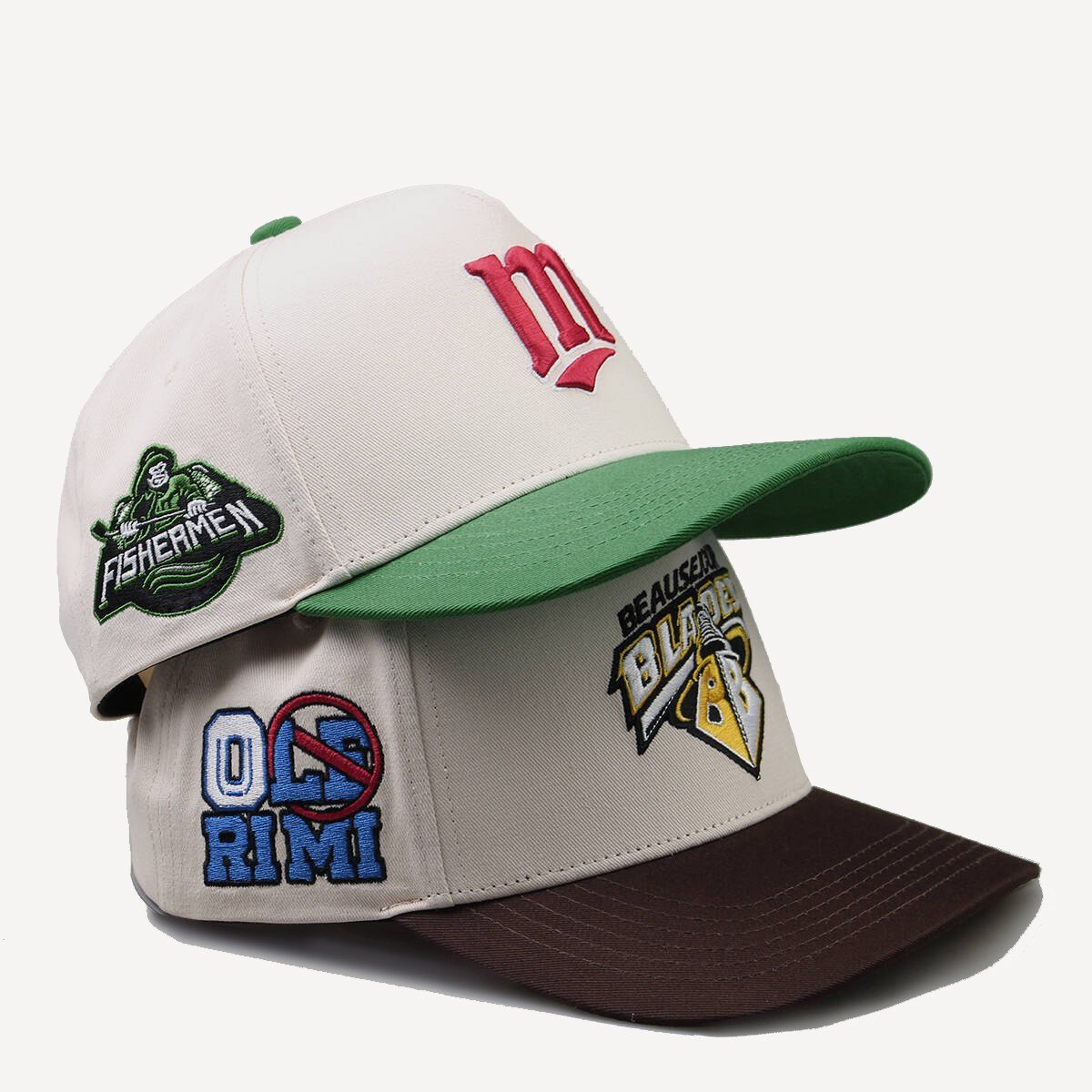
Embroidery Application
Multi-head embroidery machines stitch logos, motifs, and custom artwork directly onto ringer panels at defined stitch density, creating a raised tactile finish that signals premium quality and survives rigorous laundering without unraveling.
Heat Transfer & DTG
Direct-to-garment and heat-transfer printing deliver photo-realistic, full-color artwork onto ringer tees with no color-count restrictions — ideal for influencer drops, limited editions, and sampling rounds requiring fast, low-MOQ turnaround.
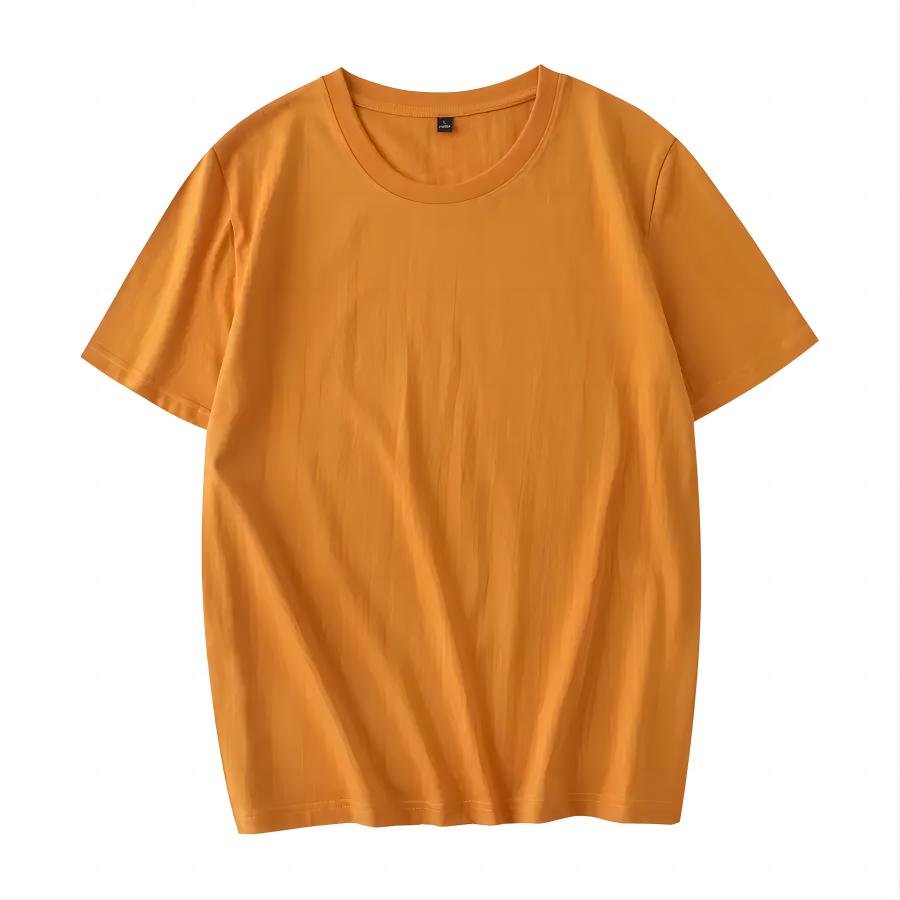
Care Label Placement
Branded neck labels, woven care tags, and hang tags are sewn to precise coordinates during our sewing production QC stage, ensuring every finished ringer tee meets international labeling standards and reinforces your brand identity.
Ringer T-Shirt Hardware & Trim Options
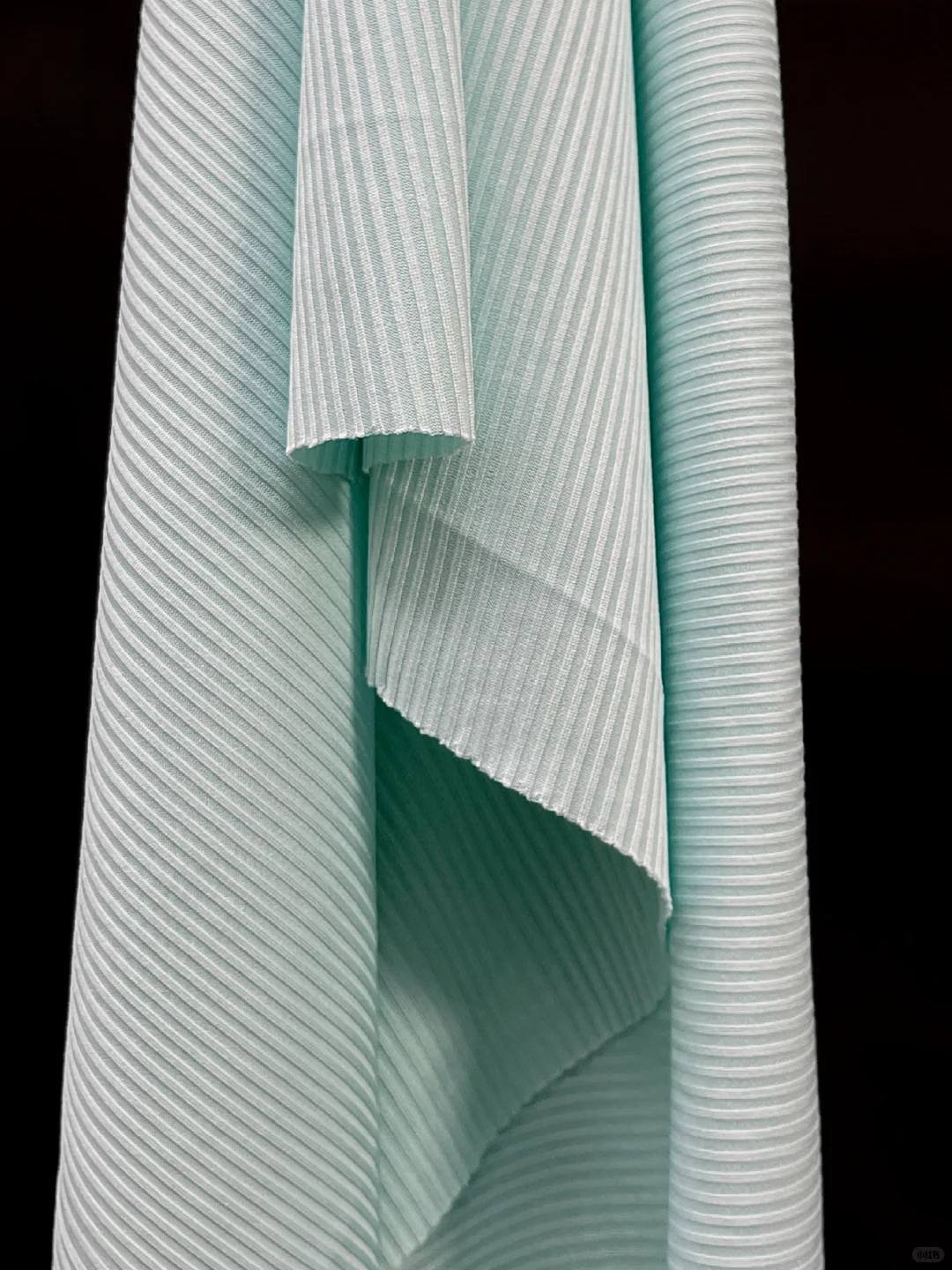
Contrast Neckbinding
The defining detail of any ringer tee. We offer 100% cotton or cotton-rib neckbinding in custom Pantone-matched contrast colors, delivering the bold two-tone look streetwear and influencer brands demand season after season.
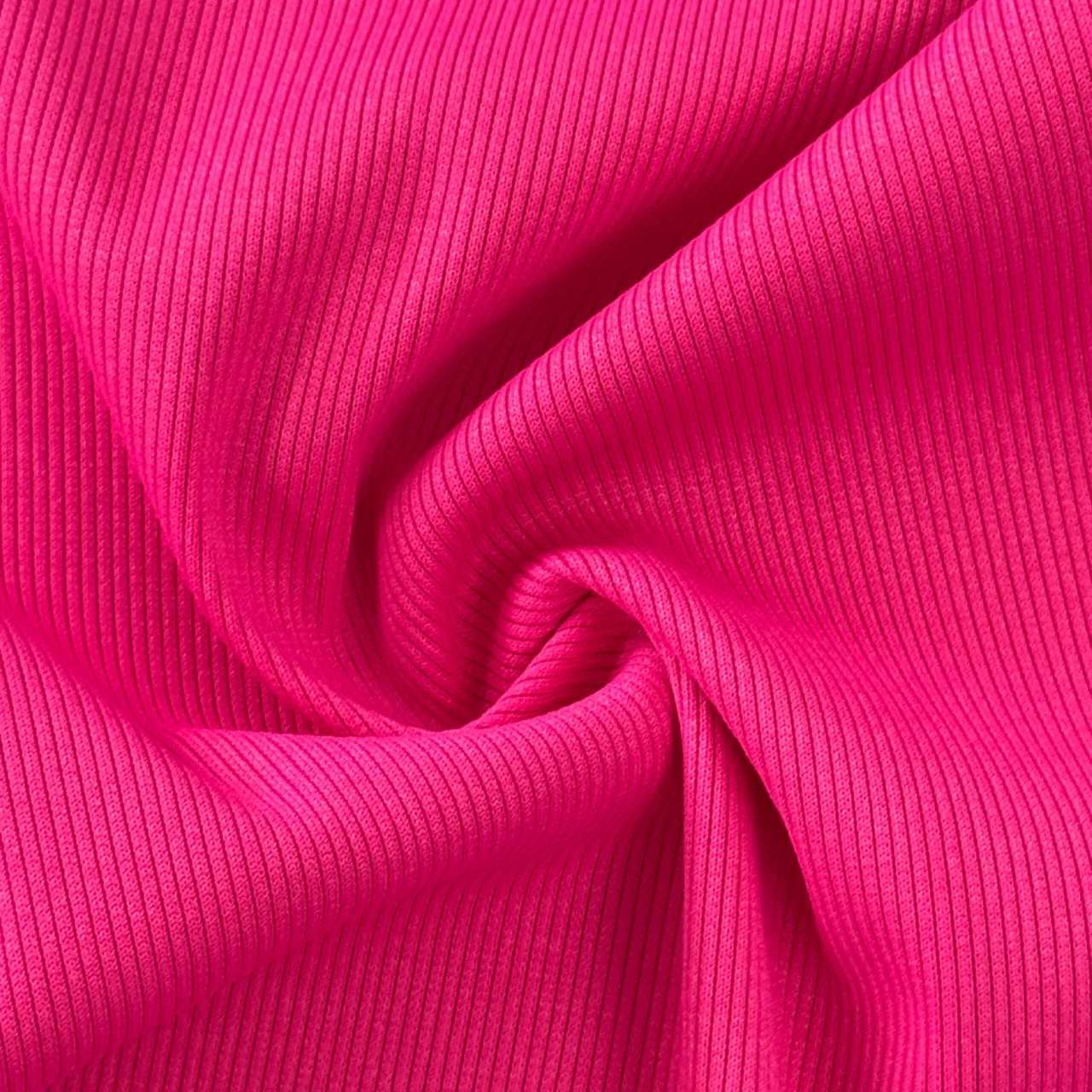
Cuff Ribbing Styles
Choose from 1×1, 2×2, or custom-width rib knit cuffs in contrast or tonal colorways. Durable ribbing maintains sleeve shape through heavy use, essential for premium streetwear collections targeting active, style-conscious consumers.
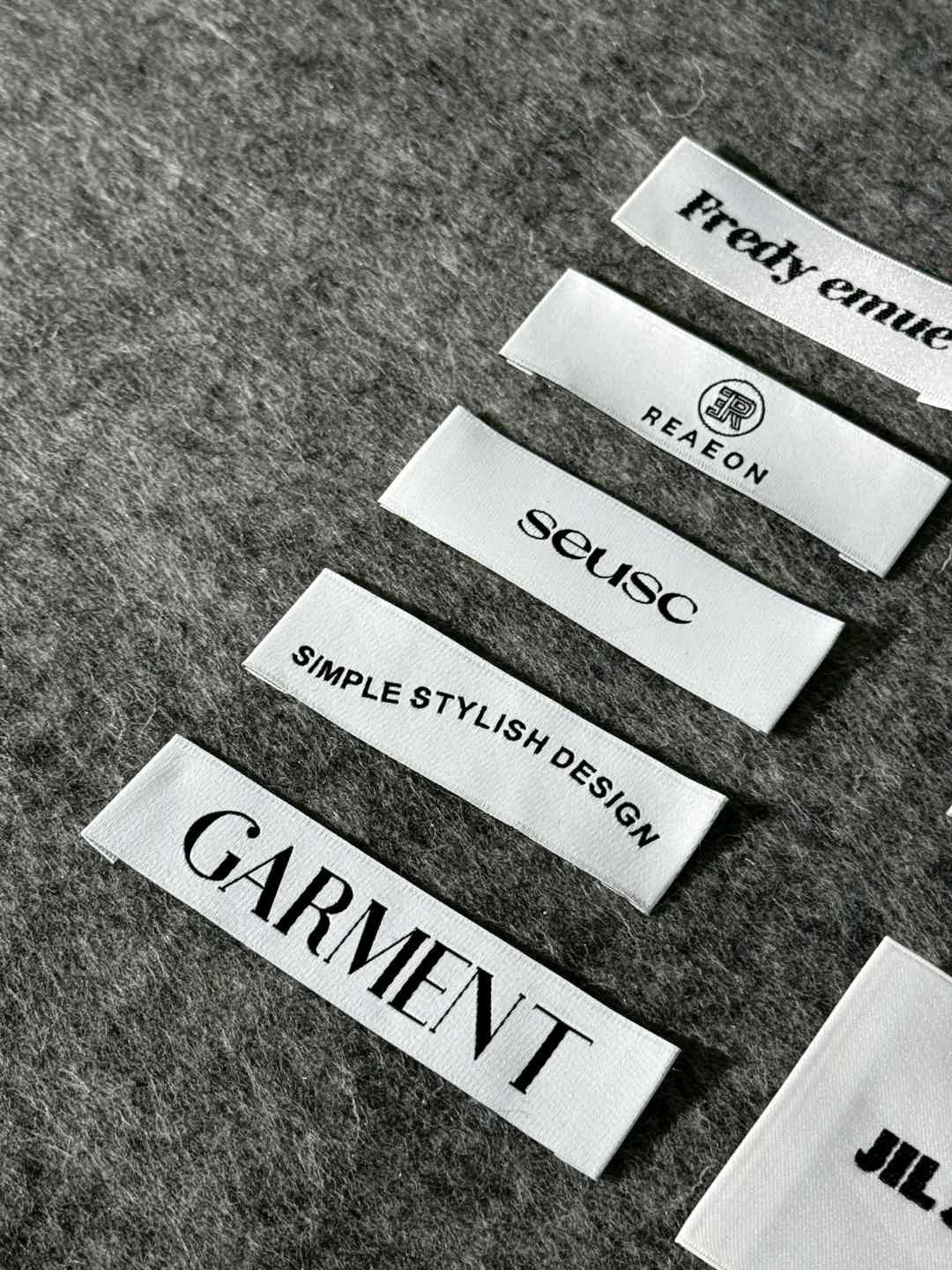
Woven Brand Labels
Custom woven neck labels and side-seam labels carry your logo, size, and country-of-origin data. High-thread-count weaving ensures crisp detail that stays vibrant and legible across hundreds of wash cycles.
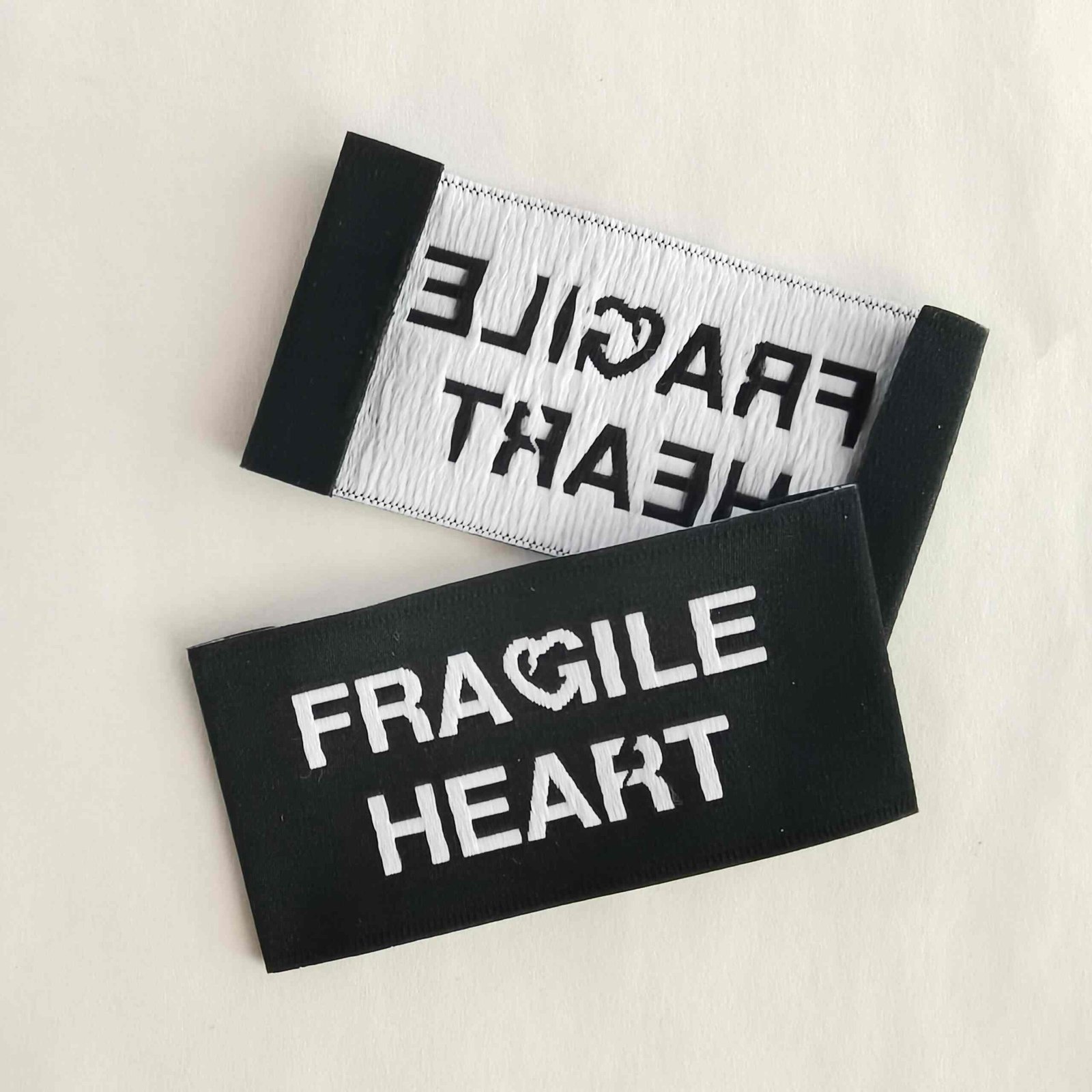
Custom Hangtags
Branded hangtags in card stock, kraft, or coated finishes with your logo, price point, and brand story. A critical touchpoint for retail and e-commerce packaging that elevates perceived value at point of sale.
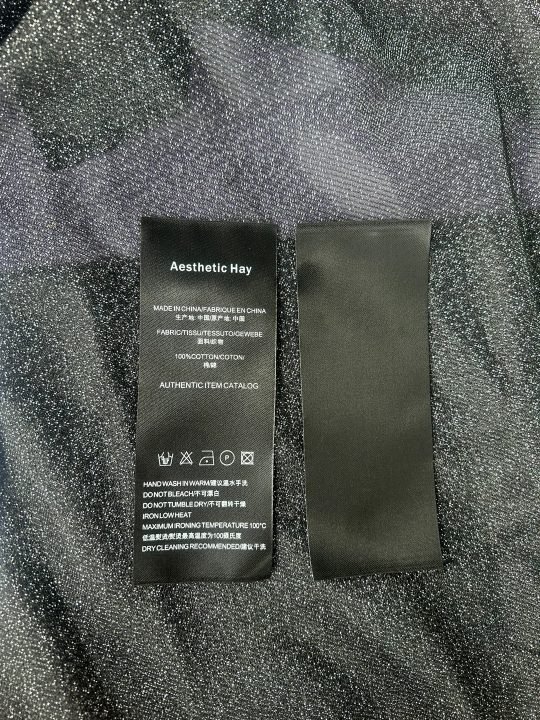
Care Instruction Tags
Compliant printed or woven care labels covering fiber content, washing instructions, and regional regulatory requirements. Mandatory for global retail and direct-to-consumer channels; we handle formatting for US, EU, and Asian markets.
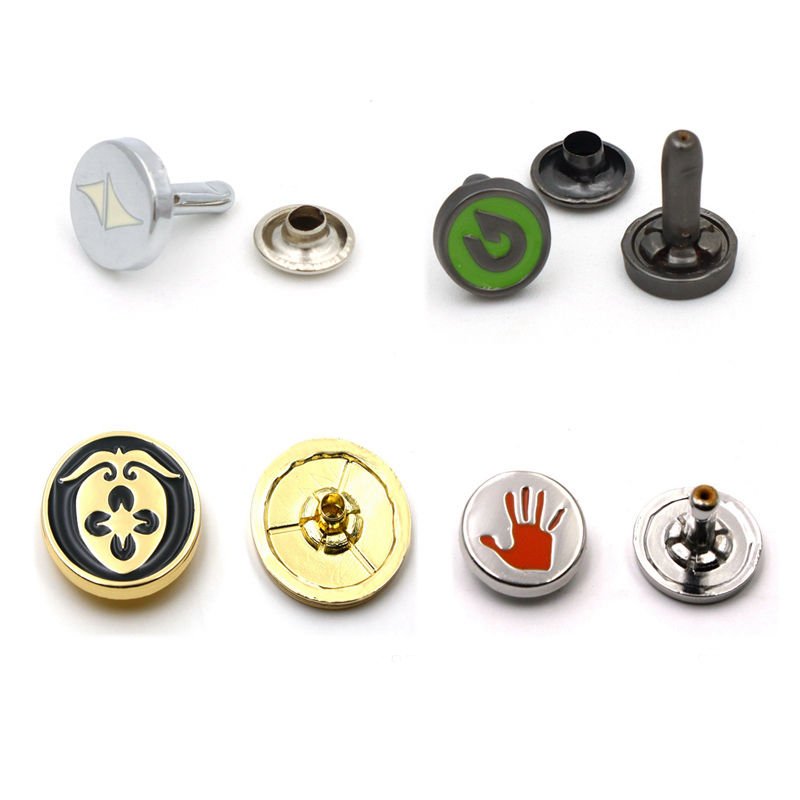
Poly Bag Packaging
Individual resealable poly bags protect each finished ringer tee during transit and fulfillment. Available with header cards, SKU barcodes, or custom printing — keeping your product shelf-ready from our factory floor to your customer.
Ringer T-Shirt Manufacturer Founded on Quality
Clothing Manufacturer Ltd. was founded in 2024 by Tesla Luo in Humen Town, Dongguan — China’s historic garment manufacturing heartland. With over 10 years of production experience and 6 years specializing in streetwear, Tesla grew up inside garment factories, rotating through every role from cutting and sewing to QC and shipping. His mission as a trusted ringer t shirt manufacturer: restore the reputation of Chinese manufacturing by embedding quality checks at every stage, not just the end.
Since launch, we have served brands across more than 100 countries, supported by a 15-member R&D team and 10 registered production patents. On February 12, 2025, we formalized our proprietary 5-step QC framework — covering materials, cutting, craft, sewing, and finished-goods inspection — because we believe quality assurance must live throughout the production cycle, never treated as an afterthought. This is what separates us from factories that ship straight from sewing machine to packaging.
Whether you are a streetwear startup placing your first order with a low MOQ, an influencer brand scaling a seasonal drop with a fast turnaround, or a global retailer requiring consistent bulk production, Clothing Manufacturer Ltd. is built to be your long-term manufacturing partner. Our in-house design and sampling team, combined with full global shipping and logistics support, means we handle the complexity so you can focus on building your brand.
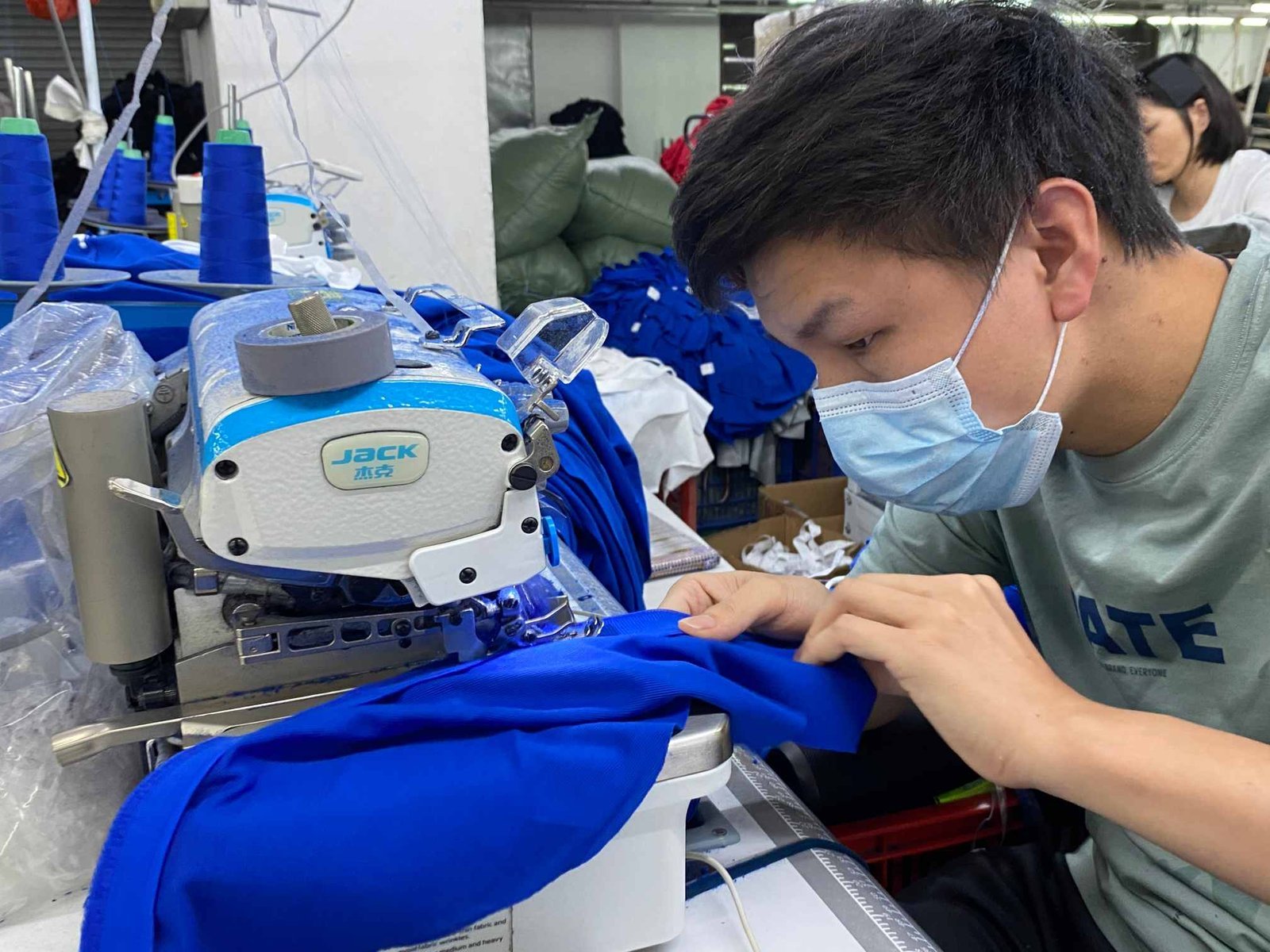
Advanced Ringer T-Shirt Manufacturer: Production & Quality Assurance
5-Step QC Every Ringer T-Shirt Batch
Our proprietary five-step quality control process inspects every ringer t-shirt at materials testing, cutting precision, craft inspection, sewing production, and final audit stages — catching defects early and guaranteeing zero-compromise output across every bulk order we ship.
- Materials QC: fabric weight, colorfastness, and shrinkage tested before a single cut is made
- Cutting QC: panel dimensions and layer alignment verified to spec at every ply
- Sewing production QC: stitch density, seam strength, and contrast-collar attachment inspected inline during assembly
- Final audit: completed garments pass a comprehensive inspection before packing and outbound shipment

Sketch to Sample in 7 Days
Our 15-member in-house R&D and sampling team takes your concept from initial sketch to physical sample in as few as 7 days, managing pattern making, fabric sourcing, and prototype refinement entirely under one roof with no outsourcing delays.
- In-house pattern development and grading purpose-built for ringer tee silhouettes and contrast trim
- Low MOQ sampling available so emerging brands can test new colorways before committing to bulk
- Rapid revision cycles keep seasonal collections on schedule for launch windows
- 10 proprietary production patents underpin consistent, repeatable sample quality every run
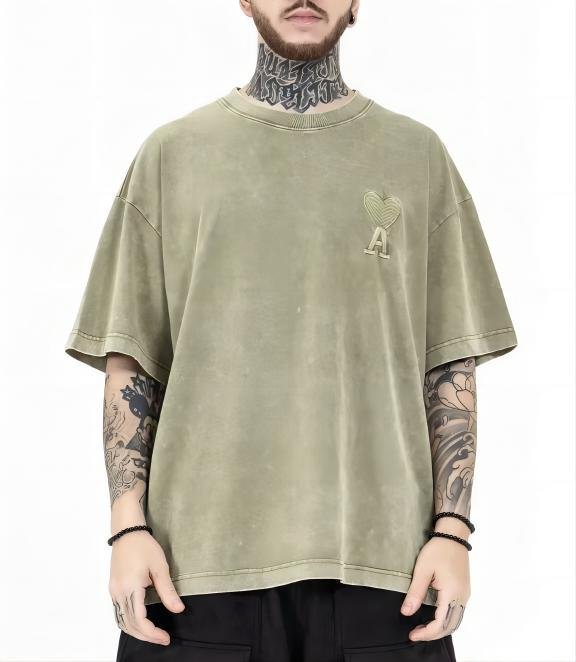
Streetwear Trend Expertise in Every Design
Our founder spent six-plus years immersed in streetwear culture, translating hip-hop, skate, and graffiti influences — skeleton graphics, rose motifs, bold color blocks — into ringer tee collections that authentically connect with trend-driven, self-expressive consumers worldwide.
- Deep fluency in skeleton, animal print, mystery-symbol, and cross-motif streetwear aesthetics
- Design consultation tailored for influencer brands, independent labels, and global apparel retailers
- Trend-aligned contrast collar and sleeve colorways refreshed each season
- Proven track record helping brands scale from zero to 100k-plus social followers
Global Logistics and Shipping Infrastructure
Serving clients across more than 100 countries, we manage customs documentation, freight routing, and end-to-end logistics coordination so you focus on selling. Every ringer t-shirt manufacturer order is tracked from our Dongguan factory floor straight to your fulfillment center.
- Established freight and customs clearance partnerships across North America, Europe, and Asia-Pacific
- Dedicated foreign trade team with hands-on international logistics experience since 2019
- Transparent shipment tracking and proactive milestone communication on every order
- Scalable production capacity backed by parent company Dongguan TuoZhen Clothing Co., Ltd.

Ringer T-Shirt Manufacturer vs. Industry Alternatives
See exactly how Clothing Manufacturer Ltd stacks up against typical low-cost suppliers across the metrics that actually protect your brand.
← 左右滑动查看 →
How Our Ringer T-Shirt Manufacturer Embeds Quality at Every Phase
From concept to delivery, our 5-step QC framework is built into every production stage — so defects are caught early, never after your order ships.
Concept & Sampling
Your design brief meets our in-house R&D team. We develop samples, refine fits, and lock in ringer tee specifications before full production begins.
Materials QC Testing
Every fabric roll and trim component clears QC Gate 1 — ensuring only certified, on-spec materials enter your ringer t-shirt manufacturer production run.
Cutting QC Testing
Precision cutting is verified at QC Gate 2. Panel dimensions, grain alignment, and contrast-collar placements are inspected before a single seam is sewn.
Sewing & Craft QC
QC Gates 3 and 4 monitor clothing craft and live sewing output, catching stitch defects, tension inconsistencies, and assembly errors in real time.
Final Inspection & Testing
Every finished ringer tee clears QC Gate 5 — a full audit of measurements, colorways, branding placement, and construction quality before any unit is approved.
Packing & Global Shipping
Approved garments are folded, tagged, and packed to your exact spec, then dispatched worldwide via our global logistics network with complete tracking documentation.
How Your Ringer T-Shirt Manufacturer Takes You From Quote to Bulk Delivery
Five friction-free steps — engineered to protect your investment, uphold quality at every stage, and get your ringer tees to market on time.
Submit Tech Pack & Design Files
Share your artwork, measurements, colorways, and fabric preferences. Our team reviews every detail and responds within 24 hours with a clear production plan.
Receive Quote & Free Sample Offer
Get a transparent bulk pricing breakdown with tiered options. We include a free pre-production sample so you can confirm quality before committing to full production.
Approve Sample & Place Bulk Order
Review your physical ringer tee sample, request any refinements, then lock in your order. Low MOQs make it easy for startups and independent designers to begin.
Monitor Production Through 5-Step QC
Our proprietary five-step quality control process inspects materials, cutting, sewing, and finishing at every stage — eliminating defects before your order reaches final packaging.
Confirm Delivery & Scale Your Brand
Your finished ringer tees ship with full global logistics coordination. Our team tracks every order and stays available for reorders, scaling, and post-delivery questions.
Certified Ringer T-Shirt Manufacturer — Quality & Ethics You Can Verify
What Brands Say About Our Ringer T-Shirt Manufacturer
We launched our first ringer tee drop with zero production experience. Clothing Manufacturer Ltd. guided us through sampling, nailed our colorblock design in just 8 days, and we sold out in 72 hours. We grew from 0 to 60K Instagram followers in under 4 months.
Their 5-step QC process caught 230+ defects across two bulk orders before a single unit shipped. That saved us a costly recall and protected our brand with key retailers. We have placed four orders since and defect rates have stayed near zero.
We needed 7-day samples to hit our spring and fall seasonal windows. Clothing Manufacturer Ltd. delivered on both deadlines, letting us launch two full ringer tee collections on schedule. Our sell-through rate jumped 35% compared to our previous supplier.
Ringer T-Shirt Manufacturer — Answers to Top Questions
Everything streetwear brands, startups, and global retailers need to know before placing an order — answered directly by our production team.
What is the minimum order quantity for a ringer t shirt manufacturer like yours?
How long does production take at your ringer t shirt manufacturer facility?
Do you offer samples before I commit to a bulk ringer t shirt order?
What payment terms does your ringer t shirt manufacturer accept?
How do you protect my design IP when I share artwork or tech packs with your team?
What shipping options and delivery timelines do you offer for international orders?
Can every element of a ringer tee be customized — collar, sleeves, graphics, and labels?
What quality guarantee does your ringer t shirt manufacturer provide on bulk orders?
The Complete Buyer’s Guide to Ringer T Shirt Manufacturer
Discover how to evaluate every ringer t shirt manufacturer on quality, pricing, and minimums — with a proven decision framework, must-check supplier criteria, and the critical mistakes that cost brands time and money.
1. What Is a Ringer T Shirt Manufacturer?
A ringer t shirt manufacturer is a factory or production partner that specializes in the classic two-tone tee — a crew-neck shirt featuring a contrast-color rib-knit collar band and matching sleeve bands in a second colorway. The defining construction detail is yarn-dyed ribbed trim, which requires sourcing or knitting a separate rib fabric and joining it to the body shell at seam tolerances under 2mm for a clean, commercial finish.
3 tooling requirements separate a true ringer t shirt manufacturer from a general blank-tee CMT supplier: ribbed trim cutting dies calibrated for 1×1 or 2×2 rib structures, a yarn-dyed or piece-dyed contrast fabric inventory matched across standard Pantone colorways, and flatlock or clean-finish seaming equipment that aligns collar and sleeve band joins without puckering or color bleed at the seam edge.
Any general CMT factory can technically sew a ringer tee, but without a dedicated trim supply chain and embedded seam-alignment quality checks, collar band misregistration and dye-lot mismatch become recurring defect categories that inflate rework costs and delay shipments. A specialist ringer t shirt manufacturer treats contrast-trim accuracy as a core competency, building band-width checks, Pantone color verification, and seam alignment inspection into cutting and sewing stages rather than relying on a single end-of-line review.
For streetwear and trendy brands, this distinction matters: the ringer tee’s visual impact depends entirely on the sharpness of its two-tone contrast, meaning production partners who skip mid-process QC consistently deliver inconsistent results that erode brand equity at retail.
2. Brief History of the Ringer T Shirt and Its Manufacturers
By the early 1950s, the ringer tee had claimed its place in American sports culture, appearing on baseball diamonds and college campuses as a functional uniform piece defined by its contrasting collar and sleeve bands. American mills — many concentrated in the Carolinas — dominated production, knitting ring-spun cotton jersey at 160–180 GSM specifically for athletic durability.
The 1970s transformed the ringer from stadium gear into cultural currency. Bands touring behind acts like the Rolling Stones and The Ramones sold contrast-banded tees at every stop, cementing the silhouette as shorthand for rebellious style. By the 1990s, hip-hop labels and early streetwear imprints — drawing from skateboarding, graffiti, and street art roots — pulled the ringer back into rotation as a blank canvas for bold graphic storytelling.
Manufacturing geography shifted decisively between the 1980s and early 2000s. US domestic mills, facing rising labor costs, ceded volume to factories across South and Southeast Asia, and ultimately to Guangdong Province, China — now the world’s most concentrated apparel production hub. Humen Town in Dongguan alone hosts thousands of cut-and-sew operations with deep expertise in knit construction, trim sourcing, and precision finishing.
Today, every credible ringer t shirt manufacturer operates within a global supply network where fabric comes from specialized knitting mills, contrast-rib trims are sourced separately, and decoration — screen print, embroidery, DTG — is applied in-house or nearby. For streetwear startups and creator brands, understanding this supply chain architecture is the first step toward finding a manufacturing partner capable of consistent, scalable output.
3. Types of Ringer T Shirts Every Manufacturer Should Offer
A qualified ringer t shirt manufacturer must master at least six core silhouettes. Each targets a distinct demographic and brand use-case — ordering the wrong cut for your audience burns sample budgets and delays launches.
Classic Crew-Neck Ringer
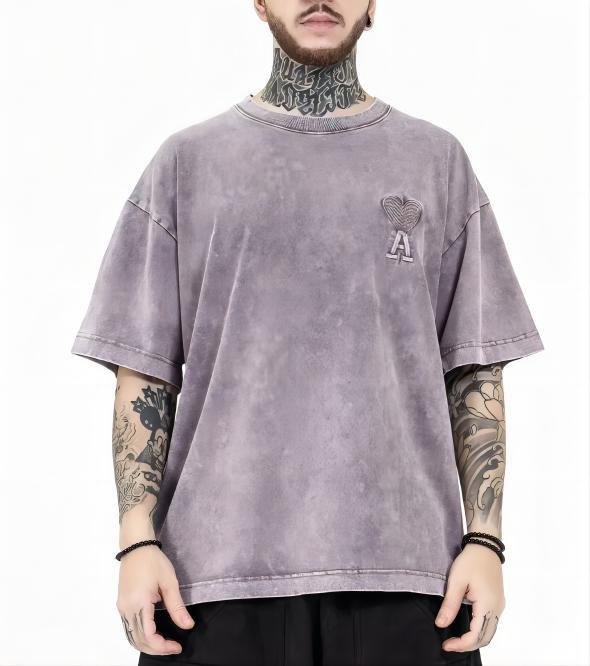
The 160–180 GSM crew-neck ringer is the baseline reference point for the entire category. It suits men aged 18–35, vintage-inspired retail lines, and band merchandise. Brands use it as an entry-level SKU with predictable fit and broad size-run compatibility.
V-Neck Ringer
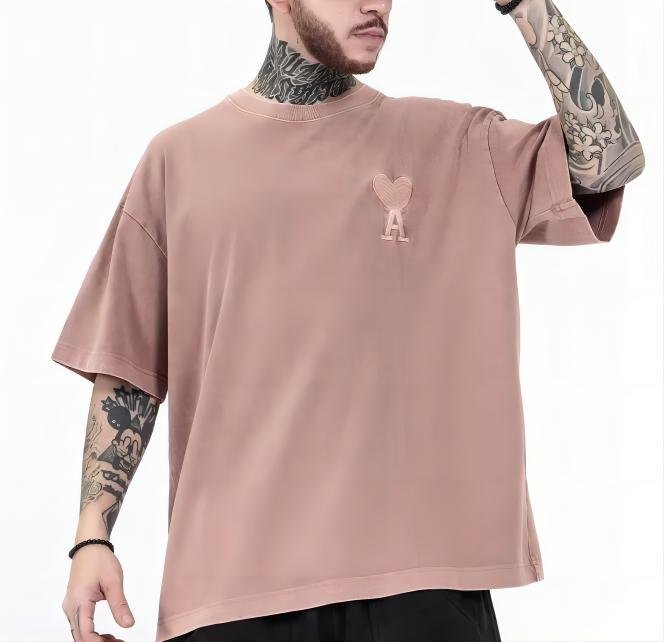
V-neck ringers run 5–8 cm deeper than crew cuts, drawing a younger, fashion-forward female and unisex audience. Independent designers and influencer brands use this silhouette for elevated casual collections where a crew-neck would read as too utilitarian.
Baseball and Raglan Ringer
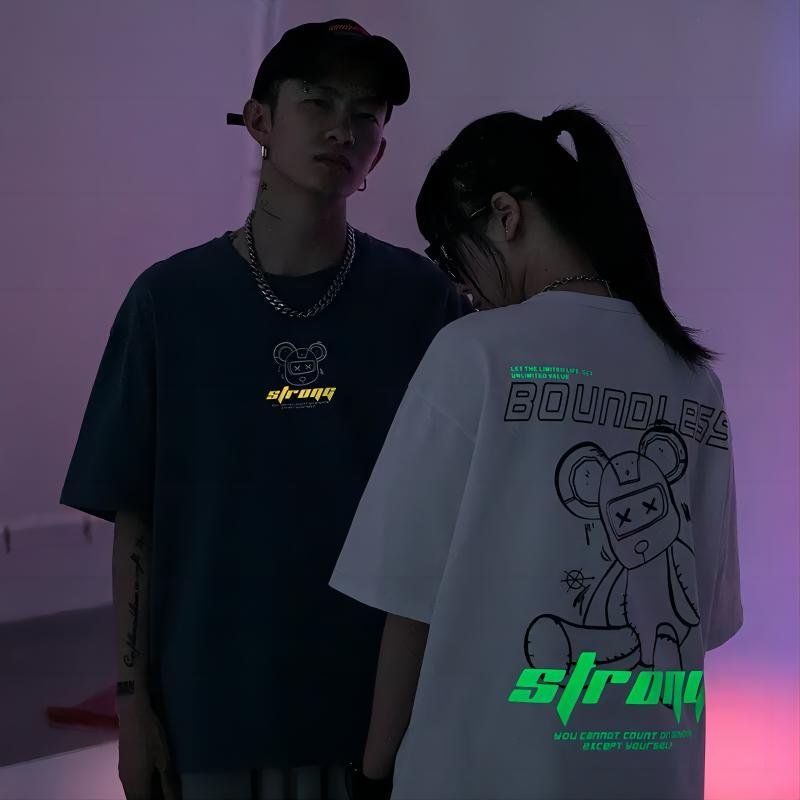
Raglan-sleeve ringers feature contrast three-quarter sleeves joined to a solid body — a construction requiring precise flatlock or overlock seaming at every armhole. Streetwear labels and skate brands favor this cut for its athletic heritage and large graphic print surface.
Oversized and Boxy Ringer
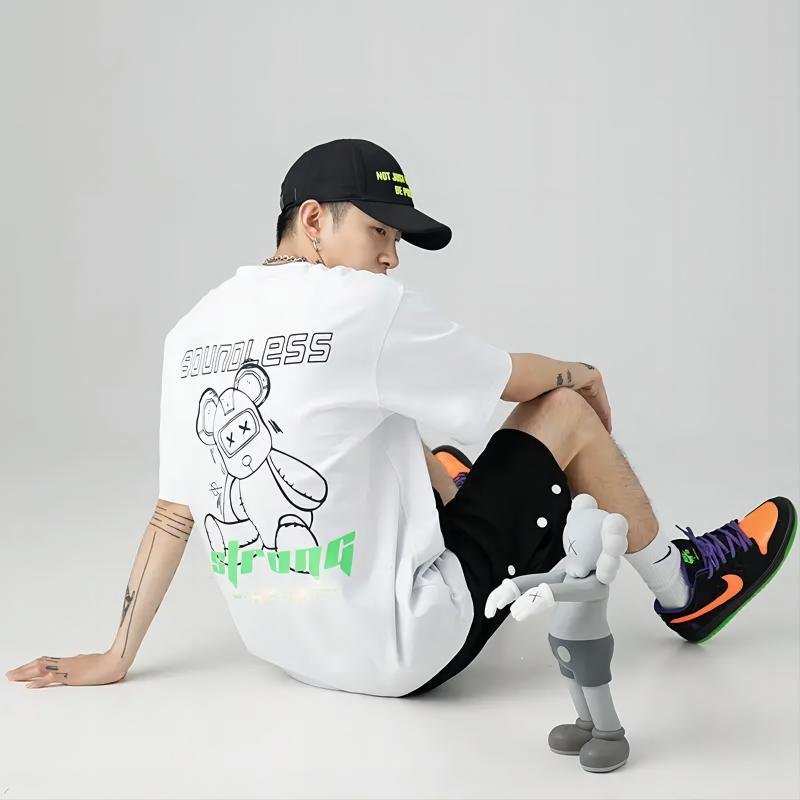
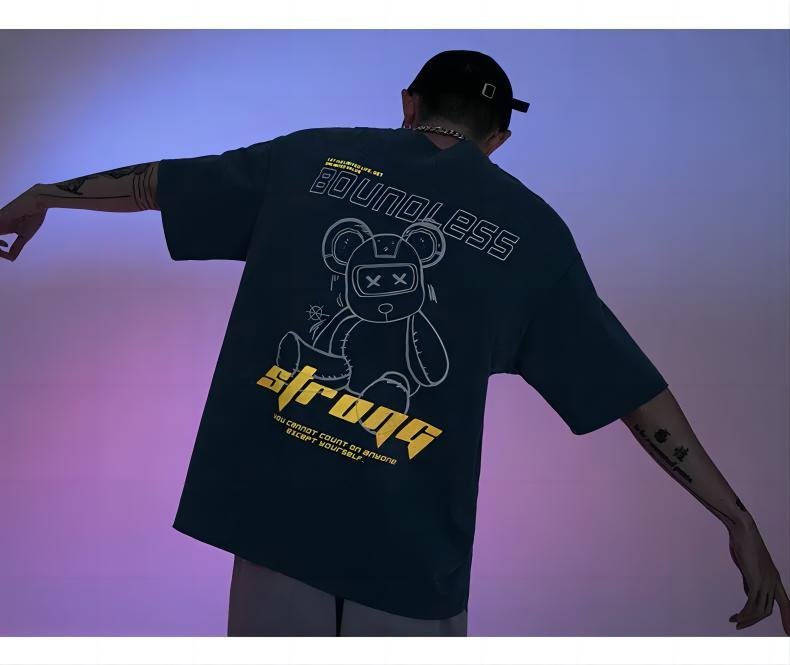
Oversized patterns drop 3–5 sizes beyond standard grading, with a boxy hem and dropped shoulders — a non-negotiable capability for any streetwear-focused ringer t shirt manufacturer. Hip-hop and hype-label brands rely on this cut as their primary volume driver.
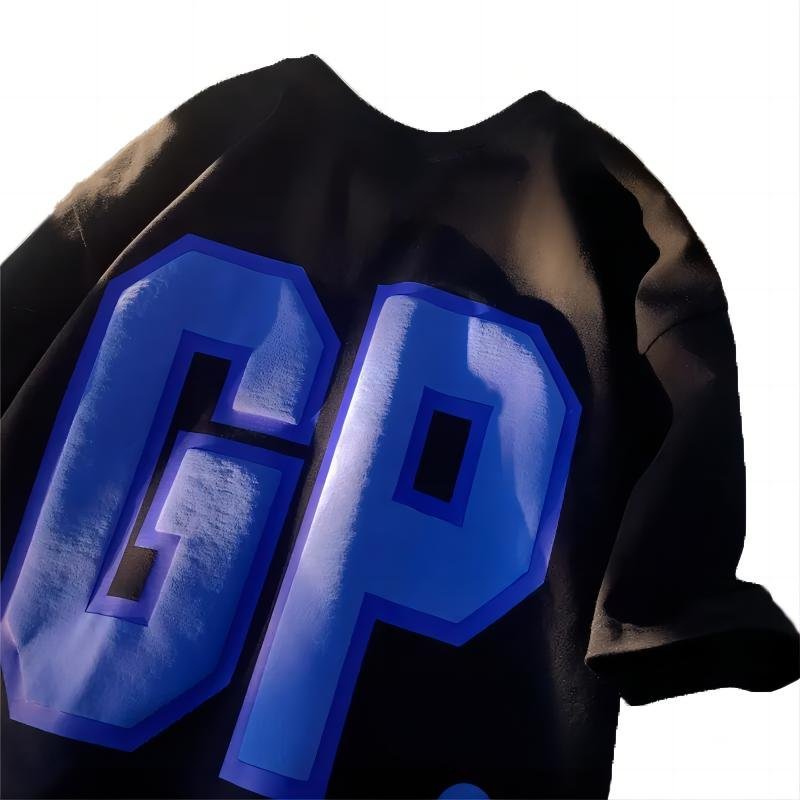
Long-Sleeve Ringer
Long-sleeve ringers extend the contrast-collar detail to matching cuff trim, adding a third construction seam that tests a manufacturer’s consistency. They target cooler-climate markets and autumn/winter drops, used by influencer brands for seasonal capsule collections alongside short-sleeve core SKUs.
Fitted and Cropped Ringer
Cropped ringers finish 5–10 cm above the natural waist, targeting women and unisex fashion-forward audiences aged 16–28. Retail chains and creator brands use this cut for trend-driven drops where high-waist pairing with wide-leg bottoms drives fast sell-through.
4. Materials and Fabrics Used by Ringer T Shirt Manufacturers
Fabric selection determines whether a ringer t-shirt holds its shape, prints cleanly, and keeps contrast bands aligned wash after wash. Any qualified ringer t shirt manufacturer sources within defined GSM ranges — 140–180 GSM for lightweight styles, 180–220 GSM for premium-weight garments.
| Fabric Type | GSM Range | Feel | Best Use | Eco Credentials |
|---|---|---|---|---|
| 100% Ring-Spun Cotton | 160–180 | Smooth, durable | DTG and screen print | OEKO-TEX eligible |
| 100% Combed Cotton | 160–200 | Ultra-soft | Fashion blanks | GOTS if organic |
| 50/50 Cotton-Poly | 140–170 | Lightweight, stable | Athletic, sublimation | Recycled poly available |
| 60/40 Cotton-Poly | 150–180 | Balanced drape | Everyday streetwear | Recycled poly available |
| Tri-Blend (Cotton/Poly/Rayon) | 140–165 | Heathered, soft | Vintage streetwear | Recycled poly option |
| Organic/Recycled Cotton | 160–200 | Natural, breathable | Eco brand labels | GOTS, OEKO-TEX |
Ring-Spun vs. Combed Cotton
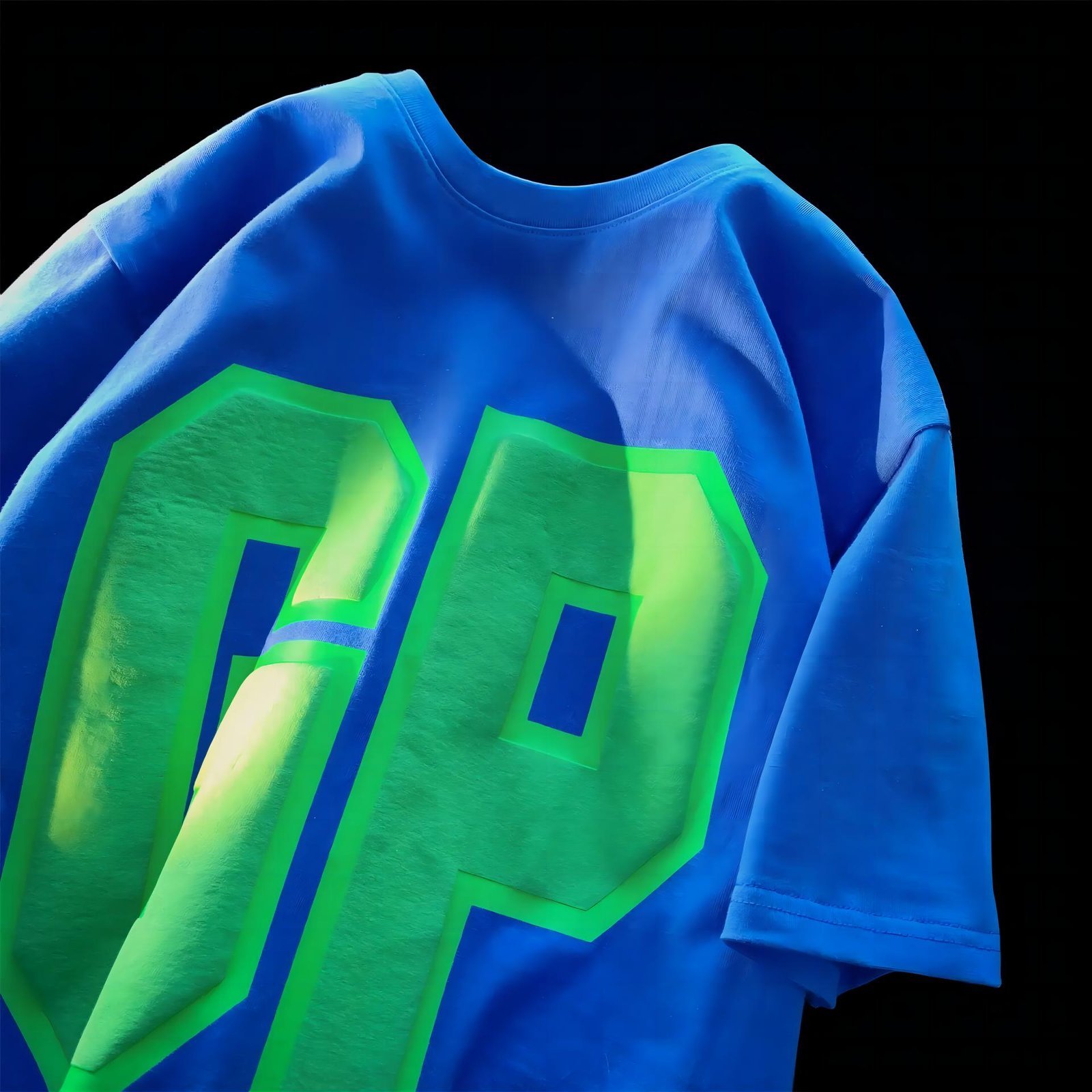
Ring-spun cotton yarns are twisted tighter, producing a smoother, more durable surface that accepts screen printing and DTG ink with sharper detail. Combed cotton removes short fibers first, adding softness — ideal for fashion-forward blanks targeting premium retail price points.
Blends, Tri-Blends, and Performance Fabrics
50/50 and 60/40 cotton-polyester blends reduce shrinkage and weight, useful for athletic and sublimation styles where dimensional stability matters. Tri-blends (cotton/poly/rayon) hit 140–165 GSM, delivering the heathered drape popular in vintage-inspired streetwear.
Contrast-Band Fabric Matching
Ringer collars and sleeve bands must use the same fabric construction as the body to prevent shrinkage mismatch after washing. Mismatched shrinkage rates cause collar ripple and band distortion — a defect caught only when QC testing includes post-wash checks at every production stage.
5. Customization and Decoration Options From a Ringer T Shirt Manufacturer
A full-service ringer t shirt manufacturer should support at least six decoration methods. Matching the right technique to run size prevents cost overruns and quality failures before a single shirt ships.
Screen Printing: Spot Color, Discharge, Water-Based
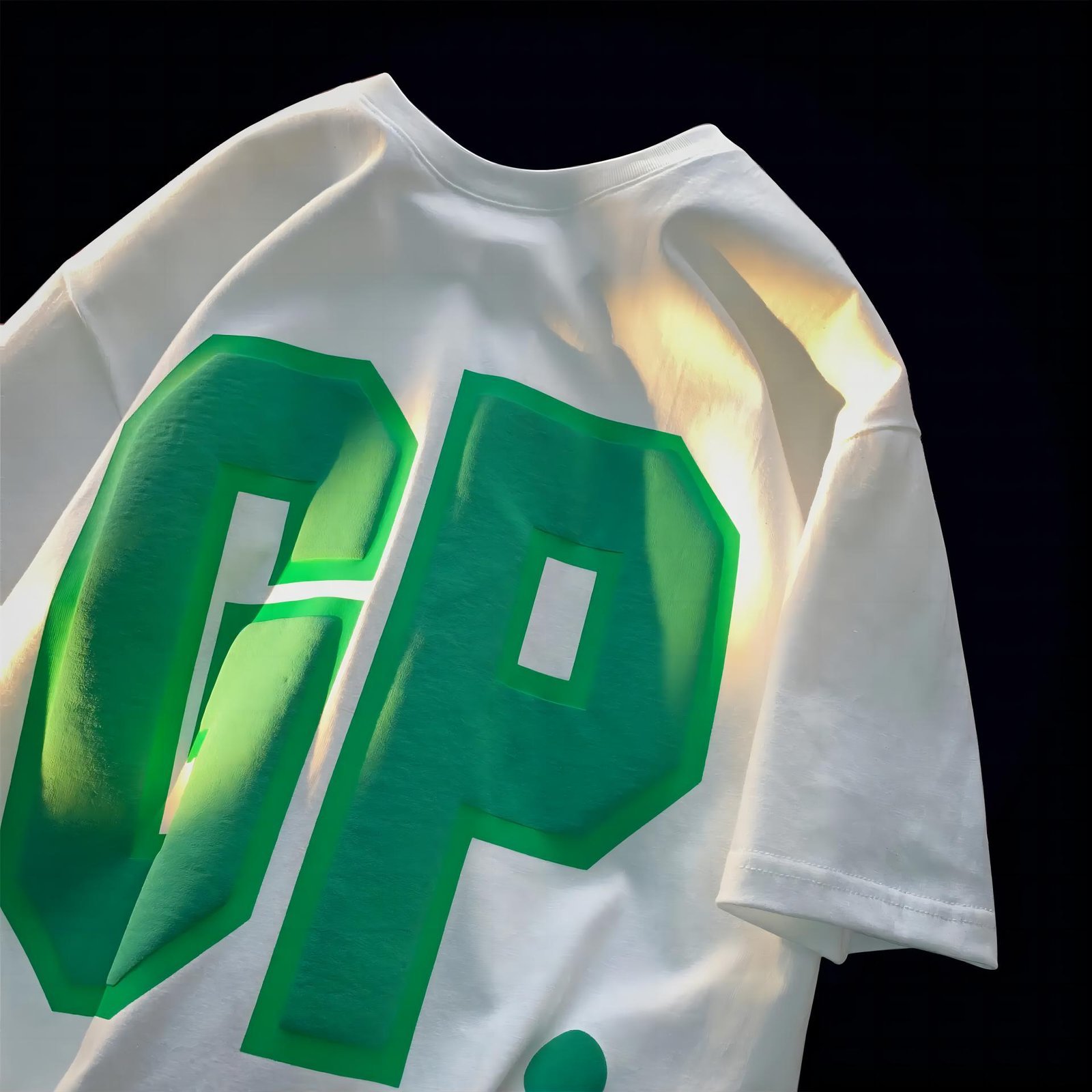
Screen printing suits runs of 24+ pieces per colorway; spot-color builds using Pantone-matched inks deliver the sharpest edge definition on ring-spun cotton. Discharge and water-based inks penetrate the fiber rather than sitting on top, producing the soft hand-feel streetwear buyers expect.
DTG and Heat Transfer for Small Runs
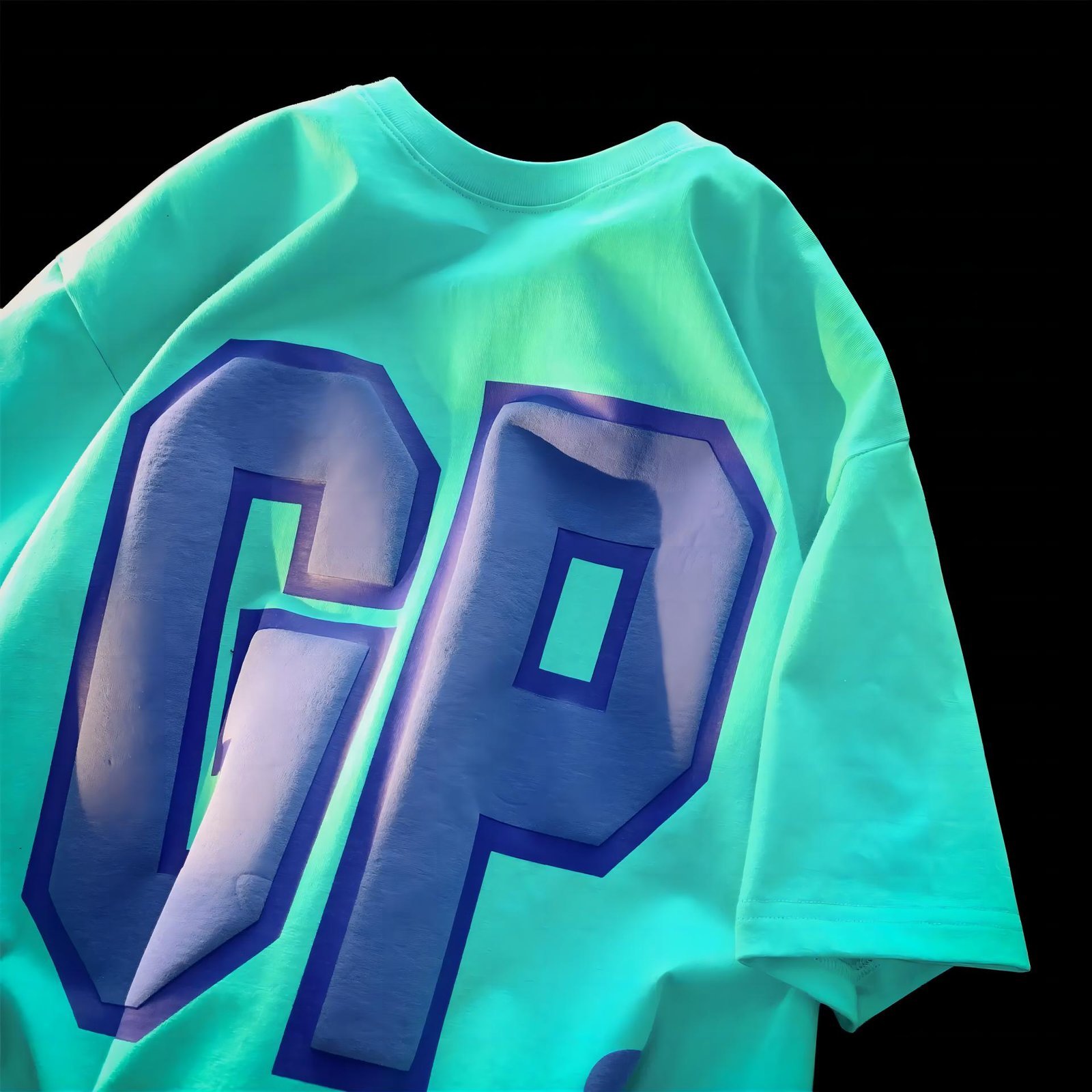
DTG (direct-to-garment) requires no screens or setup fees, making it viable for runs under 12 units and ideal for sampling. Heat transfer and vinyl cut work at quantities as low as 1 piece. Both methods perform best on 100% cotton or high-cotton blends above 180 GSM.
Embroidery and Woven Label Branding
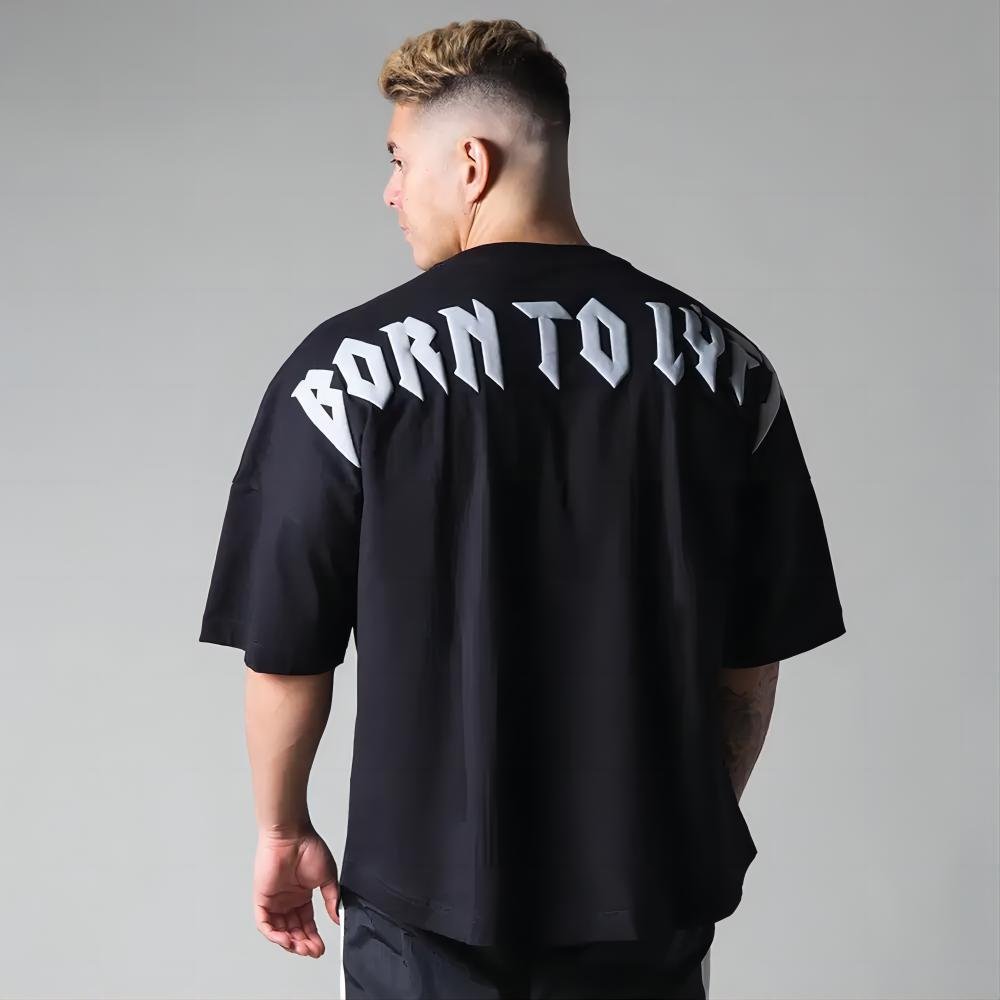
Embroidery — standard at 4,000–10,000 stitch counts for chest logos — adds tactile weight that elevates perceived quality on ringer tees. Woven labels placed at the collar interior or hem turn a functional tag into a brand touchpoint, typically ordered at MOQs of 100–500 units.
Placement Zones and Contrast Band Canvas
Standard placement zones on a ringer tee include the left chest (3–4 inch print), center chest, back yoke, and sleeve. The contrast collar and cuff bands — typically 1–2 inches wide — function as a secondary branding canvas; screen-printed text or small embroidered marks on those bands create a signature streetwear detail.
All-Over Sublimation for Poly Blends
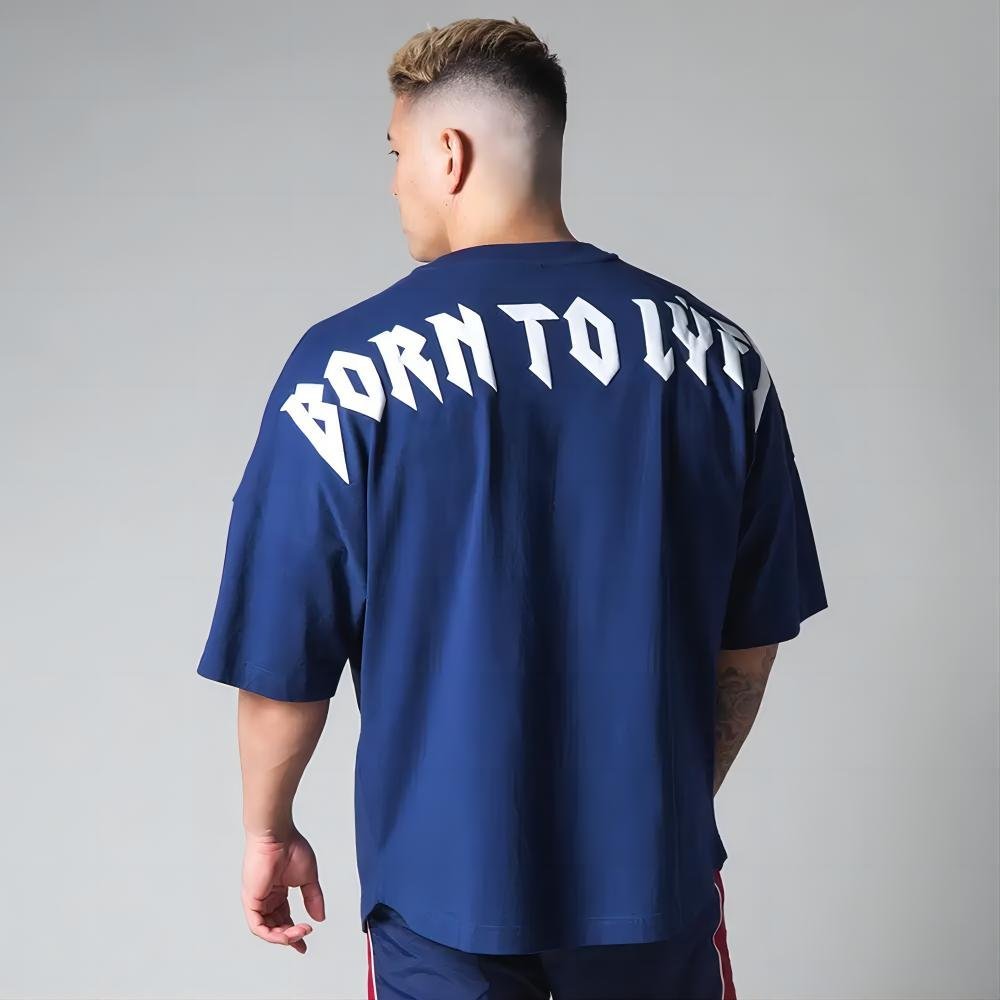
All-over sublimation requires a minimum 65% polyester content to bond dye permanently into the fiber, producing edge-to-edge prints with no color-count limit. This method suits AOP streetwear drops. MOQs typically start at 50–100 pieces per design due to setup and cutting costs.
6. Key Construction Quality Elements to Inspect
Evaluating a ringer t shirt manufacturer on sample quality requires checking five specific construction points before committing to bulk production. Defects caught at the sample stage cost nothing; defects found after a full run cost everything.
Seam Construction on Side and Shoulder Panels
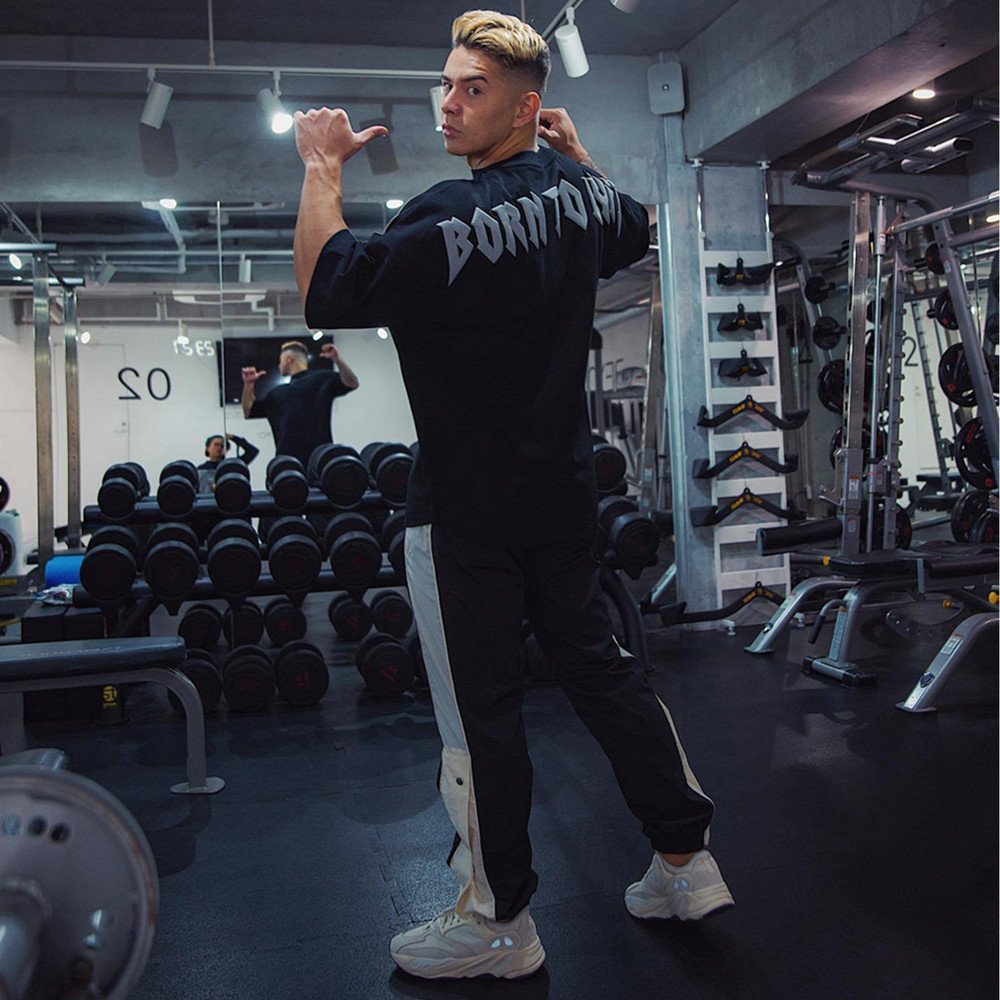
Side seams and shoulder seams should use overlock or flatlock stitching at 12–14 stitches per inch. Lower stitch density signals skipped sewing-stage QC — a standard that no credible ringer t shirt manufacturer should compromise.
Collar Band Tension and Rib-Knit Gauge
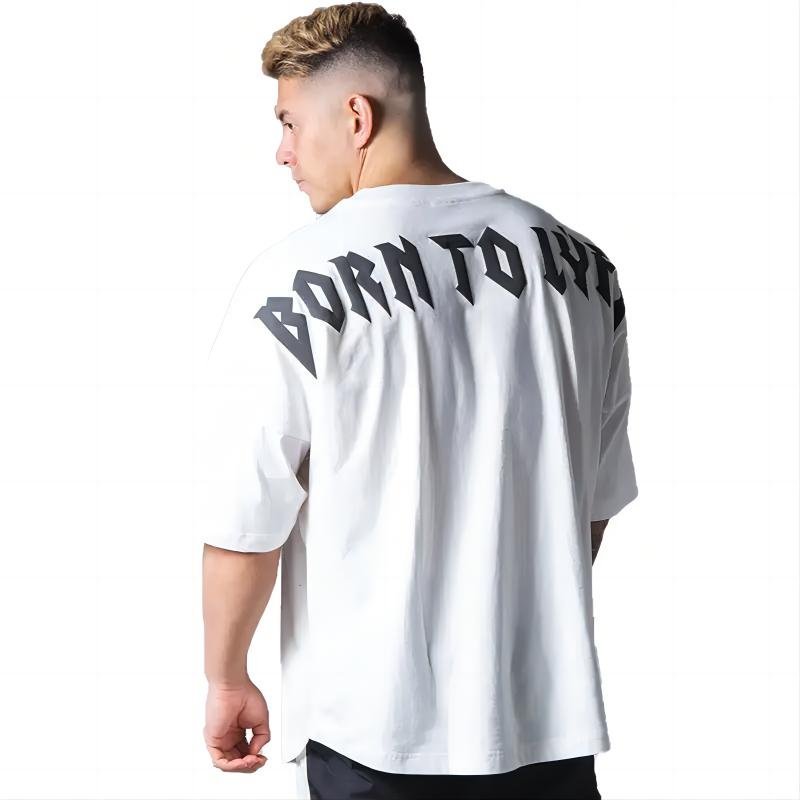
Rib-knit collar bands in 2×1 or 1×1 gauge must stretch evenly across the full neckline and recover without twisting or puckering. Inconsistent gauge between the collar and sleeve bands causes visible warping after the first wash cycle.
Sleeve Band Color-Fastness and Fabric Shrinkage
Request AATCC 61 test results confirming sleeve-band dye holds through at least 20 wash cycles; contrast-color bands are the first point of color bleed on ringer tees.
Pre-shrunk ring-spun cotton at 180–200 g/sm should test below 3% shrinkage per AATCC 135 — untreated fabric typically shrinks 8–12%.
Label Placement and Sample Evaluation Checklist
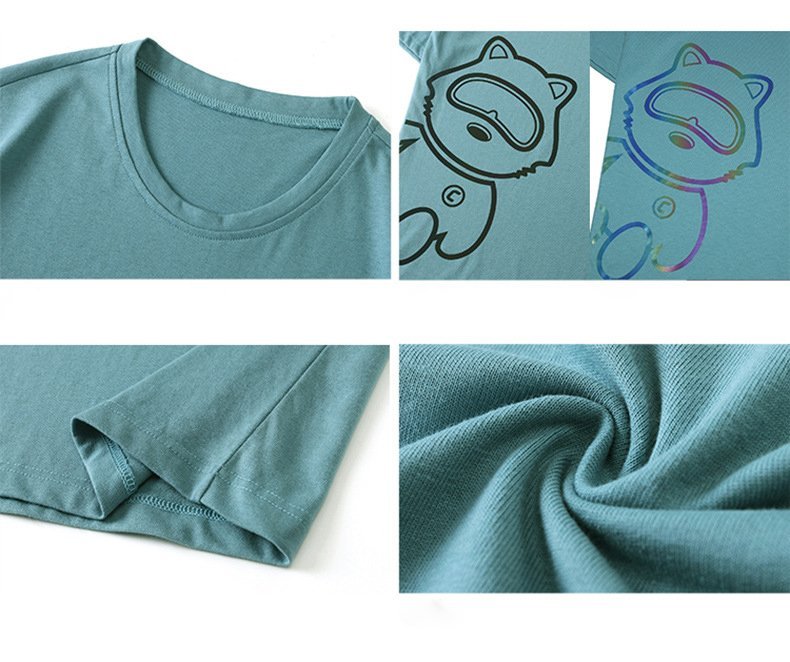
Neck labels must land within ±3 mm of the spec-sheet position; misalignment at this stage indicates absent cutting-stage QC and compounds sizing inconsistencies across the bulk run.
- Check flatlock or overlock stitching at 12–14 stitches per inch on side and shoulder seams.
- Stretch collar rib-knit fully; it must recover without twisting or gapping along the neckline.
- Request AATCC 61 wash-cycle results confirming sleeve-band dye holds stable through 20 cycles.
- Confirm pre-shrunk fabric tests below 3% shrinkage per AATCC 135 before approving bulk production.
- Measure label placement; reject any sample where placement falls outside ±3 mm of the spec sheet.
7. How to Choose the Right Ringer T Shirt Manufacturer for Your Brand
Three criteria separate reliable vendors from risky ones — MOQs, lead times, and certifications — but price alone misleads most buyers. A structured vetting framework prevents costly production failures before a single sample ships.
MOQ Tiers and Sample Turnaround Benchmarks
Tier-1 overseas factories require MOQs of 300–500 pieces per colorway; mid-tier vendors accept 50–150 pieces. Standard sample turnaround runs 7–14 days; custom contrast-collar builds add 5–7 days. Get approval timelines confirmed in writing before committing to bulk.
In-House vs. Outsourced Printing
Pantone-matched in-house screen printing is the accuracy benchmark for ringer tee decoration. Outsourced print jobs add a 5–10 day handoff and introduce color-shift risk on contrast-collar edges, where alignment is most visible.
Certifications and Factory Audit Options
GOTS, OEKO-TEX 100, WRAP, and BSCI are the four certifications to request before placing samples. SGS or Bureau Veritas factory audits add an independent compliance verification layer beyond self-reported documents.
- GOTS: organic fiber chain-of-custody verified from field to finished garment
- OEKO-TEX 100: screens fabric and dyes for 100+ harmful substances
- WRAP: 12-principle audit covering factory safety, labor, and environment
- BSCI: social compliance standard for wages, hours, and worker rights
Vetting Overseas vs. Domestic Manufacturers
30–40% lower unit costs make overseas factories in Humen, Dongguan the default for volume buyers. Sea-freight lead times of 25–35 days are the trade-off; domestic suppliers deliver in 5–10 days at 2–3× higher CMT rates. A 24-hour reply window is a reliable proxy for order management quality.
Red Flags to Watch For in Quotes
$2.50 per unit is roughly the floor for ring-spun ringer tees with in-house printing; quotes below that typically signal fabric substitution or skipped QC. Remove any vendor exhibiting these behaviors from your shortlist.
- No itemized cost split between fabric, cut-and-sew, and decoration
- MOQ waivers offered with no setup-fee or tooling explanation
- Sample lead times quoted under 5 days without process detail
- Refusal to share third-party audit reports or certification copies
8. Common Mistakes Brands Make When Sourcing a Ringer T Shirt Manufacturer
Even experienced buyers make avoidable errors when sourcing a ringer t shirt manufacturer — mistakes that stall launch timelines, inflate reorder costs, or deliver contrast trim colors that clash with a brand’s visual identity.
Skipping Pre-Production Samples
A startup that skips the pre-production sample and releases payment on 500 units often receives misaligned contrast collar seams across the entire run. Request a sealed sample per colorway before bulk payment; it catches fit and construction defects before they multiply at scale.
Ignoring Contrast Band Shrinkage Specs
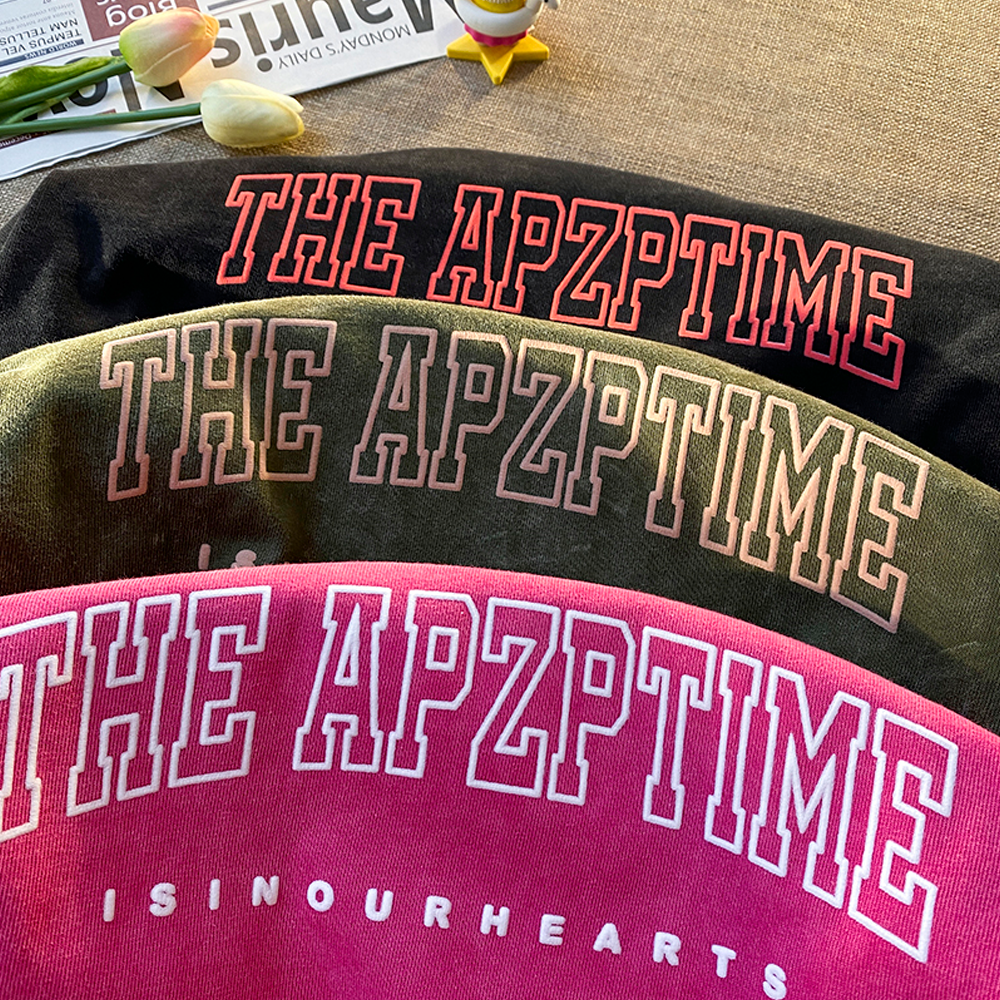
Ribbed contrast bands shrink at 3–8%, while ring-spun jersey averages 2–4% post-wash. Brands that ignore these differences receive puckered necklines after the first launder. Specify post-wash dimensions for both components in your tech pack.
Price-First Sourcing Without MOQ Scalability
A 200-unit quote that looks cheap can double or triple per-unit when reordering at 1,000 units with a manufacturer who cannot scale. Confirm tiered pricing at 200, 500, and 1,000+ units during initial negotiation to protect margin at every growth stage.
Missing Pantone References for Contrast Trim
Creator brands that approve ‘navy’ trim without a Pantone TCX code risk receiving purple-toned contrast collars that photograph off-brand. Cite a specific Pantone reference for every trim component and accept no more than ΔE 2.0 deviation on bulk yardage.
Skipping Wash-Test Protocols
AATCC 61 or ISO 105-C06 wash testing should run on sealed samples before bulk production begins, not after delivery. Brands that skip this step discover color bleed from contrast bands or dimensional distortion only when customer returns spike.
Misreading Custom Label Lead Times
Woven custom labels carry 15–25 business days of their own production lead time, separate from the garment itself. Brands that request label specs at the sewing stage delay shipment by 3–4 weeks. Lock in label details — thread color, fold type, legal content — before cutting begins.
9. Steps to Launch Your Brand With a Ringer T Shirt Manufacturer
Turning a ringer concept into a shippable SKU takes six deliberate steps. Skipping even one — particularly pre-production sampling or mid-run QC — is the fastest way a startup burns its opening budget.
Define Your Silhouette and Colorway Brief
Nail down body width, sleeve length, and rib-trim width (1-inch contrast band is the streetwear standard) before contacting any ringer t shirt manufacturer. Specify Pantone references for both shell and contrast band to eliminate ambiguity in production.
Request Tech Packs and Quotes From Multiple Factories
Send a one-page spec sheet — GSM target (160–180 gsm for most streetwear), stitch count, print placement, and MOQ tolerance — to 2–3 shortlisted factories simultaneously. Comparing quotes against identical specs exposes true cost differences, not apples-to-oranges pricing noise.
Order Pre-Production Samples and Document Deviations
A pre-production sample typically costs $30–$80 per colorway. Assess neck-rib tension, side-seam alignment, and Pantone accuracy under daylight. Record every deviation in writing; verbal approvals are unenforceable once bulk production starts.
Approve Bulk Production and Set QC Milestones
Confirm bulk only after a countersigned approval sample is on file. Set three checkpoints — fabric inspection at intake, inline sewing audit at 20% completion, and finished-goods AQL 2.5 inspection — to catch defects before they multiply across the run.
Arrange Freight and Customs Documentation
Orders under 200 kg ship cost-effectively via DHL or FedEx air in 5–7 days; sea LCL suits 300-plus units at lower per-piece freight cost. Prepare a commercial invoice, packing list, and HS code 6109.10 for cotton tees ahead of departure.
Plan First-Drop Marketing Around the Ringer Aesthetic
Shoot lifestyle imagery that isolates the contrast rib — the ringer’s signature visual cue. Short-form video on Reels or TikTok highlighting the color-block detail consistently outperforms generic flat-lay content for influencer brands launching a debut drop.
10. Pricing and Bulk Cost Tiers From a Ringer T Shirt Manufacturer
At a vetted ringer t shirt manufacturer, unit cost falls sharply past the 100-piece threshold — that tier also unlocks fabric weight customization from 180 to 240 GSM ring-spun cotton. Orders of 300 or more typically open private-label woven neck tags, custom hang tags, and polybag packaging at no additional tooling charge.
- DTG: $0–$30 setup, $2.50–$5.00 per-unit add-on; ~50-wash durability; best for runs under 50 pieces.
- Screen print: $25–$50 per screen, $0.80–$2.00 per-unit add-on; 100+ wash durability.
- Heat transfer: $15–$40 setup, $1.50–$3.50 per-unit add-on; 30–50 wash durability.
- Embroidery: $50–$120 digitizing fee, $3.00–$6.00 per-unit add-on; garment-lifetime durability.
- Puff/specialty ink: $30–$60 per screen, $1.50–$3.00 per-unit add-on; 80+ wash durability.
| Quantity Tier | Est. Unit Price (USD) | Lead Time | Recommended Print Method |
|---|---|---|---|
| 12–49 | $8.50–$12.00 | 15–20 days | DTG or heat transfer |
| 50–99 | $6.50–$8.49 | 14–18 days | Screen print (1–2 colors) |
| 100–299 | $4.80–$6.49 | 12–16 days | Screen print (up to 4 colors) |
| 300–499 | $3.50–$4.79 | 10–14 days | Screen print + embroidery |
| 500+ | $2.50–$3.49 | 10–12 days | All methods; fabric & label custom |
Work With a Ringer T-Shirt Manufacturer That Guarantees Quality
5-step QC on every order, 50-piece MOQ, and 7-day samples — your next collection starts with one message.