
Premium Big and Tall Hoodie Manufacturer for Streetwear Brands
Trusted big and tall hoodie manufacturer with 50-piece MOQ, 5-step quality control, and fast turnaround. Empowering emerging brands and global retailers with premium craftsmanship.
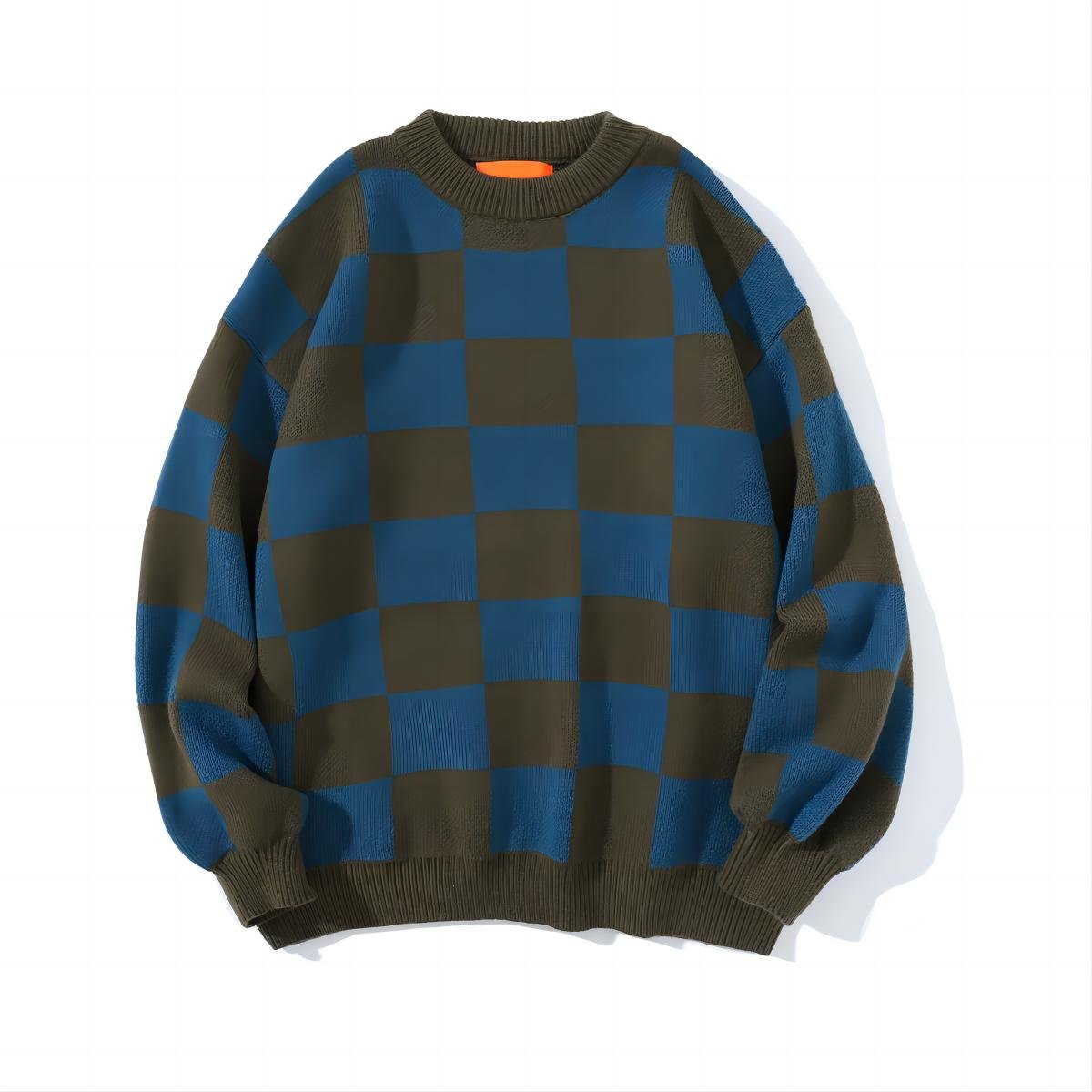
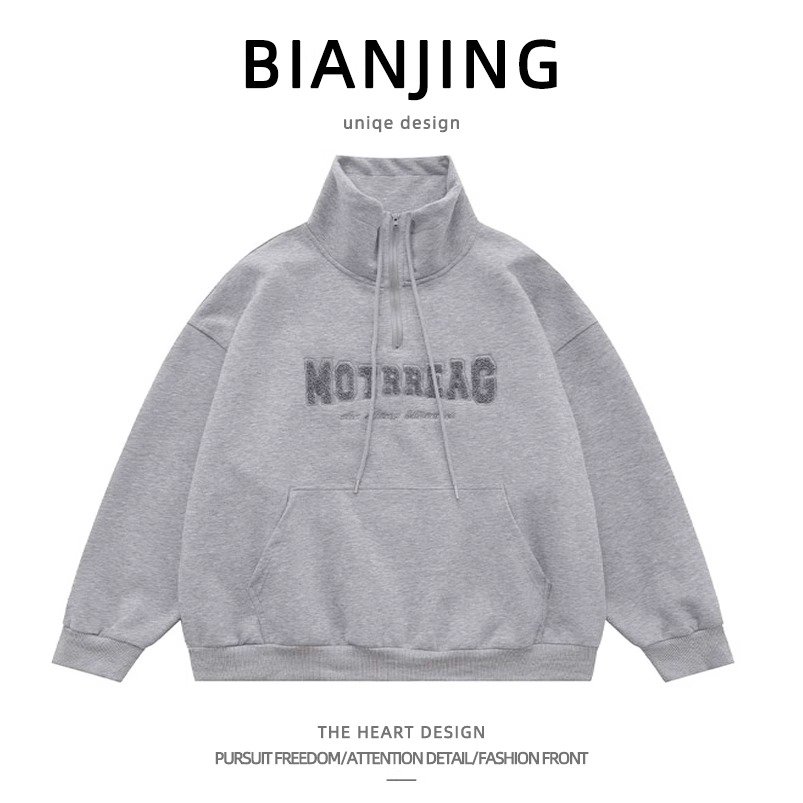
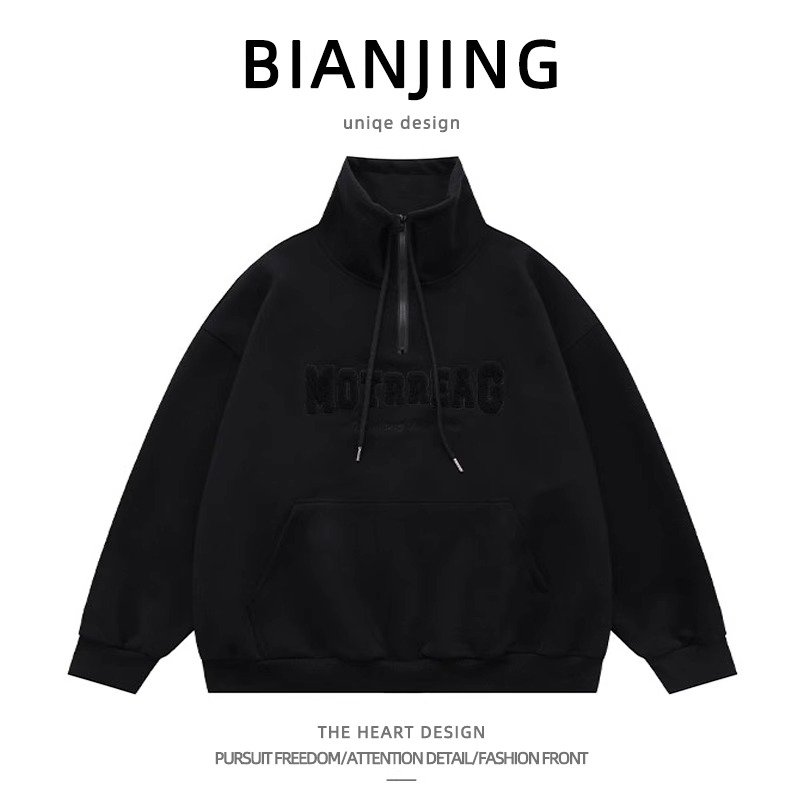
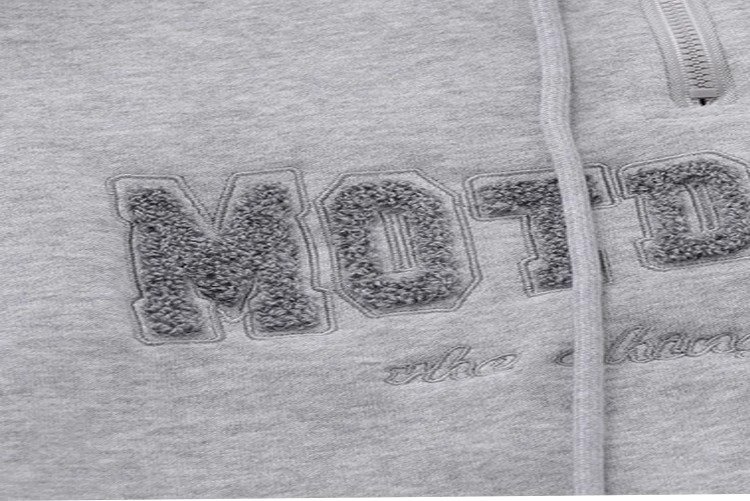
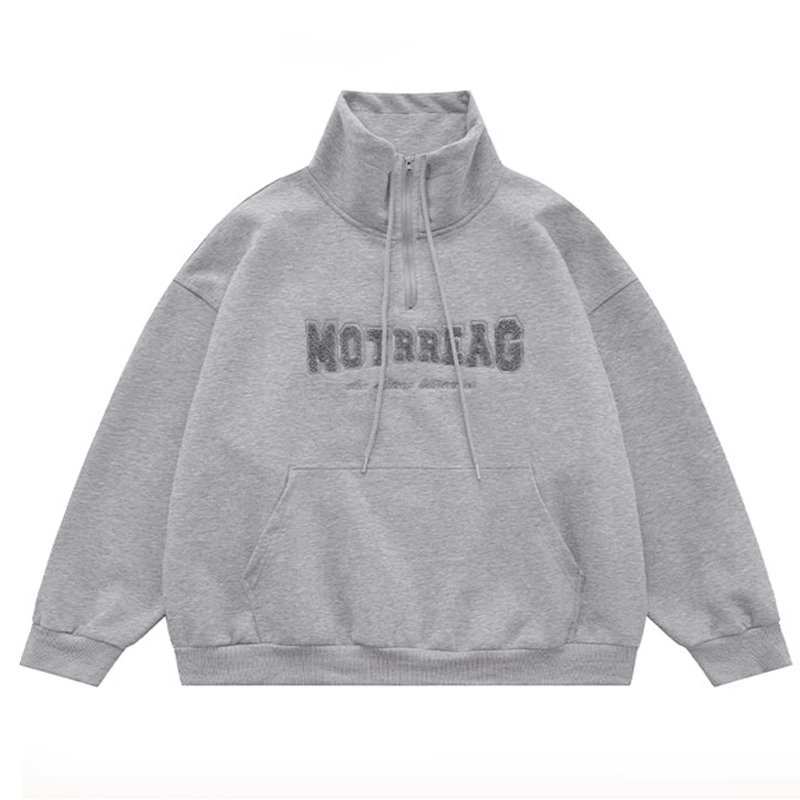
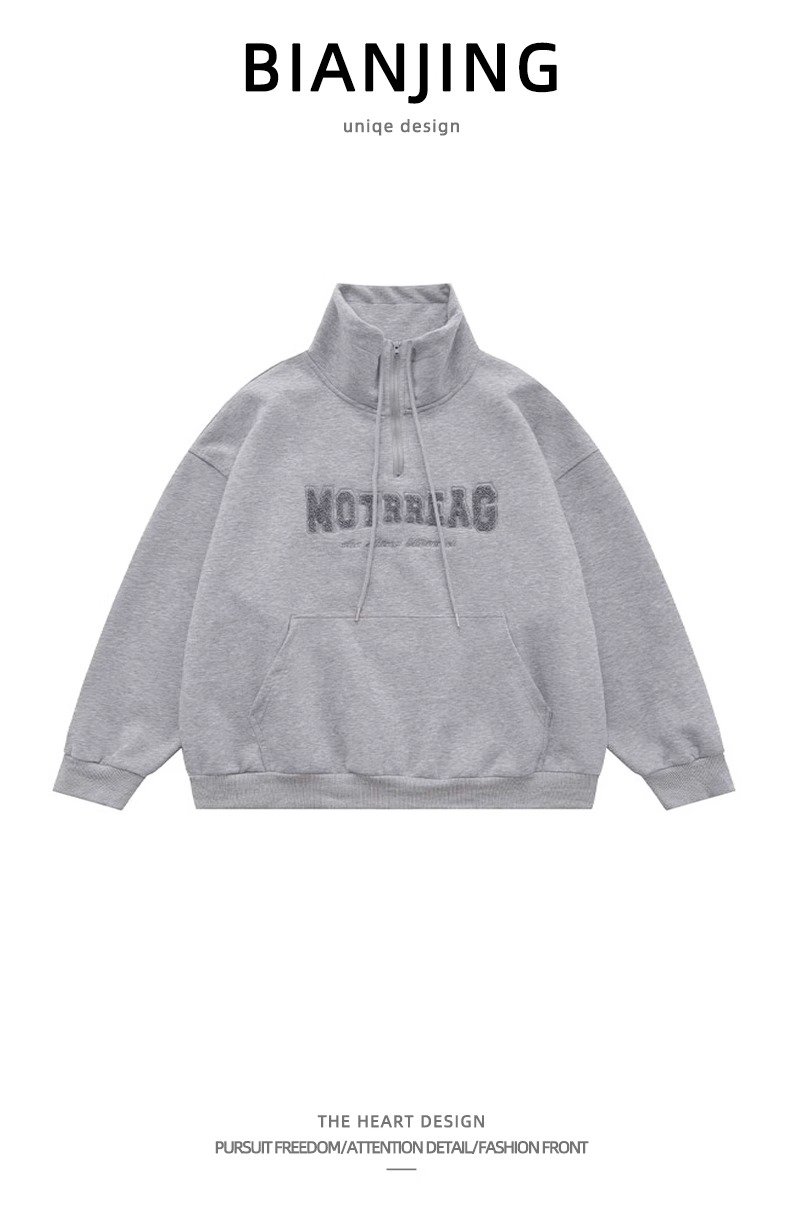
Big and Tall Hoodie Designs & Samples
Why Brands Choose Our Big and Tall Hoodie Manufacturer
From emerging streetwear labels to established retailers, our clients trust us for premium big and tall hoodies backed by rigorous quality control and flexible production.
5-Step Quality Control Guarantee
Every big and tall hoodie passes materials, cutting, craft, sewing, and finished product QC testing before shipping to you.
50-Piece Low MOQ
Launch your big and tall hoodie line without massive inventory risk. Perfect for startups and independent designers testing new markets.
7-Day Sample Turnaround
Get your big and tall hoodie samples fast so you can validate designs and launch seasonal collections on tight deadlines.
In-House Streetwear Design Team
Our 15-member R&D team brings streetwear expertise and trend-driven design support to every big and tall hoodie project.
Global Shipping & Logistics
We handle customs, documentation, and delivery to over 100 countries so your big and tall hoodies arrive on time.
Streetwear & Influencer Expertise
Six years specializing in streetwear production for trendy brands, influencer lines, and retailers who demand authentic street style.
Big and Tall Hoodie Manufacturer Categories & Customization
From classic pullovers to oversized streetwear fits, we manufacture every big and tall hoodie style your brand needs—with full custom embroidery, print, and hardware options.
Pullover Hoodies
Brands struggle to find manufacturers who can produce classic pullover hoodies in extended sizes without compromising fit, proportion, or the clean aesthetic that streetwear customers expect.
We deliver perfectly proportioned pullover hoodies in big and tall sizing with reinforced kangaroo pockets, premium ribbing, and consistent fit across all size runs—backed by our 5-step QC process.
Zip-Up Hoodies
Zip-up hoodies in larger sizes often suffer from zipper failure, poor alignment, and uneven tension along the placket, leading to returns and damaged brand reputation.
Our zip-up hoodies feature heavy-duty YKK or custom zippers tested at the cutting and sewing QC stages, ensuring smooth operation, perfect alignment, and durability even in extended sizes.
Oversized & Tall-Length Variants
Emerging streetwear brands need oversized and tall-length hoodies that capture the trend-driven silhouette without pattern distortion, but most manufacturers lack the specialized grading expertise required.
Our in-house design team creates custom patterns for oversized drops and extended lengths, preserving graphic placement, sleeve proportion, and the bold streetwear aesthetic your audience demands.
Custom Embroidery & Print
Big and tall hoodies present unique decoration challenges—graphics can warp across larger chest areas, and embroidery tension must be recalibrated to prevent puckering on heavier fabrics.
We offer screen print, DTG, heat transfer, and embroidery services calibrated specifically for extended sizing, with placement testing and craft QC to ensure every design looks sharp at every size.
Hardware & Finishing Options
Standard drawstrings, grommets, and aglets often look undersized or flimsy on big and tall hoodies, undermining the premium quality streetwear brands want to communicate.
We source and install proportionally scaled hardware—metal-tipped drawcords, reinforced grommets, custom pullers—and conduct finished-product QC to guarantee cohesive, high-end detailing across all sizes.
Premium Fabrics for Big and Tall Hoodie Manufacturer Production
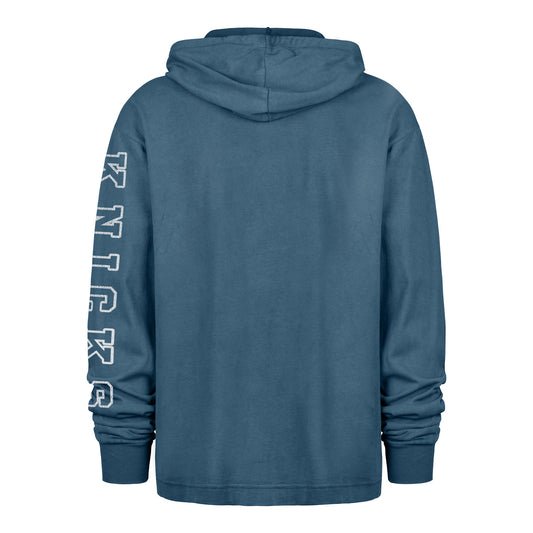
Heavyweight Cotton Fleece
Dense 400–500 GSM brushed fleece with exceptional warmth and structure. Ideal for premium big and tall hoodies that hold their shape through repeated wear. Superior pill resistance and soft hand-feel ensure lasting comfort across all sizes.
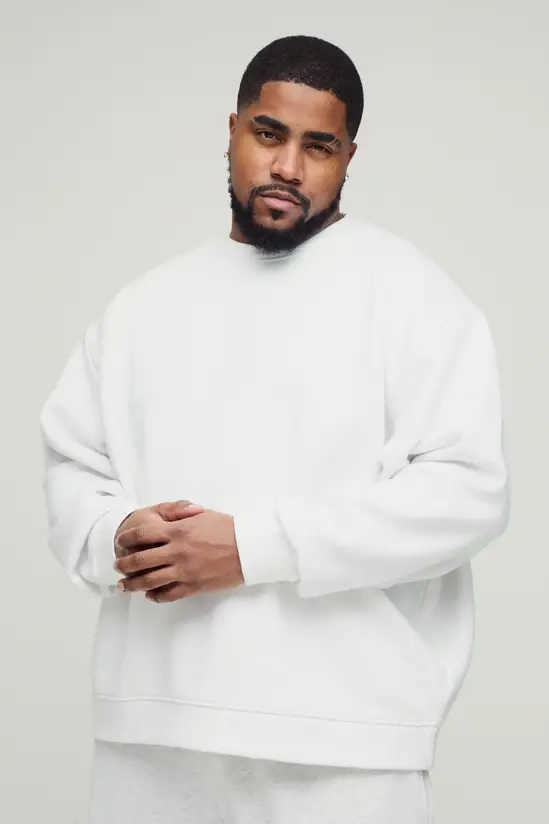
Organic Cotton Terry
Sustainable 320–380 GSM looped terry fabric with natural breathability and moisture absorption. Perfect for relaxed-fit big and tall hoodies targeting eco-conscious consumers. GOTS-certified options available with excellent stretch recovery for extended sizing.
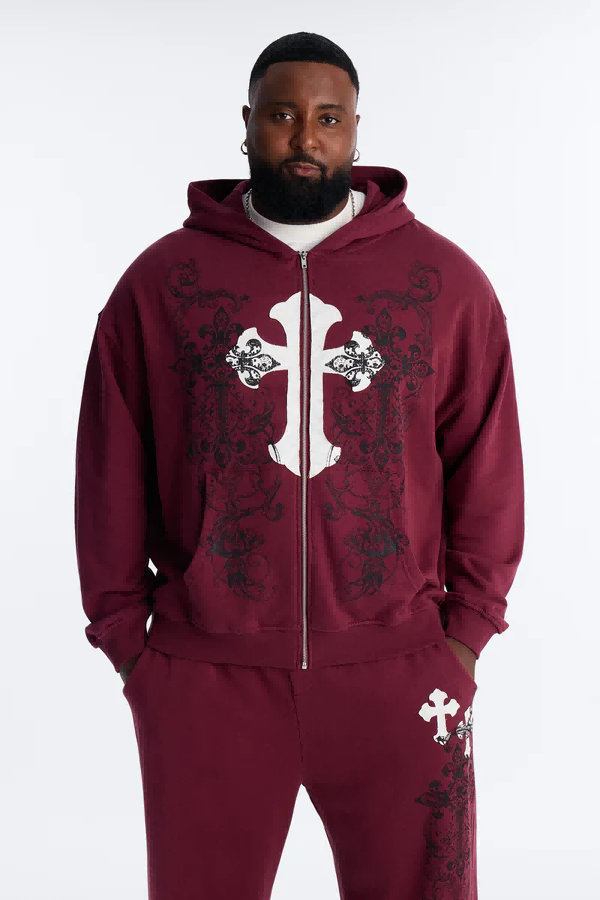
Performance Poly Blend
Technical 280–340 GSM polyester-cotton blend engineered for athletic and activewear hoodies. Offers moisture-wicking properties, enhanced durability, and four-way stretch to accommodate big and tall body types. Quick-drying with minimal shrinkage after washing.
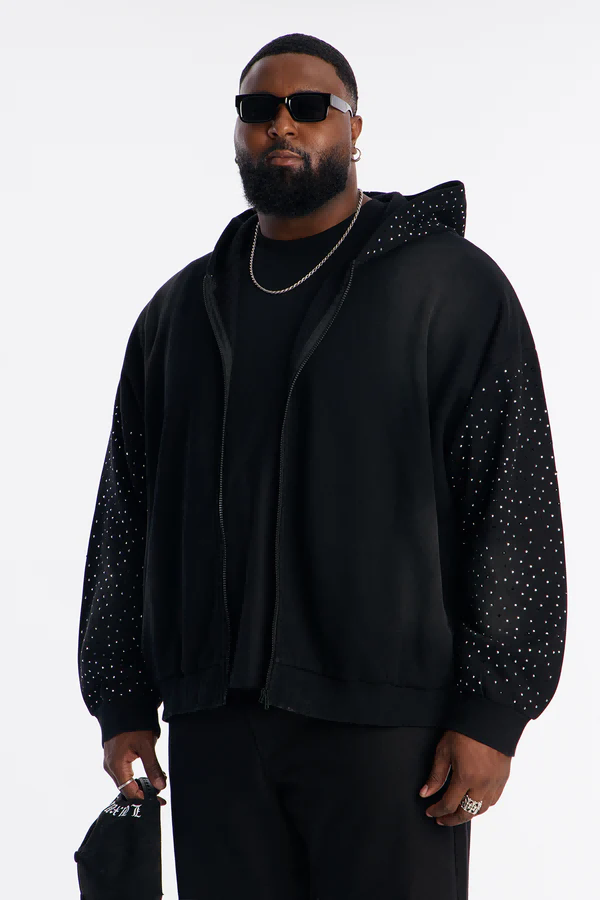
French Terry
Versatile 240–300 GSM mid-weight fabric with smooth exterior and soft looped interior. Excellent drape and breathability make it ideal for year-round big and tall hoodie collections. Holds print and embroidery beautifully across larger pattern pieces.
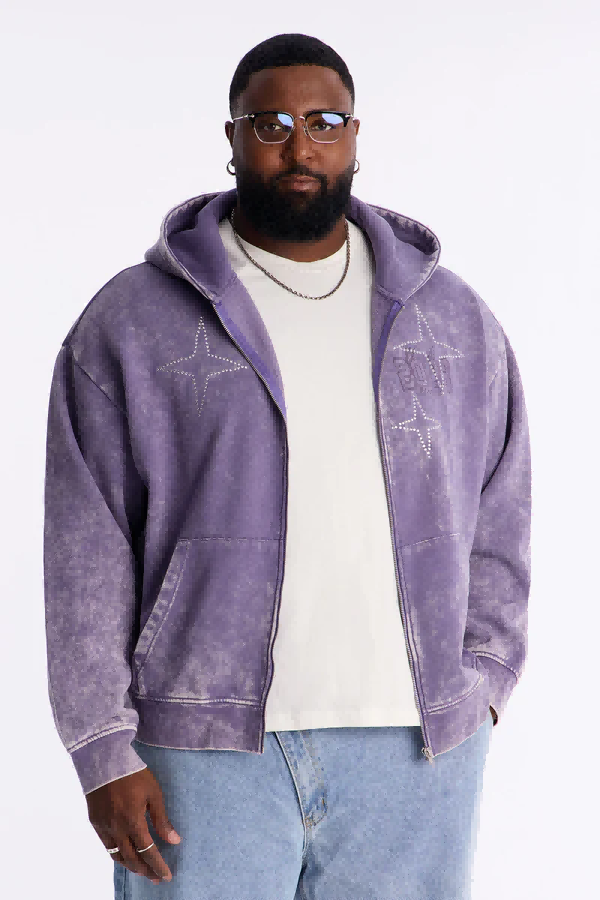
Polar Fleece
Lightweight 200–280 GSM synthetic fleece with superior insulation-to-weight ratio. Provides warmth without bulk, crucial for flattering big and tall silhouettes. Anti-static treatment and color-fast dyeing ensure professional finish and longevity.
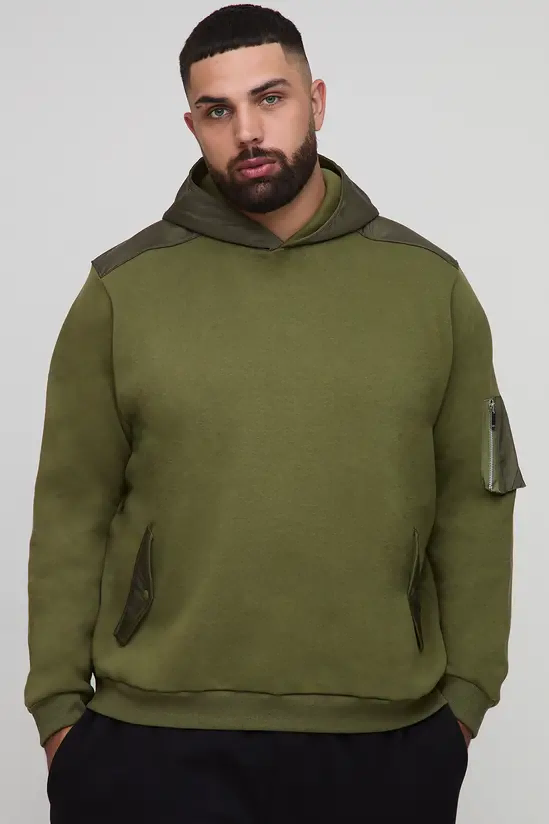
Brushed Cotton Blend
Premium 320–380 GSM cotton-polyester blend with double-brushed interior for ultra-soft comfort. Combines natural feel with enhanced durability and shape retention. Ideal for luxury big and tall streetwear hoodies requiring exceptional hand-feel and print clarity.
Big and Tall Hoodie Manufacturer Production Techniques & Customization
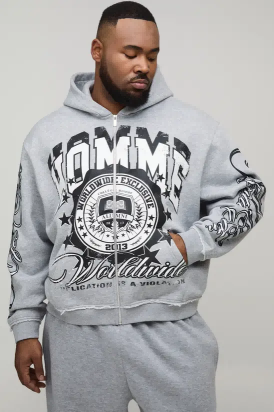
Screen Printing
High-opacity ink application ideal for bold graphics, logos, and streetwear artwork on big and tall hoodies. Delivers vibrant, long-lasting color with excellent wash durability and cost-efficiency for medium to large production runs.
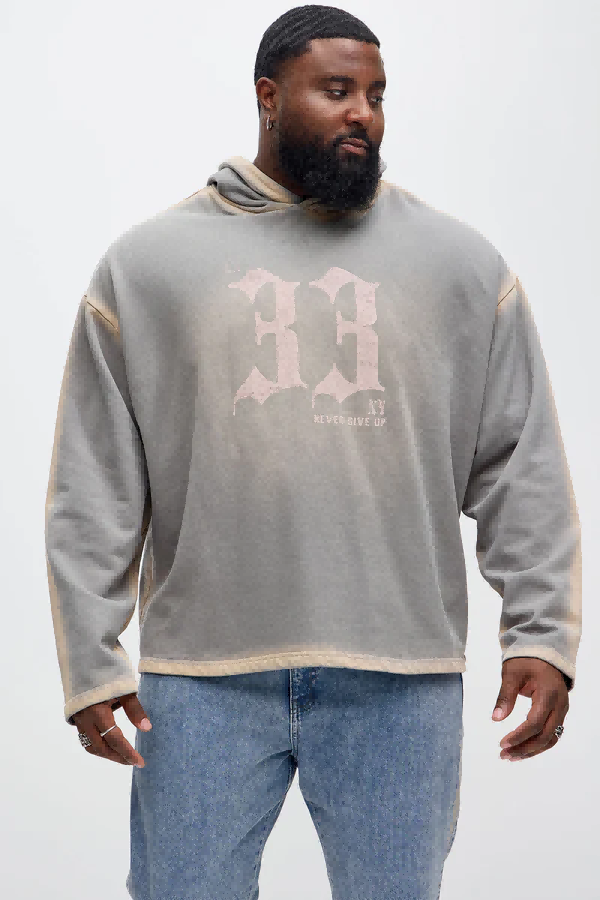
Embroidery
Premium thread stitching for logos, text, and intricate designs that add dimension and luxury. Perfect for chest logos, sleeve branding, and hood details on extended-size hoodies, offering superior durability and a high-end finish.
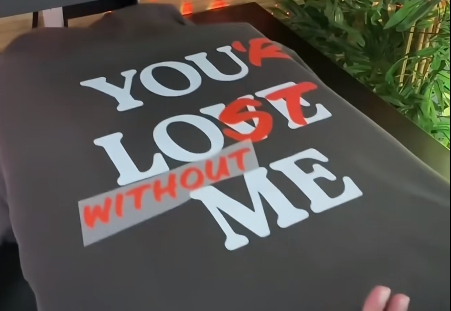
Sublimation Printing
Dye-infusion process for all-over prints, gradients, and photo-realistic designs on polyester-blend hoodies. Creates seamless, breathable graphics that won’t crack or fade, ideal for bold streetwear patterns in big and tall sizes.
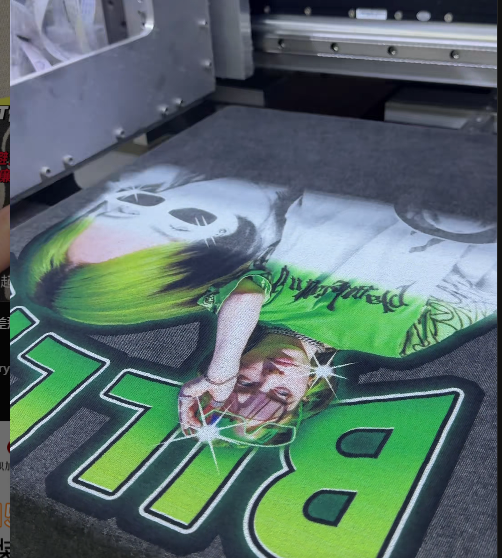
Direct-to-Garment (DTG)
Digital inkjet printing for complex, multi-color designs with photographic detail and soft hand feel. Ideal for low-MOQ custom runs and influencer collections, delivering sharp resolution on both light and dark big and tall hoodies.
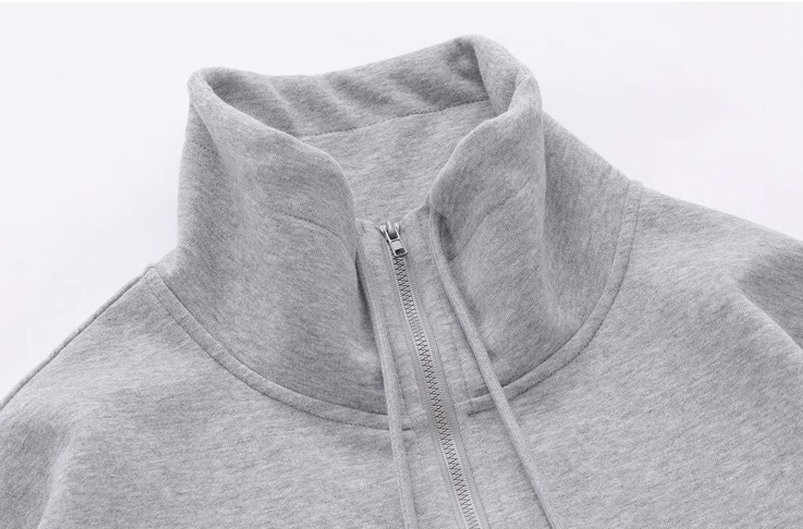
Woven Labels
Custom-designed fabric labels with your brand name, logo, and care instructions. Sewn into neck, hem, or side seam for professional branding that withstands repeated washing and reinforces brand identity on every hoodie.
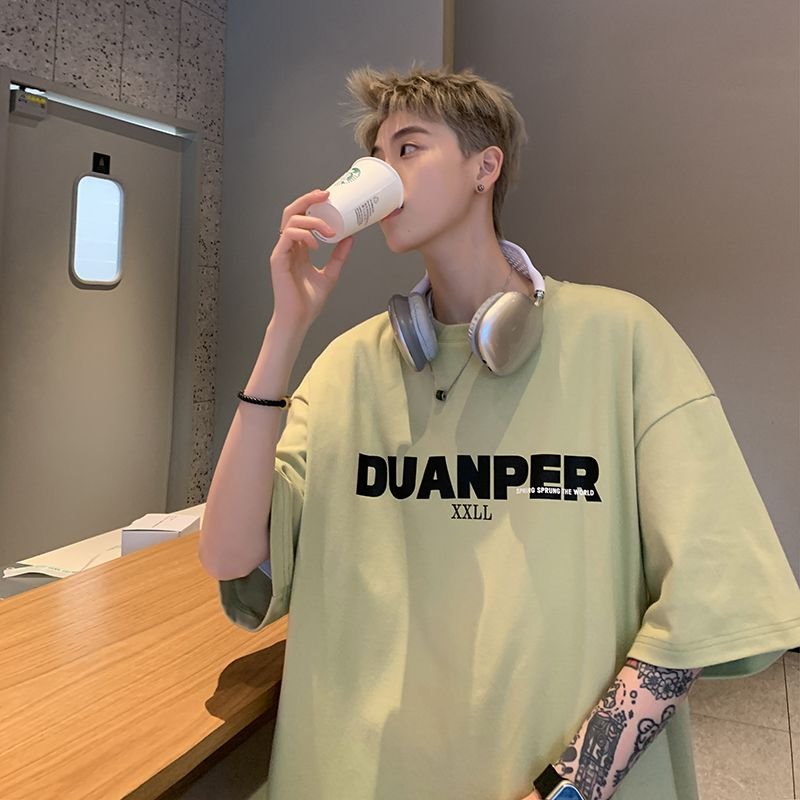
Custom Hang Tags
Branded paper or cardboard tags featuring your logo, sizing, and product details. Attached via string or plastic fastener to communicate brand story and quality at point of sale, elevating presentation for retail and e-commerce.
Big and Tall Hoodie Manufacturer Hardware & Accessories
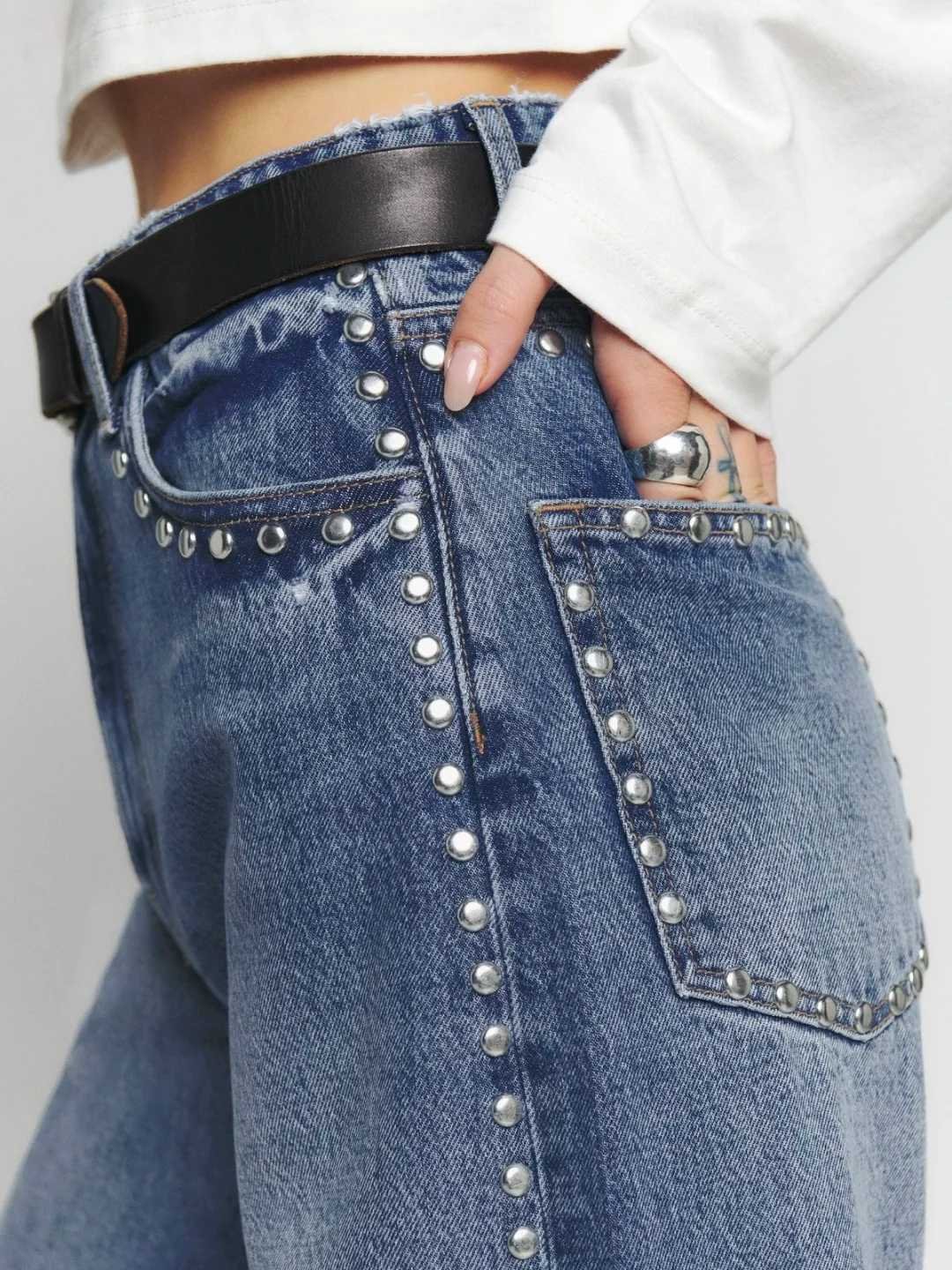
Custom Drawcords
High-strength drawcords in flat, round, or tipped styles with metal or plastic aglets. Essential for adjustable hoods on big and tall hoodies, available in any color to match your brand palette and withstand repeated use.
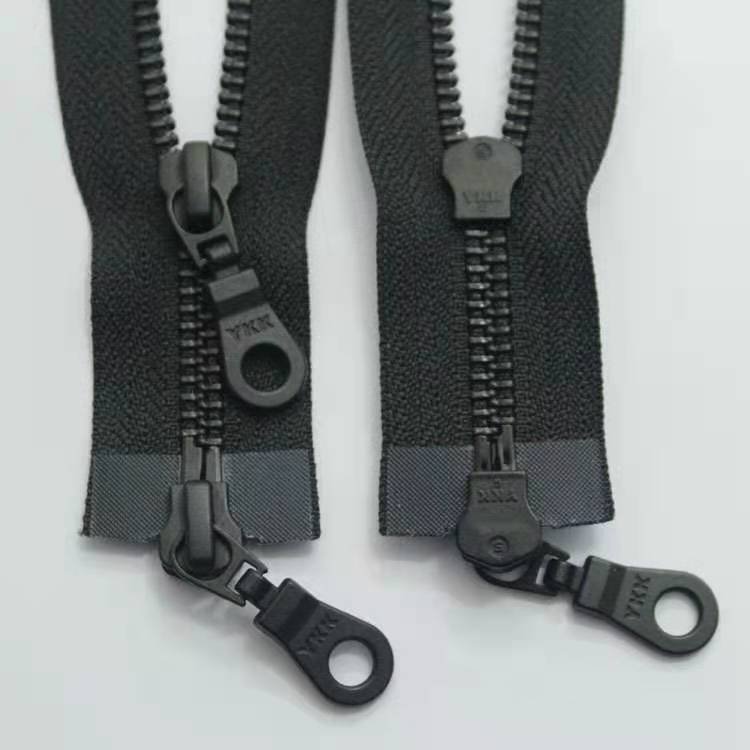
YKK Zippers
Premium YKK zippers in metal or nylon for zip-up hoodies, offering smooth operation and exceptional durability. Available in multiple sizes and finishes to complement streetwear aesthetics and handle the stress of extended sizes.
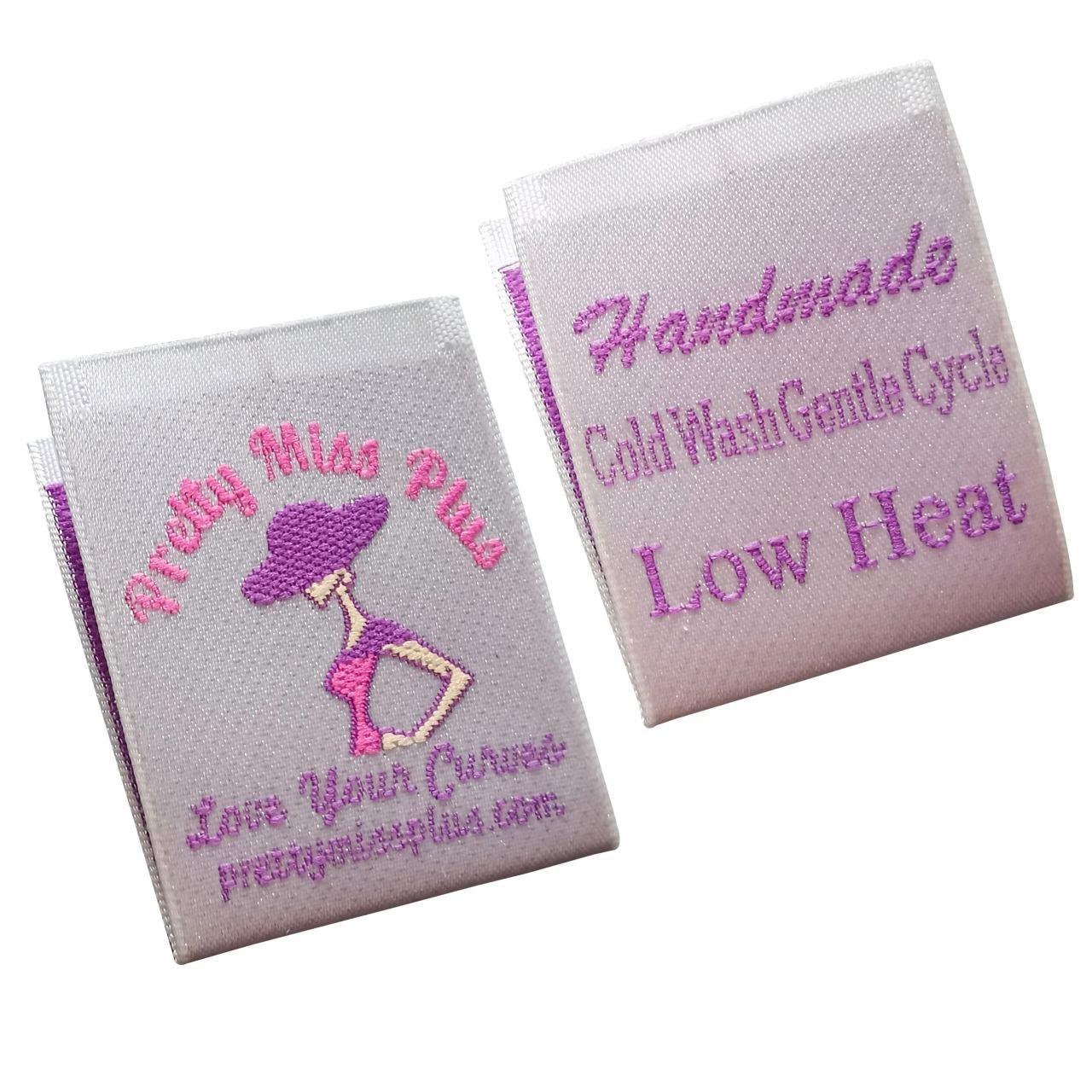
Woven Labels
Custom woven brand labels in damask, taffeta, or satin for neck, side seam, or hem placement. Reinforce brand identity with high-definition logos and care instructions that won’t fade or irritate skin over time.
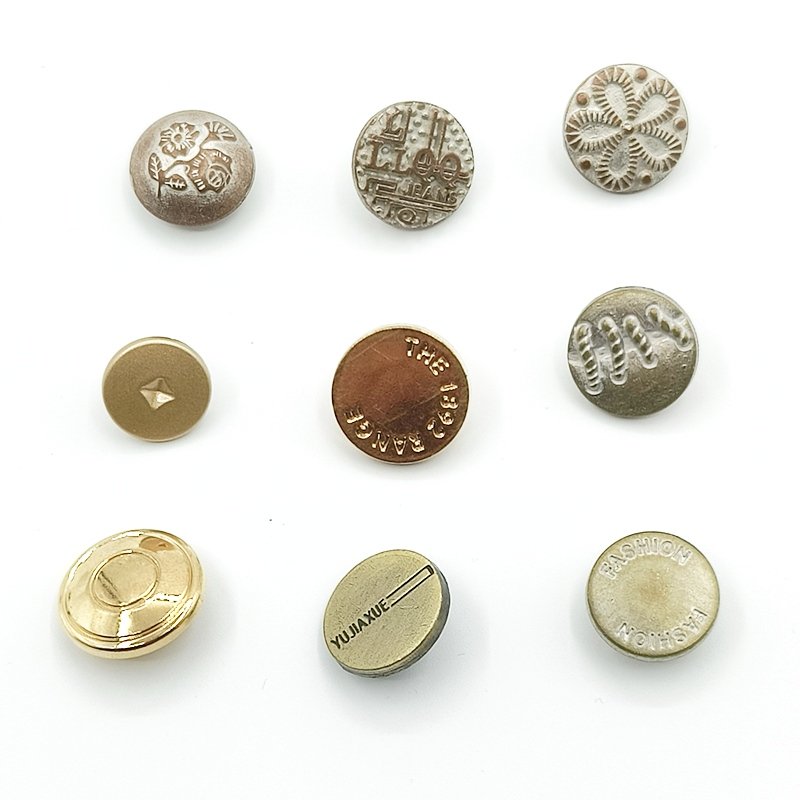
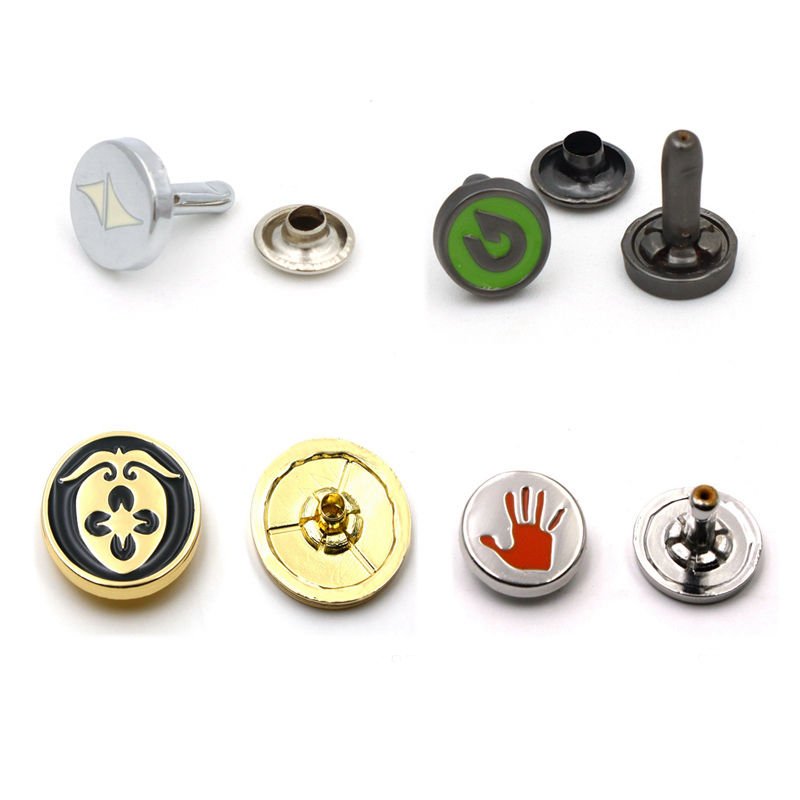
Snap Buttons
Durable metal or resin snap buttons for plackets, cuffs, or decorative accents. Ideal for adding functional streetwear details to big and tall hoodies while ensuring secure closure that stands up to daily wear.
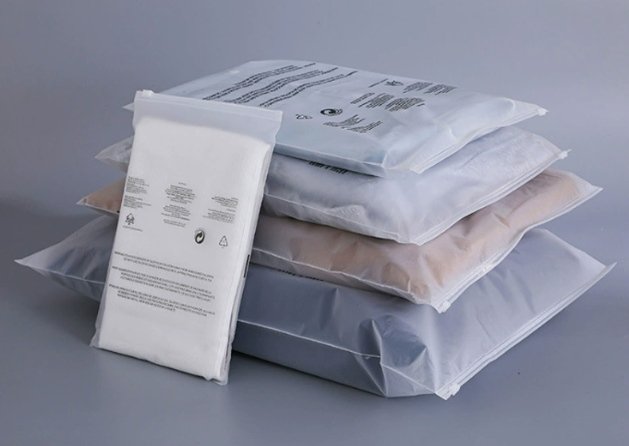
Custom Hangtags
Die-cut or folded hangtags printed on premium stock with your branding, sizing, and product story. The first touchpoint for retail customers, hangtags communicate quality and professionalism before the hoodie is even tried on.
Embroidered Patches
High-stitch-count embroidered patches for chest, sleeve, or back placement. Add dimension and texture to your big and tall hoodie designs with custom logos, graphics, or streetwear motifs that elevate perceived value.
Your Trusted Big and Tall Hoodie Manufacturer
Founded in 2024 by Tesla Luo, Clothing Manufacturer Ltd. was born from a mission to eliminate low-quality clothing through rigorous quality control. With over 10 years of apparel production experience and 6 years specializing in streetwear, we’ve served customers across 100+ countries, helping emerging brands and global retailers bring premium big and tall hoodies to market.
Unlike mass-market suppliers who skip quality checks, we implement a proprietary 5-step QC guarantee at every production stage—from materials inspection through final packaging. Our 15-member design team and 10 patents support brands at every growth stage, whether you’re launching your first collection or scaling an established line with consistent, trend-driven big and tall hoodie designs.
We combine the agility of a streetwear specialist with the manufacturing capacity of our parent company, Dongguan TuoZhen Clothing Co., Ltd. Low MOQs, fast turnaround, and global logistics support ensure your big and tall hoodie line launches on time and on brand, backed by a decade of proven expertise and zero-compromise craftsmanship.
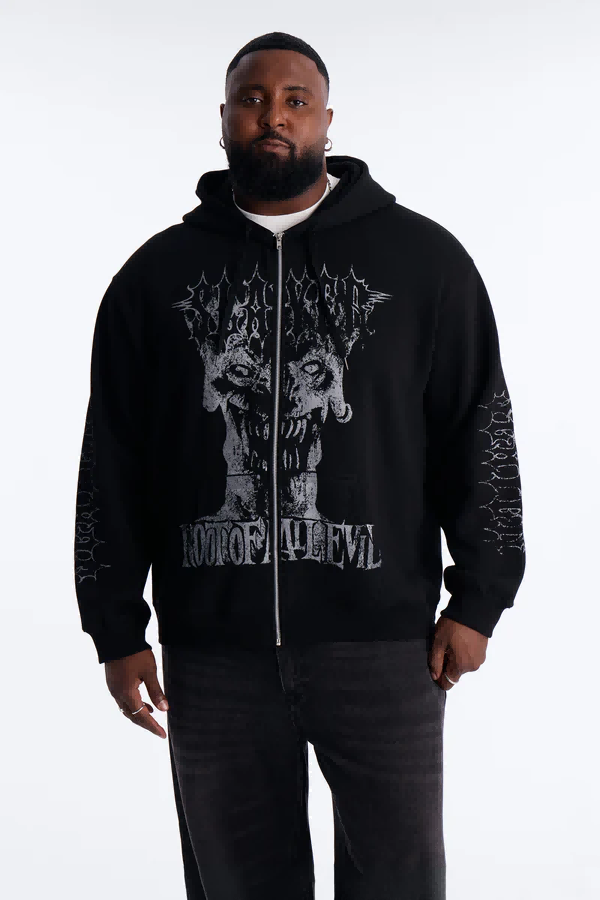
Our 5-Step Quality Control Guarantee for Big and Tall Hoodie Manufacturing
Materials QC Testing Before Production
Every fabric roll, zipper, and trim is inspected before cutting begins. For big and tall hoodies, we verify weight consistency, stretch recovery, and colorfast ratings across larger yardage runs to ensure your extended sizes maintain the same premium hand-feel and durability as standard cuts.
- Fabric weight and GSM verification across full rolls to prevent inconsistencies in larger panels
- Stretch and recovery testing for ribbing, cuffs, and body fabric under extended sizing stress
- Colorfast and shrinkage pre-testing to guarantee wash stability in all big and tall sizes
- Hardware and trim inspection for zippers, drawcords, and grommets before assembly
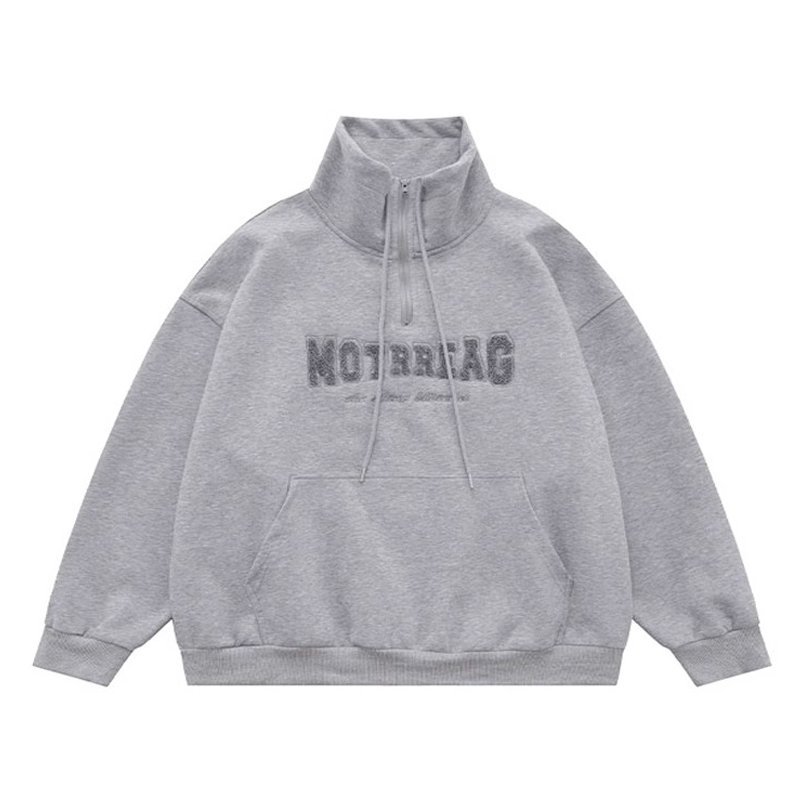
Cutting QC Testing for Precision
Big and tall patterns demand exact cutting tolerances—oversized panels magnify even minor errors. Our cutting QC step verifies pattern alignment, grainline accuracy, and seam allowances on every piece, catching miscuts before they reach the sewing floor and eliminating costly remakes.
- Pattern piece verification against approved tech packs and grading specs for extended sizes
- Grainline and fabric direction checks to prevent twisting or distortion in larger garments
- Seam allowance accuracy inspection to ensure consistent fit across all big and tall size runs
- Layer-by-layer cutting audits to confirm no fabric shifts or pattern misalignment
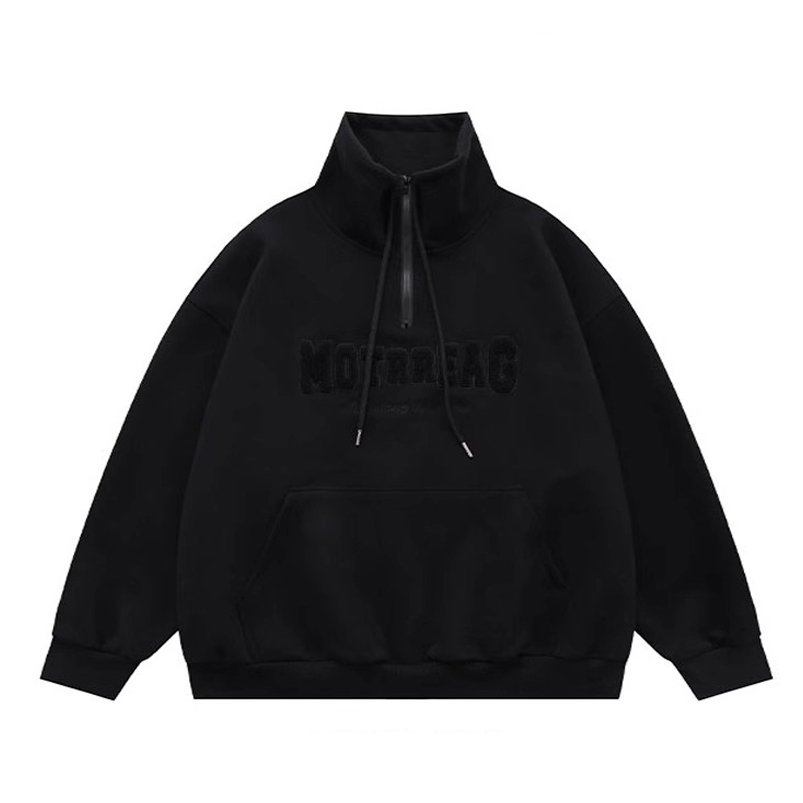
Clothing Craft and Sewing Production QC
During assembly, our QC team monitors stitch density, seam strength, and construction techniques in real time. For big and tall hoodies, we reinforce stress points—shoulder seams, armholes, and pocket attachments—and verify that every garment can withstand the demands of extended sizing without compromising comfort or style.
- Real-time stitch-per-inch audits and seam strength testing on stress-prone areas
- Reinforcement checks at shoulders, side seams, and pocket bars for durability in larger sizes
- Hood alignment and drawcord placement verification to maintain symmetry and function
- In-process fit sampling to catch construction issues before full batch completion
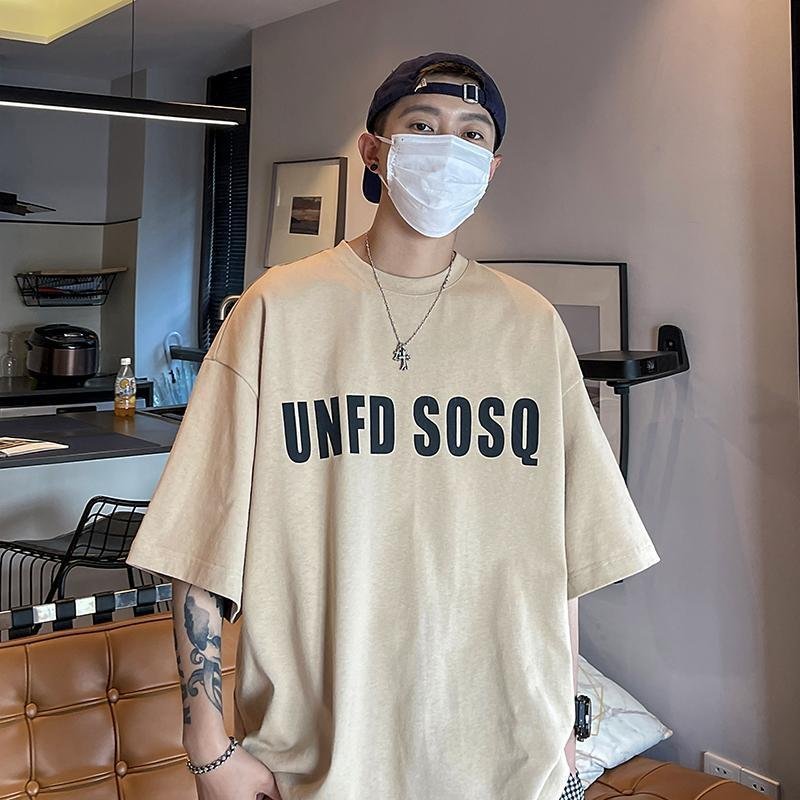
Finished Clothing Quality Inspection
Every completed big and tall hoodie undergoes a comprehensive final inspection covering measurements, finishing details, and visual defects. We check that zippers glide smoothly, hems lie flat, and prints or embroidery align perfectly—ensuring only garments that meet our zero-compromise standard reach your customers.
- Full garment measurement verification against approved size charts and tolerances
- Visual defect screening for loose threads, stains, print misalignment, and fabric flaws
- Functional testing of zippers, snaps, drawcords, and all hardware components
- Final press and packaging inspection to guarantee retail-ready presentation
How We Compare to Typical Big and Tall Hoodie Manufacturers
See the concrete differences that set our big and tall hoodie manufacturing apart — from quality control rigor to flexible MOQs designed for emerging streetwear brands.
← 左右滑动查看 →
Our Big and Tall Hoodie Manufacturer Production Workflow
From tech pack to finished garment, every big and tall hoodie passes through our rigorous 5-step quality control process at each production stage.
Tech Pack Review
Our design team analyzes your specifications, measurements, and fabric requirements to ensure every big and tall sizing detail is production-ready before manufacturing begins.
Material Sourcing & QC
Premium fabrics are sourced and tested through our materials QC process, verifying weight, stretch, durability, and color accuracy for extended sizing.
Cutting & Marking
Precision pattern cutting with cutting QC testing ensures accurate big and tall proportions, proper grain alignment, and zero fabric waste across all size runs.
Sewing & Craft QC
Skilled craftspeople construct each hoodie with clothing craft QC and sewing production QC testing at critical checkpoints, guaranteeing reinforced seams and proper fit.
Final Inspection & Packing
Finished clothing quality QC inspection verifies measurements, stitching, prints, and hardware before professional packing, labeling, and preparation for global shipping.
How to Partner With a Big and Tall Hoodie Manufacturer
From concept to delivery, our streamlined process ensures your big and tall hoodies meet every quality standard and deadline.
Submit Your Design or Tech Pack
Share your hoodie specifications, artwork, sizing requirements, and target launch date. Our team reviews your project within 24 hours and confirms feasibility.
Receive Quote and Sample Timeline
Get transparent pricing for sampling and bulk production, MOQ details, fabric options, and estimated delivery dates tailored to your big and tall collection needs.
Approve Pre-Production Samples
Review physical samples for fit, fabric quality, construction, and print accuracy. Request revisions until every detail aligns with your brand standards before bulk.
Place Bulk Order and Track Production
Confirm your order and quantities. Our 5-step QC process begins, with regular updates at materials, cutting, sewing, and final inspection checkpoints throughout manufacturing.
Receive Your Finished Hoodies
Your big and tall hoodies ship with full documentation and tracking. Global logistics support ensures on-time delivery to your warehouse or fulfillment center.
Certified Big and Tall Hoodie Manufacturer with Global Quality Standards
Big and Tall Hoodie Manufacturer Success Stories
We launched our plus-size streetwear line with their big and tall hoodies and grew from 0 to 47,000 Instagram followers in 8 months. The 5-step QC meant zero returns on our first 500-unit drop.
As a startup, the 50-piece MOQ was perfect for testing our oversized hoodie designs. We’ve now released 4 seasonal collections with them, and our defect rate dropped from 12% to under 1%.
Their big and tall hoodie production expertise helped us expand into the 3XL-6XL market. We saw a 340% increase in sales within 5 months and finally found a manufacturer who understands extended sizing.
Big and Tall Hoodie Manufacturing — FAQ
What is the minimum order quantity for a big and tall hoodie manufacturer?
How long does it take to produce big and tall hoodies from order to delivery?
Can I get samples before placing a bulk order with your big and tall hoodie manufacturer?
What payment terms does your big and tall hoodie manufacturer offer?
Do you handle international shipping and customs for big and tall hoodie orders?
How do you protect my designs and intellectual property?
How many design revision rounds are included in the sampling process?
Can you accommodate custom sizing beyond standard big and tall measurements?
What quality control measures ensure consistent big and tall hoodie sizing?
The Complete Buyer’s Guide to Big and Tall Hoodie Manufacturer Selection
Navigate the sourcing landscape with confidence. This guide delivers a proven decision framework, essential supplier criteria, quality benchmarks, and the critical mistakes to avoid when partnering with a big and tall hoodie manufacturer for your brand.
1. What Is a Big and Tall Hoodie Manufacturer?
A big and tall hoodie manufacturer is a garment production facility that specializes in extended sizing ranges, typically from XL through 6XL and beyond, using specialized pattern grading techniques to ensure proper fit across larger body dimensions. Unlike standard hoodie production that stops at XL or 2XL, big and tall manufacturing requires distinct expertise in proportional scaling for chest width, sleeve length, torso length, and shoulder breadth to maintain comfort and aesthetic balance in sizes 3XL and above.
Standard hoodie manufacturers often apply simple linear grading—adding uniform inches to each dimension as sizes increase—which results in ill-fitting garments that bag in some areas and constrict in others. Big and tall specialists employ multi-point grading systems that adjust proportions independently: a 4XL hoodie may add 3 inches to chest circumference, 1.5 inches to sleeve length, and 2 inches to body length, calibrated to real body-scan data rather than mathematical extrapolation. This technical knowledge separates competent big and tall producers from factories that simply scale patterns without anatomical reference.
Brands targeting the extended-size market need manufacturers experienced in reinforced construction details—double-needle stitching at stress points, wider ribbing at cuffs and waistbands, and fabric selections with adequate stretch recovery—because larger garments endure different mechanical forces during wear. Clothing Manufacturer Ltd. applies its five-step quality control methodology across all size runs, ensuring that a 5XL hoodie receives the same materials QC testing, cutting QC testing, craft QC testing, sewing production QC testing, and finished garment inspection as smaller sizes, maintaining consistent standards throughout extended ranges.
2. The Evolution of Big and Tall Apparel Manufacturing
Before the 1960s, men requiring sizes above standard retail offerings relied on local tailors or specialty shops that charged premium prices for custom work. The first dedicated big and tall retail chains emerged in North America during the 1970s, yet manufacturing remained a low-volume, high-cost endeavor with limited fabric choices and styles that lagged years behind mainstream fashion trends.
By 2010, pattern grading software such as Gerber AccuMark and Lectra Modaris enabled manufacturers to scale sizing mathematically across extended ranges, reducing development time from weeks to days and ensuring consistent fit proportions. These digital tools allowed a single base pattern to generate 15 or more size variations with precise adjustments to shoulder width, sleeve length, chest circumference, and torso length. Streetwear brands began adopting inclusive sizing around 2015, driven by social media advocacy and the recognition that consumers above XL represented significant untapped revenue.
The global big and tall menswear market reached approximately 8.9 billion USD in 2023 and is projected to grow at a compound annual rate of 5.2 percent through 2030, fueled by rising obesity rates, body-positive movements, and e-commerce platforms that reduce the stigma of specialty sizing. Modern big and tall hoodie manufacturers now operate with MOQs as low as 50 pieces per colorway, a dramatic shift from the 500-piece minimums common before 2018. Quality standards have also tightened, with multi-stage QC processes replacing end-of-line inspections to meet the expectations of brands serving vocal, digitally connected customer bases.
3. Types of Big and Tall Hoodie Manufacturers
Not all big and tall hoodie manufacturers operate the same way. Understanding the four main categories helps brands match their service model, budget, and volume needs to the right production partner.
Full-Package Specialists
Full-package manufacturers handle fabric sourcing, pattern grading, cutting, sewing, decoration, and finishing under one roof. MOQs typically start at 50–200 pieces per design, and lead times run 45–60 days.
These partners serve fashion startups and independent designers who lack supply-chain infrastructure. They offer design consultation, tech-pack development, and sample iterations. The trade-off is higher per-unit cost compared to cut-and-sew shops, but brands gain speed and reduced coordination overhead.
Cut-and-Sew Shops with Extended Sizing
Cut-and-sew facilities require clients to supply fabric and trims; they provide grading, cutting, and assembly. MOQs often begin at 100–300 units, with 30–45 day production windows.
Brands with established supply chains and in-house designers benefit most. Per-piece costs drop 15–25 percent versus full-package, but clients assume fabric procurement risk and must coordinate multiple vendors.
Overseas vs. Domestic Producers
Overseas manufacturers in China, Bangladesh, and Vietnam offer MOQs from 50 pieces and unit costs 30–50 percent below domestic U.S. or European factories. Lead times span 60–90 days including shipping.
Domestic producers deliver 2–3 week turnarounds and easier quality oversight but require 200+ piece minimums and charge premium rates. Influencer brands needing fast restocks favor domestic; global retailers prioritizing margin choose overseas partners.
Niche Plus-Size Specialists
A small segment focuses exclusively on extended sizing, maintaining pre-graded patterns from 2XL to 6XL and stocking heavier-weight fabrics. MOQs range 100–500 pieces.
These manufacturers serve plus-size-only labels and understand fit nuances like dropped shoulders and extended torso length. Limited style flexibility and higher minimums are common trade-offs for specialized expertise.
4. Materials and Fabrics for Big and Tall Hoodies
Fabric selection for big and tall hoodies directly impacts garment longevity, comfort, and shape retention across extended size runs. Heavier weights and engineered stretch are critical to prevent sagging, maintain structure through repeated wear, and ensure consistent fit across 2XL-6XL+ ranges.
| Fabric Type | GSM Range | Stretch % | Best Use Case | Durability Rating |
|---|---|---|---|---|
| Heavyweight Fleece | 280-400 | 0-5% | Core streetwear hoodies, cold-weather styles | Excellent (50+ washes) |
| Cotton-Poly Blend | 300-350 | 5-10% | Everyday wear, shape retention priority | Very Good (40-50 washes) |
| French Terry | 240-280 | 5-10% | Layering pieces, warm-climate collections | Good (30-40 washes) |
| Brushed Fleece | 320-380 | 3-8% | Premium comfort, winter capsules | Excellent (50+ washes) |
| Performance Poly-Spandex | 200-260 | 15-20% | Athleisure, activewear big & tall lines | Very Good (40+ washes) |
Heavyweight Fleece: The Extended-Size Workhorse
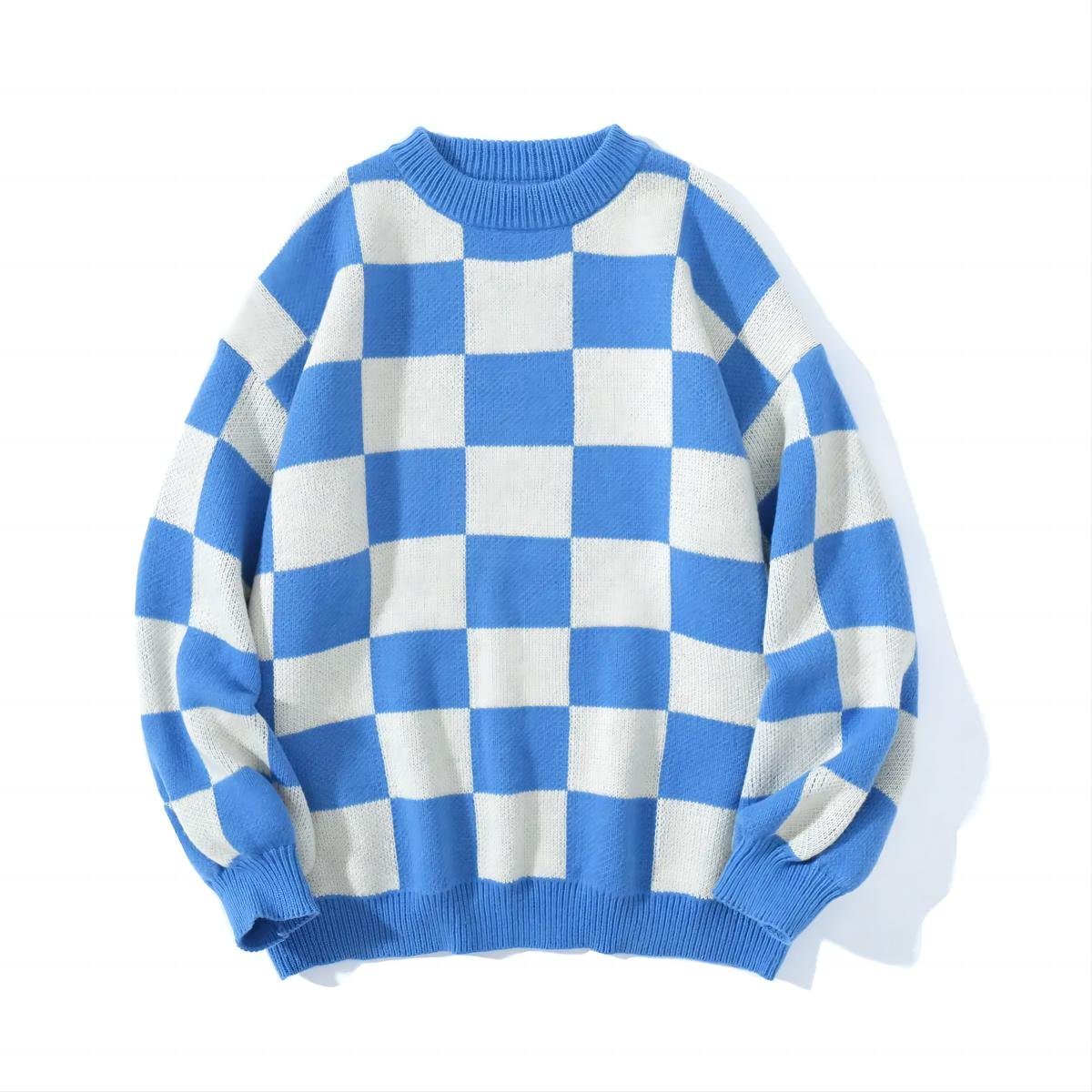
Heavyweight fleece in the 280-400 GSM range provides the structural integrity big and tall hoodies require. Garments below 280 GSM lose shape quickly in larger sizes, while 320-400 GSM fabrics resist stretching at stress points — shoulders, chest, and hem.
Brushed fleece interiors add warmth without bulk, a key consideration when pattern grading extends beyond 3XL. Ring-spun cotton blends (80/20 cotton-poly) balance softness with durability, maintaining form after 50+ wash cycles where pure cotton would relax and distort.
French Terry for Lightweight Big and Tall Styles
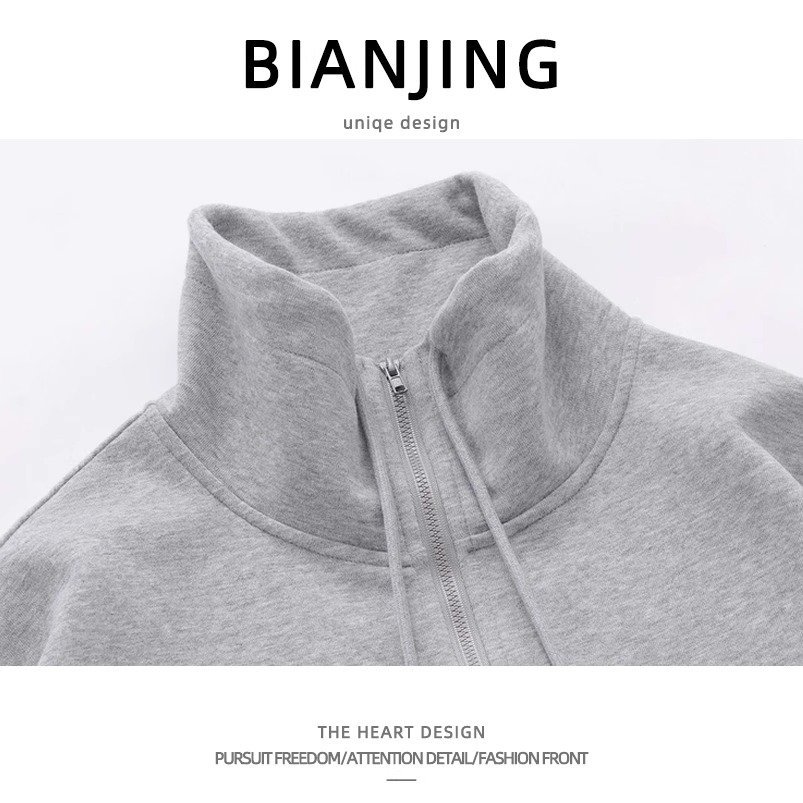
French terry (240-280 GSM) offers breathability for warmer climates and layering applications. The looped interior wicks moisture while the smooth face resists pilling, extending garment life in high-friction areas common to larger body types.
Stretch content of 5-10% spandex is essential in French terry for big and tall production; it allows recovery at seams and prevents bagging at elbows and waistbands.
Technical Performance Fabrics for Active Lines
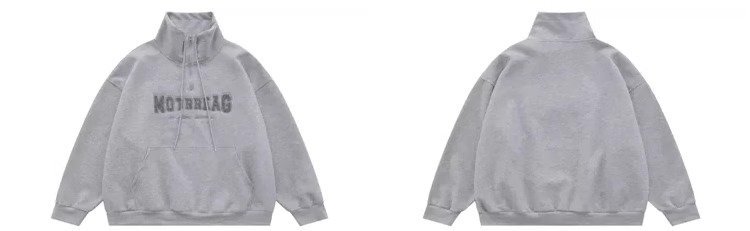
Polyester-spandex blends (88/12 to 92/8) with moisture-wicking finishes serve athleisure and activewear big and tall collections. These fabrics maintain 4-way stretch (15-20% stretch percentage) and dry 3x faster than cotton, critical for extended sizes where fabric surface area increases significantly.
Anti-microbial treatments and flatlock seams reduce chafing, addressing comfort pain points specific to larger body dimensions.
5. Customization and Decoration Options with Your Big and Tall Hoodie Manufacturer
Big and tall hoodies present a larger canvas for branding, but decoration techniques must account for fabric weight, stretch, and proportional placement. Each method carries distinct MOQ thresholds, setup costs, and technical constraints that affect both visual impact and durability.
Screen Printing on Extended-Size Garments
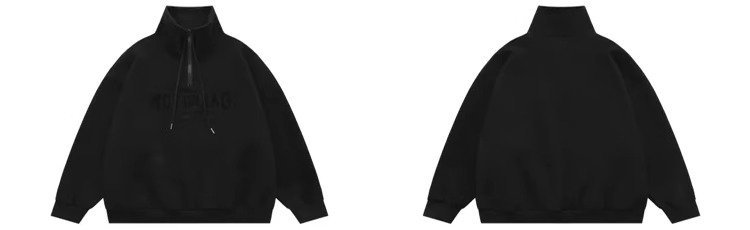
Screen printing remains the most cost-effective method for runs above 50 pieces, with setup fees typically $15–$25 per color. On big and tall hoodies, print placement shifts 1–2 inches lower and wider to maintain visual balance; a standard 12×16-inch chest print scales to 14×18 inches on 3XL and above.
Heavier fleece (≥300 GSM) requires discharge or high-opacity plastisol inks to prevent cracking during wear. Underbase layers stabilize prints on dark fabrics, adding one extra screen per design.
Embroidery Density and Stabilization
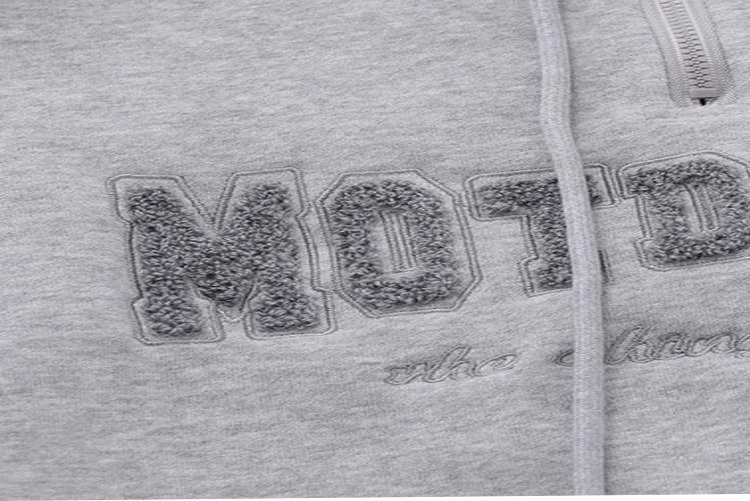
Embroidery on heavyweight hoodies demands tear-away or cut-away backing to prevent puckering, especially on left-chest logos (typical 3–4 inch width). Stitch density should not exceed 6,000–8,000 stitches per square inch on fleece to avoid fabric distortion.
MOQs for embroidered decoration start at 50 pieces due to digitizing fees ($30–$50) and setup time. Complex designs with gradients or fine text often fail on thick pile fabrics.
DTG, Heat Transfers, and Alternative Methods
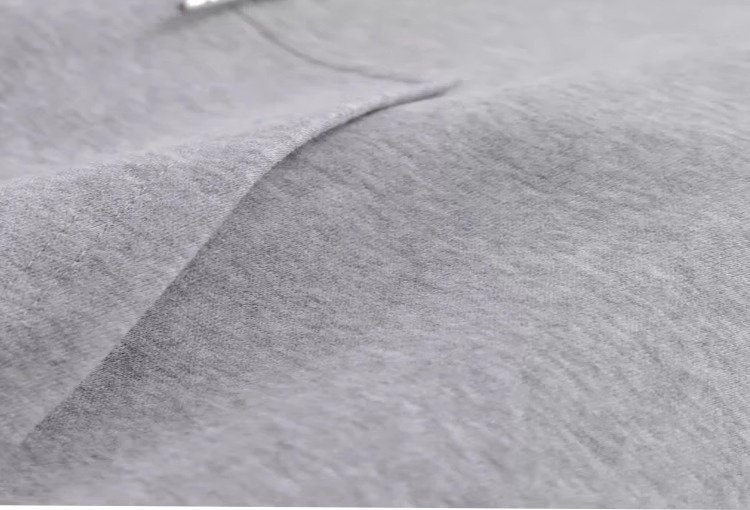
Direct-to-garment printing suits orders under 50 pieces but requires pre-treatment on dark hoodies, adding 24–48 hours to lead time. Print durability on high-pile fleece drops after 20–30 washes without proper curing at 330°F for 45 seconds.
Heat transfers (vinyl or sublimation) work for small runs (10–25 pieces) but vinyl can stiffen heavyweight fabrics. Sublimation applies only to polyester-blend hoodies, limiting use in cotton-dominant extended sizes.
Custom Labels, Hang Tags, and Packaging
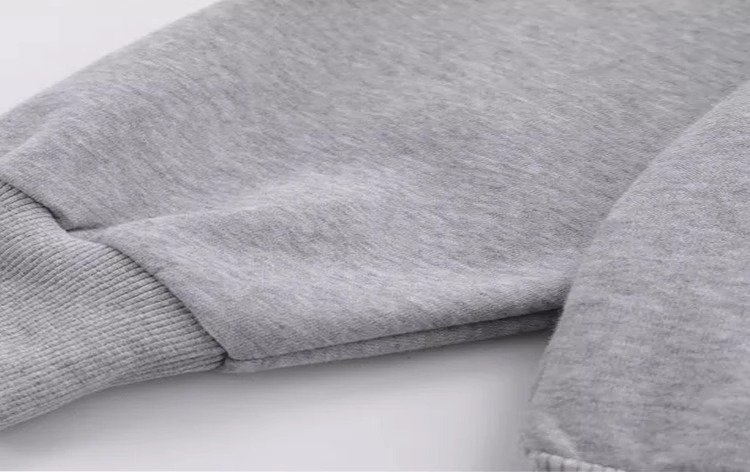
Woven labels (neck or hem) typically require 500-piece minimums per design, while printed satin labels start at 100 pieces. Hang tags with custom artwork begin at 250 units, with setup costs $50–$100 for die-cutting.
Individual polybag packaging is standard; branded boxes or tissue wrapping add $0.50–$1.50 per unit and suit retail or influencer launches. Clothing Manufacturer Ltd. integrates custom labeling and packaging into its five-step QC process to ensure consistent brand presentation.
6. Key Construction Quality Elements in Big and Tall Hoodies
Big and tall hoodies face greater mechanical stress than standard sizes, making construction quality the difference between a durable garment and early failure. Every seam, attachment point, and elastic component must be engineered to handle extended fabric spans and higher tension loads throughout daily wear.
Reinforced Stress Points and Seam Construction
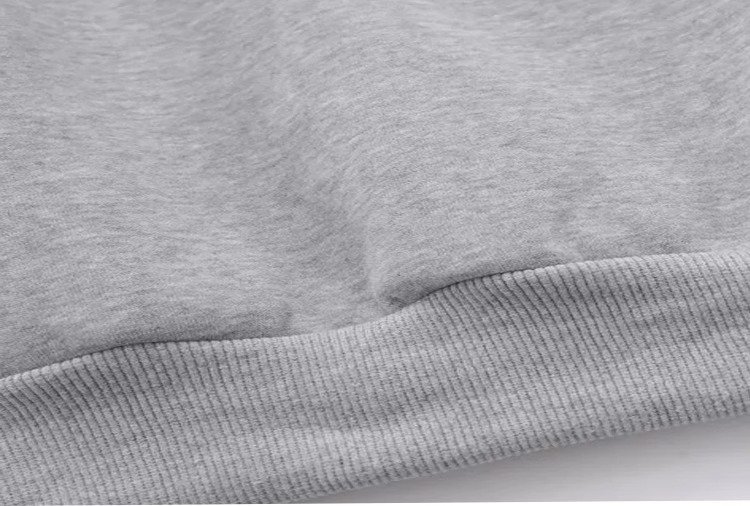
Shoulder seams in big and tall hoodies carry 30–40% more fabric weight than standard sizing, requiring reinforced stitching or taped seams to prevent separation. Armholes and side seams experience constant flexion and must use double-needle or flatlock stitching with bar tacks at termination points.
Pocket attachments are critical failure zones; kangaroo pockets need reinforced top corners and bottom stress points, while side-seam pockets require double-stitched entry openings. Quality control testing during sewing production catches loose threads, skipped stitches, and inadequate seam allowances before garments reach finishing.
Pattern Grading and Proportion Maintenance

Proper grading for big and tall sizing adjusts length and width independently, maintaining armhole depth, sleeve pitch, and hood volume proportional to body dimensions. Poor grading simply scales up standard patterns, creating distorted fits with shallow armholes or hoods that sit incorrectly.
Cutting QC testing verifies that graded patterns match specifications before fabric is cut, preventing costly errors. Each size tier requires validation samples to confirm that proportions scale correctly across the full range.
Ribbing, Zippers, and Hood Construction

Cuffs and waistbands use 2×2 or 1×1 rib knit with 5–10% spandex content to retain elasticity after repeated stretching over larger frames. Ribbing must be pre-tested for recovery; low-quality trim loses shape within 10–15 wash cycles.
Full-zip hoodies require YKK or equivalent metal or nylon coil zippers rated for heavy-duty use, with reinforced zipper tape and bar-tack stops. Hood construction demands proper pattern drafting to maintain shape and drape; poorly cut hoods collapse or pull backward. Finished clothing quality QC inspection checks all these elements before packing.
7. How to Choose the Right Big and Tall Hoodie Manufacturer
Selecting a big and tall hoodie manufacturer requires a systematic vetting process that examines technical capabilities, quality systems, and operational transparency. The right partner will demonstrate proven grading expertise, rigorous QC protocols, and clear communication from first inquiry through final shipment.
Sizing Expertise and Grading Capabilities
Request the factory’s grading charts for sizes 2XL through 6XL, comparing chest width, body length, sleeve length, and shoulder increments across each step. Experienced big and tall hoodie manufacturers grade in 2-inch chest increments and adjust armhole depth, sleeve pitch, and hem width proportionally to maintain silhouette balance.
Ask for references from brands serving the same size range and request photos of finished samples on fit models or mannequins in 3XL and above. Factories without dedicated plus-size pattern libraries often simply scale standard patterns, resulting in poor drape and restricted movement.
Sample Quality and Fit Testing
Order pre-production samples in at least three sizes (e.g., 2XL, 4XL, 6XL) and test them on actual wearers within each size bracket. Evaluate seam strength under stress, fabric recovery after stretching, and whether proportions feel natural across the torso and sleeves.
Manufacturers using a five-step QC process — materials, cutting, craft, sewing, and finished-garment inspection — catch grading errors and construction flaws before bulk production begins. Confirm that QC checkpoints occur during production, not only at final inspection.
Certifications and Production Capacity
Verify WRAP, BSCI, or Oeko-Tex Standard 100 certifications to ensure ethical labor practices and chemical safety, particularly for direct-to-skin garments like hoodies. Request certificate numbers and expiration dates, then cross-check them on the issuing body’s public registry.
Confirm minimum order quantities (typically 50–200 pieces per design for specialized manufacturers), lead times (usually 25–45 days after sample approval), and monthly output capacity. Ask whether the factory handles overflow through vetted subcontractors or keeps all production in-house.
Communication and Pricing Transparency
Evaluate response time, clarity, and willingness to answer technical questions during initial inquiries. Reliable manufacturers provide itemized quotations breaking out fabric cost, trim, labor, printing or embroidery, and packaging — not a single lump sum.
Red flags include vague answers about QC procedures, reluctance to share client references, inconsistent sizing information, and pressure to commit before samples are approved. Request contact details for two to three current clients in your market segment and verify their experience directly.
8. Common Mistakes When Sourcing from a Big and Tall Hoodie Manufacturer
Many brands stumble when sourcing big and tall hoodies by applying standard-size assumptions to extended ranges. These errors inflate costs, delay launches, and damage customer trust when fit or durability falls short.
Assuming Standard Grading Scales Up Automatically
Standard grading adds 1–1.5 inches per size; big and tall grading requires 2–3 inches in chest and 1.5–2 inches in length increments beyond XL. Brands that skip custom grading tables produce hoodies that fit poorly in 2XL–5XL, with armholes riding high and shoulder seams pulling.
Request a manufacturer-specific grading chart before sampling. Clothing Manufacturer Ltd. develops extended-size grade rules based on 10+ years of streetwear production data, ensuring proportional fit across the full range.
Skipping Fit Models and Pre-Production Samples
Launching without fit models in each extended size — especially 3XL, 4XL, and 5XL — leads to returns and negative reviews. Fabric drape, sleeve length, and hood volume behave differently at larger scales.
Always order pre-production samples in at least three sizes (M, 2XL, 4XL) and test on live models. The five-step QC process includes sewing production testing that catches proportion errors before bulk runs begin.
Underestimating Fabric Consumption and Costs
A 5XL hoodie consumes 40–60% more fabric than a medium, yet many buyers budget only 20–25% markups. This miscalculation squeezes margins or forces mid-production price renegotiations.
Get per-size fabric consumption breakdowns in your quote. Reputable big and tall hoodie manufacturers provide detailed costing by size tier, not blended averages.
Choosing Manufacturers Without Extended-Size Experience
Factories experienced only in S–XL lack reinforced-seam knowledge, pattern adjustments, and quality checks for stress points in larger garments. Shoulder seams, side seams, and pocket attachments fail prematurely.
Verify the manufacturer has produced 2XL–5XL streetwear for at least three years. Request references and sample garments in your target size range before committing to an order.
9. Steps to Launch Your Brand with a Big and Tall Hoodie Manufacturer
Launching a brand with a big and tall hoodie manufacturer requires a structured workflow that spans market research, technical specification, sampling, production, and logistics. Each phase has distinct deliverables and realistic timelines that first-time buyers must plan for to avoid costly delays.
Market Research and Sizing Strategy
Define your target customer’s body measurements and identify which extended sizes (2XL through 5XL, or tall variants) will anchor your collection. Review competitor size charts and customer feedback on fit to determine whether you need proportional grading or tall-specific adjustments in sleeve and torso length.
Allocate two to four weeks for this research phase. Document your findings in a sizing matrix that maps chest, length, shoulder, and sleeve measurements for each SKU before approaching manufacturers.
Tech Pack and Grading Specifications
Prepare a tech pack that includes front and back sketches, construction details, fabric weight (typically 280–400 GSM for hoodies), colorways, and a full grading table with increments for every size. Extended sizes often require 2-inch chest increments and proportional adjustments in armhole depth and hood volume.
Budget one to two weeks for tech pack creation if working with a designer, or three to four weeks if developing in-house. Clear grading specs prevent fit issues during sampling.
Manufacturer Vetting and RFQ Process
Request quotes from at least three big and tall hoodie manufacturers, comparing MOQ (commonly 50–200 pieces per colorway), lead times (45–75 days for first orders), and quality control procedures. Ask for references, facility certifications (WRAP, BSCI, OEKO-TEX), and sample portfolios in extended sizes.
The RFQ and vetting phase typically spans two to three weeks. Prioritize manufacturers that demonstrate experience with grading beyond 2XL and offer multi-point QC testing during production.
Sampling, Fit Testing, and Production
Order pre-production samples in at least three size points—your smallest extended size, mid-range, and largest—to verify grading accuracy across the spectrum. Conduct fit tests on models or fit mannequins that match your target demographics, checking shoulder seam placement, sleeve length, and torso coverage.
Sampling requires three to four weeks; revisions add one to two weeks per cycle. Once approved, place your production order and confirm QC checkpoints at materials inspection, cutting, mid-sewing, and final audit stages before shipment. Production and shipping combined span eight to twelve weeks for ocean freight.
10. Pricing and Cost Structure for Big and Tall Hoodies
Understanding big and tall hoodie pricing requires analyzing multiple cost drivers that scale with order volume and customization depth. A 50-piece order of 320 GSM fleece hoodies in sizes 2XL–5XL typically starts at $18–22 per unit, while 1,000-piece runs drop to $12–15 per unit as fabric utilization improves and setup costs amortize across larger quantities. Extended sizing (4XL and above) adds $1.50–3.00 per garment due to 15–25% additional fabric consumption and specialized pattern grading.
Decoration method significantly impacts total landed cost. Screen printing carries a $45–75 setup fee per color but runs as low as $0.80 per print at volume, making it economical for orders above 100 pieces. Embroidery incurs $25–40 digitizing fees and $2.50–4.50 per 10,000-stitch design, ideal for smaller runs or premium branding. Direct-to-garment printing eliminates setup costs but ranges $4–7 per placement, suited for complex graphics or short runs below 50 units.
Fabric weight and construction complexity create a $3–6 price spread within the same order tier. A 280 GSM French terry pullover with standard kangaroo pocket costs $14 per unit at 500 pieces, while a 400 GSM heavyweight zip-up with YKK zippers, ribbed side panels, and reinforced stress points reaches $20 per unit. Lead times compress from 35–45 days for initial 50-piece sampling orders to 25–30 days for repeat 500+ piece production runs, as patterns and quality benchmarks are already established.
| Quantity Tier | Price per Unit (USD) | Setup Fee | Lead Time (Days) |
|---|---|---|---|
| 50–99 pieces | $18–22 | $150–250 | 35–45 |
| 100–249 pieces | $15–19 | $150–250 | 30–40 |
| 250–499 pieces | $13–17 | $100–200 | 28–35 |
| 500–999 pieces | $12–15 | $75–150 | 25–30 |
| 1,000+ pieces | $10–14 | $50–100 | 25–30 |
Ready to Launch Your Big and Tall Hoodie Line?
Partner with a trusted big and tall hoodie manufacturer. 50-piece MOQ, 7-day sampling, and our 5-step QC guarantee on every order.